North Korea Escalates Rhetoric Against Japans Record Defense Spending
North Korea is calling Japan's proposed 10 trillion yen defense budget a preparation for invasive war and promising resolute counteraction. The sharp rhetoric shift carries implications for Seoul-Washington-Tokyo trilateral dynamics and the broader regional arms race.
A Hardening Line
North Koreas commentary on Japans record defense budget is not routine anti-Japan invective. The language is sharper, more systematic, and aimed at a specific audience beyond Pyongyangs usual rivals. The August 22 Rodong Sinmun piece called the proposed 10 trillion yen budget “a reckless war budget expansion bringing dangerous turmoil to the region and the world” and warned that Japan is transforming its Self-Defense Forces into “modernized first-strike capabilities.” The promise to “resolutely counterattack with united strength” carries weight precisely because it comes alongside a softer message toward Seoul.
The two-track diplomacy is the signal. On August 21, Kim Yo-jong issued separate statements: praising US President Donald Trump as having a “wonderful relationship” with North Korea, then delivering a scathing critique aimed squarely at South Korea. This pattern suggests Pyongyang is calibrating its messaging to exploit fractures in the Washington-Tokyo-Seoul triangle rather than presenting a unified front. The sequencing matters — Kim directed warmth toward Washington before pivoting to hostility toward Seoul, a deliberate ordering that maps the boundaries of Pyongyangs current diplomatic strategy.
What distinguishes this round of commentary is its granularity. North Korean state media referenced specific procurement decisions, historical budget trajectories going back to the 2013 defense guidelines revision, and detailed claims about Japan’s industrial mobilization for weapons production. The level of specificity indicates that Pyongyang’s intelligence apparatus is tracking Japanese defense planning with unprecedented precision — or at least projecting that capability for strategic effect.
The Numbers Behind the Threat
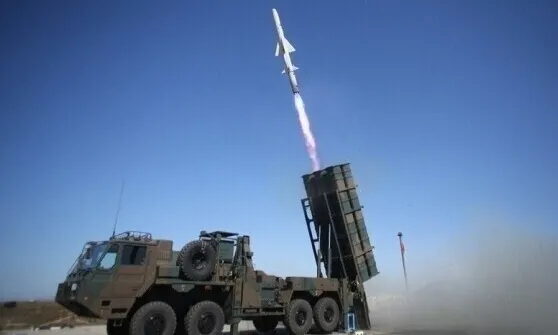
Japan’s Defense Ministry proposed 8.9 trillion yen in its initial budget request, with 150 additional “conditional request” projects whose costs remain unspecified. The final figure could approach 10 trillion yen — roughly 88 trillion Korean won — making it the largest defense budget in Japanese history. The commentary specifically called out the acquisition of US-made Tomahawk cruise missiles and the development of offensive weapons as evidence that Japan is prioritizing striking capability over territorial defense.
The conditional requests are worth examining separately. These line items, which require parliamentary approval beyond the base budget, include funding for expanded missile defense installations, additional runway hardening at bases in the Ryukyu chain, and research into hypersonic glide vehicle countermeasures. North Korean commentary did not address these ancillary items directly, but their inclusion in the budget process signals that Tokyo is preparing for a defense posture that extends well beyond the headline number.
What English-language coverage often misses is how North Korea interprets these purchases. Tokyo frames Tomahawks as a deterrent against Chinese and North Korean missile threats. Pyongyang reads them as confirmation that Japan is pursuing the very offensive posture its postwar constitution was designed to prevent. This interpretive gap is not just semantic — it drives each side further apart in how they define threat and response.
The budget also marks a structural shift in Japanese defense planning. For decades, Japan’s posture was fundamentally defensive, constrained by both constitutional interpretation and political consensus. The current budget accelerates the move toward a force capable of launching strikes against enemy bases — a capability explicitly designed to counter North Korean missile sites and Chinese military infrastructure. North Korea views this not as defensive adaptation but as offensive reorientation, and that perception is likely to harden rather than soften as procurement proceeds.
Who Wins and Who Loses
Japan wins what it asked for: a budget that enables long-range strike capability and a more assertive security posture. But the price may be higher than anticipated. North Korea’s language signals it is treating Japan’s military buildup as a direct strategic threat rather than background noise — which means Pyongyang may accelerate its own weapons programs with Japan as a named target, not just the United States.
That acceleration carries implications beyond bilateral dynamics. A North Korean weapons program that names Japan as a primary target would justify increased deployment of US tactical assets to Japanese bases, further embedding American forces in the region and making them more visible targets in Pyongyang’s strategic calculus. The feedback loop between Japanese rearmament, North Korean targeting adjustments, and American force posture is already underway and shows no signs of deceleration.
South Korea loses leverage. Every time North Korea hardens its rhetoric toward Japan while simultaneously offering conciliatory signals to Washington, it creates pressure on Seoul to choose sides. If Pyongyang perceives Seoul as too closely aligned with Tokyo’s security agenda, those conciliatory gestures vanish. The Kim Yo-jong statements demonstrate that North Korea is already drawing a distinction between how it treats the two governments — and that distinction will sharpen if Seoul deepens trilateral cooperation without securing reciprocal flexibility from Pyongyang.
The United States gains short-term coordination with Japan but risks long-term instability. A North Korea that sees Japan’s military expansion as an existential threat will recalibrate its targeting priorities, which could complicate US force protection arrangements and draw American forces into scenarios originally conceived as bilateral Japan-Self-Defense Force operations. Washington’s dual commitment to both Tokyo and Seoul becomes more difficult to manage when Pyongyang is actively working to drive wedges between them.
The Unspoken Implication
North Korea’s commentary contains a subtle admission: Japan’s military is now substantial enough to warrant a formal strategic response. Five years ago, Pyongyang’s critiques of Japanese rearmament were categorical but not detailed. This time, the commentary names specific weapons systems, references historical patterns of budget escalation, and frames Japan’s trajectory as continuous rather than reactive. That shift in tone reflects a belief in Pyongyang that Japan’s defense industrial base has crossed a threshold where it can no longer be dismissed as purely ceremonial.
This matters for Seoul because it means deterrence planning can no longer treat North Korea’s anti-Japan rhetoric as peripheral to its own security calculus. When Pyongyang says it will “resolutely counterattack,” the target set may increasingly include Japanese territory and assets — which directly affects American force posture decisions and South Korean responsibilities under the alliance framework. Seoul’s attempt to position itself as a neutral mediator between Washington and Pyongyang becomes increasingly untenable when its partner Tokyo is being explicitly targeted in North Korean strategic discourse.
There is also a domestic dimension. Japan’s budget increase will face political headwinds as economic conditions remain constrained and public opinion has not fully settled on the trade-offs between prosperity and rearmament. North Korea’s commentary, by framing the budget as an act of aggression, provides ammunition for Japanese opposition voices — even as it reinforces the argument of hawks who see external threat as justification for sustained defense investment. The rhetoric thus operates on multiple levels: it is aimed at Seoul and Washington, but it also shapes the internal debate in Tokyo.
What Happens Next
The immediate risk is a spiral. Japan increases defense spending. North Korea responds with rhetorical escalation and potentially accelerated testing. China watches and adjusts. Seoul finds itself caught between a Japan that wants deeper trilateral integration and a North Korea that is explicitly dividing the two.
The longer-term question is whether North Korea’s message is designed to pull South Korea away from Tokyo or simply to signal to Beijing that Pyongyang remains committed to a hard line. The Kim Yo-jong statements — warm toward Washington, venomous toward Seoul — suggest the latter may be more significant. Pyongyang appears to be testing whether it can drive a wedge between its two neighbors while maintaining its relationship with the United States. Success in that effort would weaken the trilateral framework at its most vulnerable point: the bilateral relationship between South Korea and Japan, which remains structurally fragile despite institutional efforts to stabilize it.
If Washington continues to prioritize the US-North Korea channel, Seoul’s options narrow. If Washington leans harder into Japan, North Korea’s rhetoric will likely harden further, and the arms race dynamics in the region will accelerate. Either path changes the calculus for every capital involved.
The 10 trillion yen budget is not just a number. It is a signal that Japan has fully committed to a more assertive security posture, and North Korea’s response indicates it is taking that commitment seriously — perhaps more seriously than Seoul would like. The real test will come in the coming months, as procurement proceeds and Pyongyang decides whether its rhetoric translates into concrete action. Until then, the region remains in a state of calibrated tension, where every budget decision and every statement is measured not for what it says but for what it predicts.