North Korea's 8,500 Troops in Russia Signal Drone War Escalation
Kyiv says 8,500 North Korean soldiers now sit in Russia's Kursk region, including 400 drone operators prepared to hunt Ukrainian targets. Moscow may soon ask for up to 50,000 more.
The Number That Changes Everything
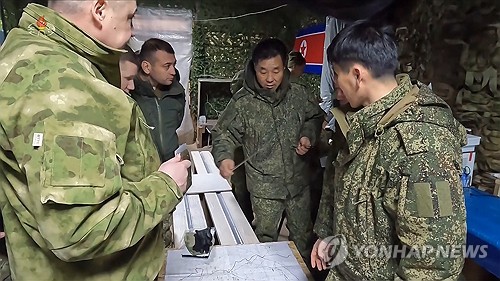
Eight thousand five hundred. That is the current headcount of North Korean troops on Russian soil, according to Kyiv’s military intelligence chief Vadym Skibitskyi, speaking to CNN on August 21. The figure matters less than what it contains.
Among those 8,500 are 1,000 combat engineers and mine-clearance specialists — the kind of troops that walk into hell so regular infantry can follow. But the 400 drone operators are the unit that will decide how expensive the next phase of this war becomes for Ukraine.
Skibitskyi’s assessment is specific: the drone operators have accumulated hands-on experience from earlier rotation rounds, and their systems will be used primarily for reconnaissance and strike missions inside Ukrainian territory. North Korean troops themselves, he argues, will stay in Russia’s rear areas around Kursk, reinforcing defensive positions and freeing Russian regulars for frontline assaults.
That is the structural shift. Ukraine now faces an enemy that has layered a state actor’s drone warfare apparatus onto its own already-stretched air-defense network — and that apparatus has been battle-tested in real combat conditions for months.
The Drone Burden Is Not Hypothetical
Ukraine’s air-defense problem has been well documented. Long-range Shahed drones, Iranian-made loitering munitions, and cheap Chinese quadcopters have turned every night into a resource-intensive calculus: shoot or let it through, reposition or hold the line, spend a million-dollar interceptor on a $20,000 drone and watch the bill compound.
North Korean drone units change the denominator. Pyongyang does not buy Iranian drones; it produces its own surveillance and attack UAVs, and it has been refining that capability for years in secret. The operators now sitting in Kursk have been flying those systems over Ukrainian terrain. They know which Ukrainian air-defense batteries light up on radar. They know which routes are saturated and which are thin.
This is not speculation. It is what Skibitskyi described explicitly: these operators bring prior deployment experience, and their drones will target Ukrainian interior positions rather than engaging on the front line. That means Ukrainian logistics hubs, fuel depots, command centers, and secondary air-defense sites become the new hunting ground — targets that have hitherto enjoyed relative sanctuary behind the front.
The strategic effect is asymmetric. Ukraine must now defend a deeper geography with the same interceptors, the same radar coverage, and the same constrained ammunition stocks. Every additional drone platform flown by North Korean operators is a vector that does not exist in Russia’s current order of battle.
The Casualty Math and the Rotation Problem
Kyiv estimates that 25,000 North Korean troops have now cycled through Russia since the first deployment began in October 2024. The initial wave of roughly 10,000 suffered heavy losses from suicidal assault tactics — a detail that matters for understanding what comes next.
If the current 8,500 include replacements and rotated units, then Moscow has already absorbed significant North Korean casualties without the world watching closely, because these troops operate under Russian command structures and are not identified by nationality on the battlefield. That is precisely the design: deniable, unattributed, and exhausting for Ukraine’s intelligence community, which must now track a force that does not announce itself.
Skibitskyi also raised the possibility that Vladimir Putin could request up to 50,000 additional North Korean troops if he meets Kim Jong Un in September. Whether that number materializes is uncertain — the source flags it as a claim, not a confirmation — but the mere framing reveals something important about Moscow’s posture: it views North Korea not as a symbolic ally but as a quantifiable reserve of human resources it can draw from at scale.
The Beijing Factor That Everyone Misses
The tripartite alignment of Beijing, Moscow, and Pyongyang is accelerating in a way that English-language coverage has largely failed to capture. China does not need to send troops to Russia. What it provides is the industrial and diplomatic architecture that makes this deployment sustainable.
North Korea’s drone program relies on Chinese dual-use electronics, chip components, and commercial satellite imagery infrastructure. Russia provides the war-fighting context and the political cover. Pyongyang provides the troops and the willingness to fight in a war that is not its own. The result is a loop: Chinese components flow north, North Korean operators fly them in Russia, Russian battlefield data flows back through intelligence channels that eventually touch Chinese military planners.
This is not alliance warfare in the NATO sense. It is a functional supply chain disguised as geopolitical alignment, and it is far harder for the West to counter because no single node is legally or publicly accountable.
What Happens Next
The most concrete near-term risk is the September Putin-Kim meeting. If North Korea commits to a larger troop rotation — even at 20,000 to 30,000 additional personnel — Ukraine’s defense planning for winter 2026 needs to assume a substantially denser drone environment across a wider depth than currently projected.
The secondary risk is diplomatic. North Korean troop deployments to Russia violate no formal treaty, but they cross a threshold that most Western governments have treated as hypothetical. Naming the numbers publicly, as Kyiv has done, is itself a strategy: it forces the issue into the open and pressures allies who have been quiet about the broader China-North Korea-Russia axis.
What is clear is that the war in Ukraine is no longer a regional conflict with external suppliers. It is a theater where a third country’s military personnel, operating under a fourth country’s command structure, are flying drones built with components from a fifth. The map has expanded faster than the vocabulary to describe it.
Ukraine’s air-defense burden was already unsustainable at current levels. Adding a trained, experienced, battle-hardened drone force loyal to a state that has never fought a war alongside anyone before is not an incremental change. It is a different war.