North Korean Missiles in Ukraine Shift War Logistics
Zelenskyy confirms Pyongyang-supplied KN-23 ballistic missiles hit Ukrainian energy infrastructure, exposing critical Western defense shortfalls and raising stakes for European security architecture talks.
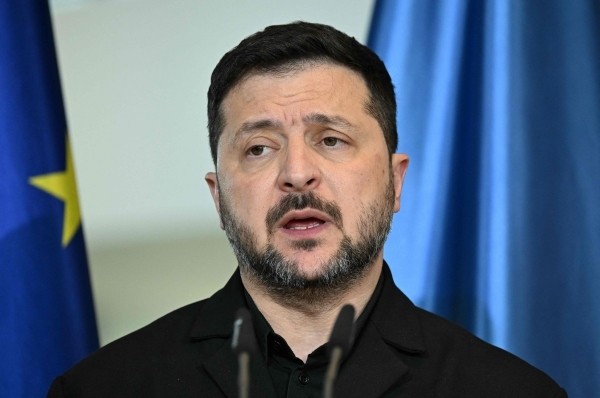
The Missile That Changed Everything
President Volodymyr Zelenskyy did not mince words on Aug 7. After a night of Russian strikes targeting Ukraine’s energy grid, preliminary findings pointed to a weapon most observers thought remained confined to the朝鲜半岛 theater: a North Korean-made KN-23 ballistic missile, known internationally as Hwasong-11A.
“Among the major energy facilities damaged, one was struck by a KN-23 missile supplied by North Korea,” Zelenskyy wrote on X. The admission does two things at once. It formally links Moscow’s war machine to Pyongyang’s arms industry — something intelligence agencies have suspected for months — and it reveals a supply chain that bypasses Western sanctions designed to choke Russia’s access to precision-guided munitions.
Why This Changes the Calculus
The KN-23 is a Soviet-era Scud derivative that North Korea has refined and mass-produced. It carries a conventional warhead and has a range of roughly 300 to 400 kilometers. Against hardened military targets or troop concentrations, it is crude. Against power plants, substations, and regional distribution hubs — exactly the infrastructure Russia has been systematically dismantling in Ukraine since 2022 — it is devastatingly effective.
What makes this deployment strategically significant goes beyond the weapon itself. It signals that North Korea is no longer a peripheral arms supplier but an active combat partner. Pyongyang has received Russian fighter jets, artillery shells, and reportedly ballistic missile technology in return. The KN-23 on Ukrainian soil means the exchange is already operational.
For Kyiv, the immediate consequence is a compound threat. Russian drones swarm first to saturate air defenses. Ballistic missiles follow at altitude, arriving faster than any drone and harder to intercept. Ukraine’s layered shield — built on American Patriots, Israeli Iron Domes, and European Sky Saturdays — was never designed to handle high-end ballistic threats at scale. The math is brutal: Zelenskyy reported 36 Russian missiles launched overnight, only four intercepted. That 89 percent failure rate is not a tactical blip. It is a structural gap.
The Patriot Shortage Nobody Wants to Admit
Zelenskyy repeated a familiar plea: interceptor ammunition is running thin. Patriot PAC-3 missiles cost roughly $4 to $5 million each. Ukraine’s stockpile, drawn from delayed U.S. aid packages and European contributions, simply cannot sustain continuous combat operations. When three dozen ballistic missiles arrive in a single night, even a fully loaded battery can engage only a fraction.
The United States produces roughly 100 Patriot interceptors per month. Germany, the primary European supplier, produces far fewer. Israel, another major producer, is drawing down its own reserves after deploying systems in the Red Sea and Gaza campaigns. The supply chain is fractured, and Ukraine sits at the bottom of every priority list in Washington and Brussels.
This is not a failure ofwill. It is a failure of industrial capacity built for a different era of warfare. TheKN-23 confirmation forces a reckoning: if North Korean missiles are now flowing through Iranian or Central Asian intermediaries into Russian arsenals, the production pipeline could expand rapidly. Pyongyang manufactures these weapons at scale and has exported them to multiple conflicts.
The Yalta Shadow
Zelenskyy also targeted a different kind of threat: the possibility that great powers would redraw Europe’s security architecture without consulting Ukraine. He dismissed suggestions — attributed to unnamed figures in the Trump administration — that a broader European security framework could be negotiated between Washington and Moscow. “We do not want Yalta 2.0,” he said, invoking the 1945 conference where Roosevelt, Churchill, and Stalin carved up postwar Europe.
The reference is deliberate. In 1945, Poland’s borders shifted, its government was imposed, and its sovereignty was bargained away. Zelenskyy’s point is clear: any settlement that treats Ukraine as a pawn rather than a participant replicates the same historical injustice. The Trump administration’s envoy, Keylor Dmitriyev, met with Russian President Vladimir Putin’s representative on Aug. 5. Reports suggest discussions touched on a comprehensive agreement covering the entire continent. Whether such talks are preliminary maneuvering or实质性 planning remains unclear, but the timing — coinciding with intensified missile strikes — is hard to ignore.
Who Wins, Who Loses
Pyongyang wins visibility. Every KN-23 fired from Russian territory proves its weapons are battle-tested and that the sanctions regime has holes large enough to drive tanks through. Moscow wins materiel. The missiles accelerate Russia’s ability to degrade Ukrainian civilian infrastructure, a strategy designed to break morale and force concessions. Kyiv loses time. Each intercepted missile buys weeks of recovery; each stragglers that reaches a substation costs months of blackouts.
The West faces a reputational cost. If European capitals believed their air defenses were adequate before North Korean missiles appeared on Ukrainian battlefields, those assumptions require urgent revision. The Pentagon’s own assessments have long warned about ballistic missile proliferation in hybrid conflicts. The gap between assessment and preparation remains the real vulnerability.
What Comes Next
Ukraine will demand more interceptors, faster. Congressional appropriators in Washington face a choice between extending existing programs or seeking emergency supplements. European allies, already stretched by their own defense industrial bases, will need to coordinate production increases or accept that their skies remain exposed.
Sanctions enforcement around North Korean arms exports will intensify, but enforcement alone cannot close a pipeline that runs through multiple jurisdictions. Diplomatic pressure on Beijing and New Delhi to cut transit routes may yield partial results. Intelligence-sharing on missile shipments will improve, but the physical reality on the ground — a battlefield where Scud-derived weapons are routine — demands material solutions, not just diplomatic ones.
The KN-23 confirmation changes the war’s character. It is no longer a regional conflict fed by Russian domestic production and limited foreign assistance. It is a multinational arms race with consequences for every capital from Seoul to Berlin to Washington. The missiles themselves are old technology. Their appearance in this conflict is anything but.
Zelenskyy’s invocation of Yalta carried a warning: the world is watching how great powers treat smaller states when they believe the terms are already settled. The missile trail from Pyongyang to Russian launch sites to Ukrainian power plants is one more reason to listen.