Norway's Arctic Ship Seizure Sets a Dangerous Precedent
Norway's seizure of a Russian research vessel in Svalbard to enforce Ukraine compensation is more than a legal maneuver—it tests the boundaries of demilitarized-zone enforcement and could reshape how war reparations are collected globally.
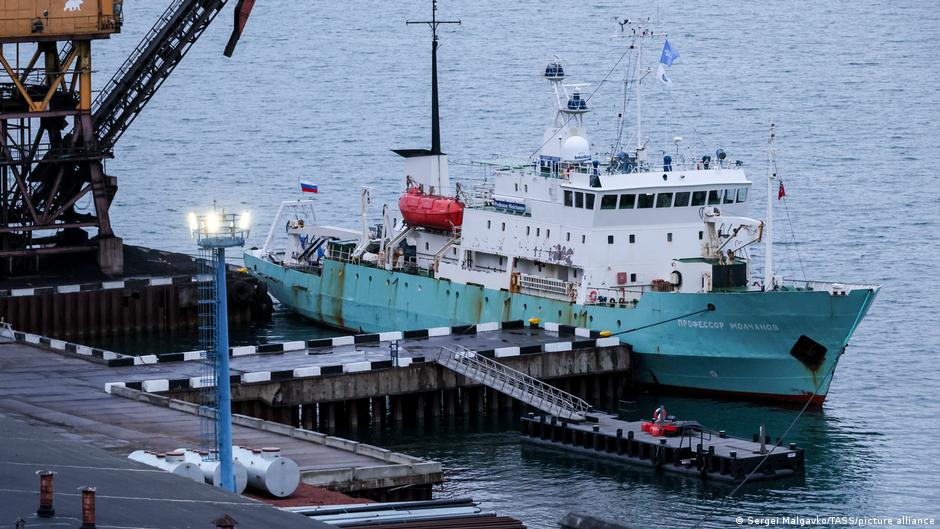
The Seizure That Isn’t About One Ship
Norway’s decision to impound a Russian research vessel in Svalbard may look like a targeted legal action, but it carries implications far beyond the Arctic. The Professor Molchanov, a repurposed icebreaker, was halted in the port of Barentsburg—a remote Russian coal-mining settlement—after a Norwegian court ordered its seizure to enforce part of a $4.22 billion compensation claim won by Ukraine’s Naftogaz. This is the first known case of an international arbitral award being enforced through domestic courts in a demilitarized zone, and it sets a precedent that could reshape how states collect reparations from adversarial governments.
The move is significant because it exploits a legal loophole in Svalbard’s unique status. The 1920 Svalbard Treaty grants Norway sovereignty but guarantees equal economic access to signatory nations, including Russia. The archipelago is demilitarized, meaning no military installations are allowed, but it does not prohibit civilian law enforcement. By seizing a Russian civilian vessel in a Norwegian-administered port, Oslo has effectively turned Svalbard into a jurisdiction where international law can be enforced without triggering direct military confrontation.
Who Wins, Who Loses, and What Changes
Ukraine wins tangible leverage. The Permanent Court of Arbitration awarded Naftogaz the compensation in 2023 after Russia confiscated its Crimean assets following the 2014 annexation. Russia has refused to pay, dismissing the award as illegitimate. Now, through Norwegian courts, Ukrainian lawyers—represented by the US firm Covington—are actually attaching Russian commercial assets. This is a practical step toward recovering billions, something Ukraine has struggled to achieve through diplomatic channels alone.
Russia loses a research vessel and faces a new type of economic pressure. The Professor Molchanov is not a warship; it is a civilian icebreaker used for scientific expeditions. Its seizure demonstrates that even non-military Russian assets abroad can be targeted, raising the cost of ignoring international rulings. Moscow’s ambassador to Norway, Nikolai Korchunov, called for the ship’s immediate release and lodged a formal complaint, but Russia has limited legal recourse. The case will likely move through Norwegian courts, potentially appealing to higher tribunals, but the process itself drains resources and attention.
Norway walks a tightrope. The Justice Ministry insisted the seizure “did not directly concern the government,” framing it as a judicial matter. Yet Oslo chose Svalbard precisely because its treaty framework allows such enforcement without violating demilitarization rules. This subtle state involvement signals that Norway is willing to test the boundaries of its own sovereignty to support Ukraine, a move that could strengthen NATO solidarity but also risk drawing the Arctic into broader geopolitical tensions.
Why Svalbard? The Legal Architecture of a Vulnerable Zone
Svalbard’s特殊性 is key. The archipelago has about 3,000 inhabitants, two-thirds of its land designated as national parks. Barentsburg, home to roughly 300 mostly Russian nationals, is a mining settlement administered by Trust Arktikugol, a Russian state enterprise. Under the Svalbard Treaty, Russian citizens have the right to settle and work there without visas, making it the only place in the Arctic where Russia maintains a permanent civilian presence.
This presence is often overlooked in Western coverage. Russia views Svalbard as a historical concession, a reminder of its Soviet-era foothold. Yet Norway exercises full jurisdiction, including control over ports and law enforcement. The seizure leveraged this jurisdiction by having the Svalbard governor enforce the court order—keeping the vessel in dock while ensuring crew safety. No arrests were made; the scientists and crew continued their work under restriction. This careful handling avoids escalating the incident into a diplomatic crisis, but it also underscores Norway’s willingness to use legal tools in a zone traditionally seen as neutral.
The demilitarized status means Norway cannot station troops or warships there, but it can deploy coast guard vessels and judicial authorities. The Professor Molchanov was stopped from departing after its arrival on Tuesday, with the district court order taking effect by Wednesday night. This rapid enforcement suggests coordinated planning between Norwegian legal authorities and Svalbard’s administration, a model that could be replicated elsewhere.
The Precedent: Enforcing Awards in Gray Zones
What happens next will determine whether this seizure becomes an isolated case or a template. If Norway successfully sells the Professor Molchanov to satisfy part of the debt, other states could attempt similar actions against Russian assets in their jurisdictions. China, for instance, has signed the Svalbard Treaty and maintains research stations in the Arctic. Would Beijing tolerate asset seizures on its territory? Iran, Venezuela, and other adversarial states might face similar risks if their commercial vessels travel to treaty-compliant zones.
The legal mechanism is straightforward: a victorious claimant obtains an arbitral award, then applies to domestic courts in a third country to seize localizable assets. Norway’s courts approved Covington’s application, demonstrating that domestic judicial systems can become instruments of international enforcement. This bypasses the UN Security Council veto or the reluctance of some nations to impose sanctions. It is a quiet, legalistic form of pressure that could proliferate.
However, risks are significant. Russia could challenge the seizure at the International Court of Justice, arguing Norway violated the Svalbard Treaty’s spirit by using a demilitarized zone for coercive purposes. Alternatively, Moscow might retaliate against Norwegian interests elsewhere, such as fishing rights or energy projects. The Kremlin has summoned Norway’s ambassador, signaling displeasure, but has not yet imposed economic countermeasures. For now, the situation remains contained, but the underlying tension is unresolved.
Broader Implications for Arctic Governance
The seizure occurs amid increasing great-power competition in the Arctic. Russia has been fortifying its northern military bases, reopening Soviet-era infrastructure, and conducting frequent patrols. Norway, as a NATO member, has responded by enhancing its own northern defenses, including deploying F-35 jets and cooperating with US forces. Yet the Svalbard Treaty remains a fragile framework, balancing Norwegian sovereignty with Russian access.
By enforcing a compensation award in Barentsburg, Norway has subtly asserted that the treaty does not grant Russia immunity from legal consequences. This could encourage other NATO states to pursue similar strategies, potentially leading to a chain of asset seizures that isolate Russia economically. Conversely, it might push Russia to renegotiate the treaty or withdraw from it—a move that would destabilize the Arctic’s legal order.
For Ukraine, the seizure is a morale boost. It shows that Western legal systems are active allies in the war, not just rhetorical supporters. Naftogaz’s acting CEO, Sergii Fedorenko, stated that “Russia cannot evade responsibility simply by refusing to comply with an international arbitral award.” This mindset could shift how Ukraine and its partners approach reconstruction costs, emphasizing legal recovery over diplomatic appeals.
The Human Dimension: Scientists and Crew in Limbo
The Professor Molchanov’s crew and the accompanying Russian scientists remain in Barentsburg, forbidden from leaving but otherwise unharmed. Andrei Gorbunov, editor-in-chief of KP radio, reported that operations continued as usual, though the uncertainty lingers. This human element is often absent in geopolitical analyses. These individuals are not combatants; they are researchers caught in a legal crossfire. Their plight highlights the collateral impact of grand strategic moves.
Norway’s Svalbard governor committed to caring for the crew and passengers, collaborating with Trust Arktikugol. This gesture maintains Norway’s image as a responsible administrator, even as it enforces a hostile measure. It also avoids creating martyrs or humanitarian crises that could galvanize Russian propaganda.
Looking Ahead: A Flashpoint with Far-Reaching Consequences
The seizure is a flashpoint, but not an explosion. It tests the boundaries of neutral-zone enforcement and establishes a new method for collecting war reparations. If the case proceeds, it could lead to a sold ship, a partial payment to Ukraine, and a protracted legal battle in international forums. Russia may seek damages or retaliate against Norwegian interests, but the economic and diplomatic costs of escalation are high for both sides.
For the Arctic, the incident raises questions about the future of the Svalbard Treaty. Will Norway continue to use its jurisdictional reach to support allies? Will other treaty signatories follow suit? Or will Russia push back, seeking to revise the treaty’s interpretation?
The broader lesson is that international law is increasingly being weaponized through domestic courts. This trend could empower smaller states and non-state actors to enforce judgments against powerful adversaries, changing the dynamics of global accountability. It also risks fragmenting legal systems into competing jurisdictions, where asset seizures become commonplace in geopolitical disputes.
In the end, Norway’s seizure of the Professor Molchanov is not just about one ship or one debt. It is about where and how international law can be enforced in contested spaces. The precedent set here will resonate far beyond the icy waters of Svalbard, shaping the mechanics of war reparations and Arctic governance for years to come.