Norway Just Made Russian Assets Seizable — What Changes Now
Norway's seizure of a Russian research vessel in the Arctic to enforce a $4.2 billion Ukrainian arbitration award marks the first active enforcement of a Western-backed claim against Russian assets. The move opens the door to global enforcement campaigns and reshapes the economics of Russia's overseas holdings.
The First Drop of Blood
For nearly three years, the $4.2 billion arbitration award favoring Ukraine’s Naftogaz over Russia’s 2014 seizure of its Crimean assets existed largely on paper. It was a legal victory without teeth — another judgment sitting in a Hague tribunal drawer while Russia continued operating assets across Western jurisdictions with impunity.
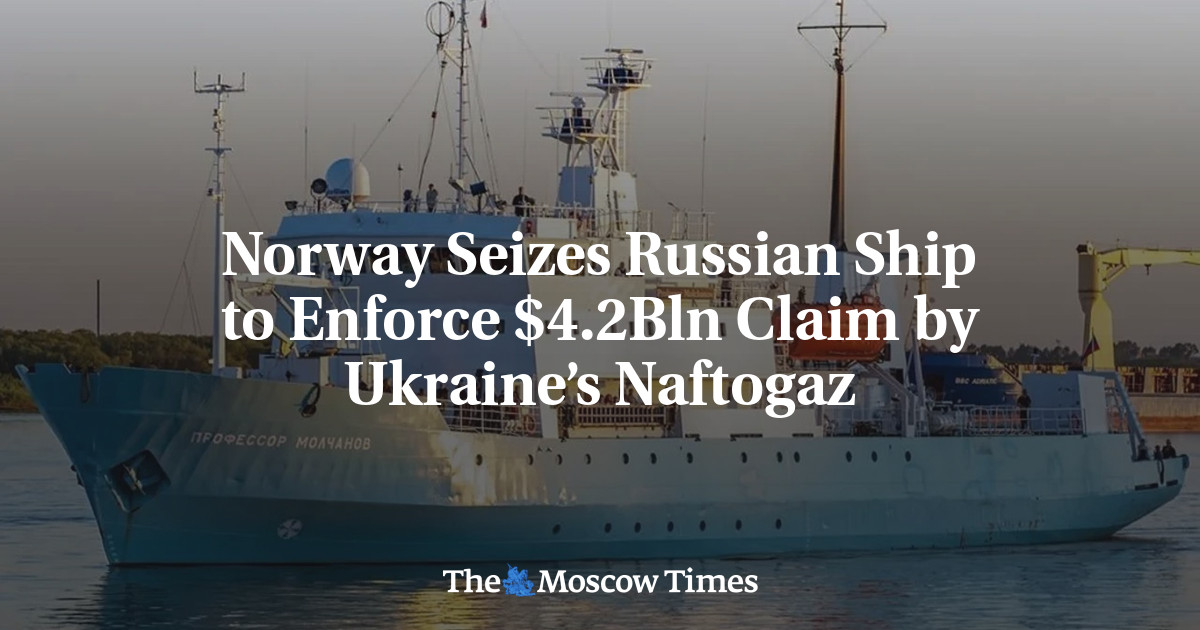
That changed in late September 2026, when Norwegian authorities seized the Russian research vessel Professor Molchanov off the Svalbard archipelago after a 24-hour standoff with the Norwegian Coast Guard.
This is the first known instance of a Western nation actively enforcing an arbitration award against Russian assets rather than merely freezing them. The distinction matters enormously.
How It Actually Happened
The mechanics of the seizure reveal a patient, legally sophisticated campaign. Covington, the Washington-based law firm representing Naftogaz, had been tracking the Professor Molchanov for months. The vessel — owned by a Russian state company and used for commercial cruises — was en route to Barentsburg, the Russian mining settlement on Svalbard.
Naftogaz’s lawyers filed an application with Norway’s Nord-Troms and Senja District Court requesting the vessel be arrested and subject to compulsory sale. The court approved the application on a Monday. The governor of Svalbard was ordered to enforce the ruling, supervise the vessel, and ensure it was not moved.
Russia’s Foreign Ministry responded within hours, calling the seizure an act of “piracy.” TASS, the state news agency, ran with the framing immediately. Moscow also appealed the process, claiming it received no advance notice — a claim that seems legally thin given the court proceedings were public and ongoing.
What made this work is jurisdiction. Svalbard falls under Norwegian sovereignty but operates under the 1920 Svalbard Treaty, which grants signatory nations equal economic access. Norway’s court determined the treaty did not immunize Russian state-owned vessels from civil enforcement proceedings. That interpretation now stands as a precedent — pending appeal, of course.
Why This Matters Beyond One Ship
A research vessel is not a sovereign warship. It cannot claim state immunity in the way a naval vessel might. But the symbolic weight of the seizure extends far beyond the asset itself.
Naftogaz has confirmed it is coordinating parallel enforcement actions across the United States, France, the United Kingdom, and Finland — all jurisdictions where Russian assets have already been frozen. The company’s acting CEO, Sergii Fedorenko, said the pursuit would continue “until the compensation awarded to Naftogaz and other Naftogaz Group companies is paid.”
This is the moment commercial law becomes a weapon of economic statecraft. For years, Western governments froze Russian central bank reserves and sovereign assets but stopped short of liquidating them or enforcing private arbitration awards. The legal and diplomatic risk of crossing that line kept every Ukrainian claim trapped in procedural limbo.
Norway crossed it. The precedent is now established.
The Reconstruction Financing Question
Ukraine’s reconstruction needs are estimated at over $400 billion. A significant portion of that figure is tied to reparations claims — arbitration awards, expropriation disputes, and damage assessments that currently lack enforceable mechanisms. The Naftogaz case was always going to be the test.
If Norway’s seizure holds, every other jurisdiction with frozen Russian commercial assets faces the same question: do you keep the asset frozen indefinitely, or do you enforce the judgment?
The answer will vary by country and political context. But the legal door is now open. Law firms that previously advised Ukrainian claimants to be patient — because enforcement was politically impossible — now have a roadmap.
Who Loses
Russia loses first. Every Russian-owned vessel, plane, building, or account that transits or sits in a jurisdiction willing to enforce arbitration awards is now exposed. The Professor Molchanov is one ship. The list of Russian commercial assets in Europe is long.
But Russia also loses strategically. Its Foreign Ministry’s “piracy” framing is politically charged but diplomatically isolated. No NATO member has echoed it. The seizure was carried out through Norwegian courts using established maritime law procedures — not as a political expropriation but as a civil enforcement action. That legal pedigree is deliberately designed to be durable.
Who Wins
Ukraine wins credibility. Three years of arbitration awards against Russia have been worthless if they cannot be enforced. The Naftogaz seizure proves the mechanism works. It also signals to other claimants — corporations, municipalities, even sovereign states — that the window for enforcement has opened.
Norway wins quietly. It avoided the headline-grabbing rhetoric of sanctions while achieving the same strategic outcome: depriving Russia of assets and reinforcing the cost of the war in Ukraine. The move also strengthens Norway’s position as a reliable legal actor in international disputes, which matters for a country whose economy depends on rules-based order.
What Happens Next
Russia will appeal. It will challenge the jurisdiction of Norwegian courts over Svalbard and argue sovereign immunity by extension. Those appeals may take years. But the Professor Molchanov remains seized in the interim, and Naftogaz can proceed with the compulsory sale regardless.
Other claimants will watch closely. Any Russian commercial entity with assets in enforcing jurisdictions is now on notice. Shipping companies, energy firms, state-owned enterprises — all of them may need to reassess whether transiting through or operating in Norway, the UK, France, or similar jurisdictions carries new legal risk.
The broader implication is harder to quantify but equally significant: the line between frozen assets and seized assets has vanished. What was once a diplomatic tool is now a legal one. And legal tools, unlike diplomatic tools, can be invoked by private parties — not just governments.
Ukraine’s $4.2 billion was always about principle as much as money. The principle now has a precedent.