Docomo's 300,000-Record Breach Exposes Japan Telecom's Data Weakness
NTT Docomo's largest-ever data breach reveals systemic vulnerabilities in how Japan's telecom giants guard customer information — and why it matters globally.
The breach most Americans won’t hear about is one of Japan’s worst ever.
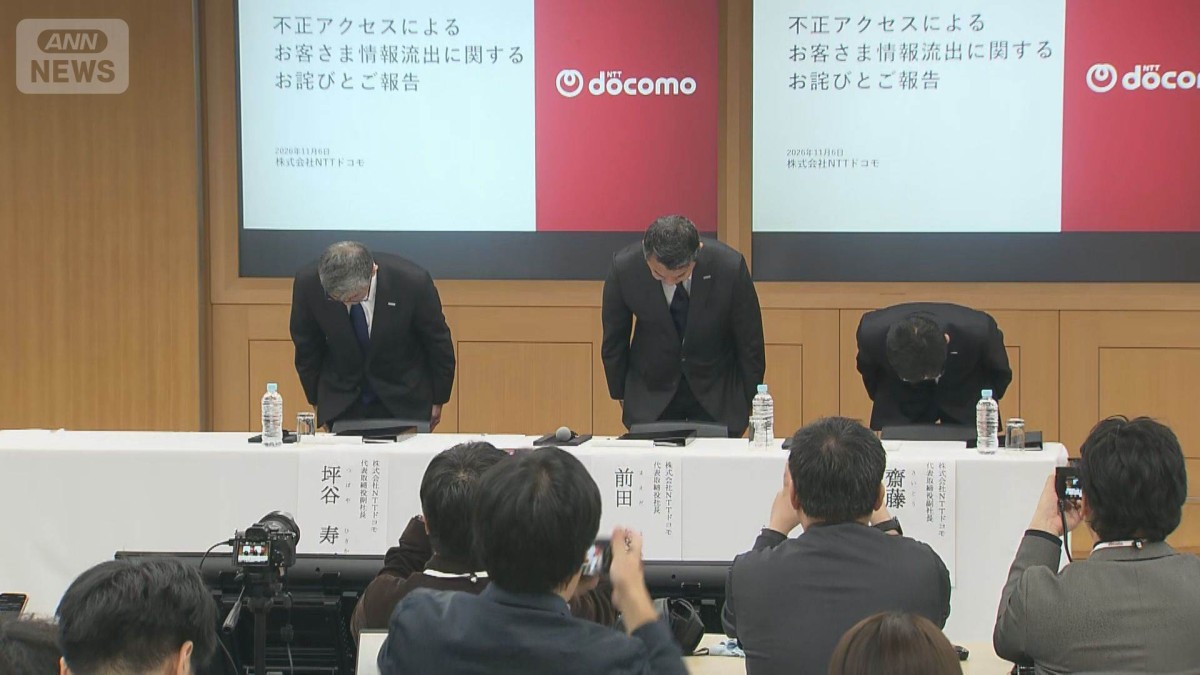
NTT Docomo announced on November 6 that unauthorized access to its Mydocomo portal and online shop siphoned personal data from as many as 294,000 customers — a figure the company rounded to roughly 300,000 in public statements. What makes this incident worth watching extends far beyond the apology from President Yorimitsu Maeda.
The stolen data includes names, residential addresses, and identification document numbers — the basic identity toolkit used in Japanese financial and bureaucratic transactions. But a subset of affected customers also had their workplace details and bank account information exposed. That escalation from inconvenience to financial exposure is what separates a data leak from a livelihood threat.
How the breach worked tells you everything about the vulnerability.
Docomo described a compound attack — multiple techniques chained together to systematically crawl and extract information through the Mydocomo platform. The company said the data was retrieved mechanically, not by a single actor manually picking through records. This points to a targeted, scripted intrusion rather than opportunistic phishing.
Security researchers familiar with similar attacks note that the combination of portal access and e-commerce infrastructure creates a wider attack surface than either system would present alone. An attacker who compromises the authentication layer gains access not just to stored profiles but to transaction histories and payment links — the very data that makes Japanese telecom accounts so valuable.
The service had been suspended since approximately 1 a.m. on November 5 while Docomo conducted system repairs. Restoration is expected to begin once the company confirms the modifications have restored security. The company is also weighing compensation payments to affected customers — an admission that ordinary remediation measures fall short of what these victims are owed.
Why this matters for every country that relies on telecom data.
Japanese telecom operators function as de facto national identity repositories. A mobile contract in Japan requires real-name registration tied to government ID, and that contractual relationship accumulates a profile far richer than what Western telcos typically hold — employment information, banking links, address histories, and more. When a breach occurs here, the payload is correspondingly more dangerous.
This is not an isolated failure. Asian telecom operators across the region operate under similar data-intensive models, and Docomo’s breach should force a conversation about whether the current security architecture in Japan’s telecom sector has kept pace with the sophistication of attacks that combine multiple vectors into coordinated intrusions.
The regulatory response will shape the industry.
Japan’s Personal Information Protection Commission has signaled since 2024 that it intends to treat major breaches as structural warnings rather than one-time lapses. Docomo can expect formal investigation and potentially binding remediation orders. The commission’s enhanced posture reflects growing public impatience with incidents that repeatedly expose the same categories of data.
What makes this case particularly testable is the compound nature of the attack. Regulators will want to know whether Docomo’s security controls addressed each vector independently or assumed that protecting one entry point was sufficient. If the latter, the findings could extend beyond Docomo to every operator that has relied on perimeter-based defenses rather than layered, zero-trust architectures.
Who wins and who loses.
The affected customers lose first and hardest. Bank account exposure opens the door to fraud that can persist for months or years. Identity document numbers in the hands of attackers enable impersonation across countless Japanese systems — utility accounts, government services, financial products. Compensation is being discussed, but money cannot reverse the exposure.
Docomo loses trust, which is its core currency in a market where switching providers remains frictionless. The company’s brand has historically rested on reliability and discretion. This breach reframes that narrative.
Competitors KDDI and SoftBank may temporarily benefit as customers look for alternatives, but the structural vulnerability is industry-wide, not Docomo-specific. A broader erosion of confidence in Japanese telecom data security would hurt all three equally over time.
There is a secondary consequence that rarely makes headlines. Insurers and fraud-monitoring services will recalibrate their risk models for Japanese telecom customers. Premiums for identity-theft protection may rise. Claims processing could slow as agencies grapple with a larger pool of exposed individuals. The ripple effects extend into sectors that never considered telecom data breaches a direct threat.
What happens next.
Docomo’s immediate priority is system restoration and customer notification. The compensation discussion signals the company expects regulatory and legal pressure to follow. Japan’s Personal Information Protection Commission has increased scrutiny of major data breaches since 2024, and Docomo will likely face formal investigation.
The company’s decision to frame the incident as a compound, automated attack rather than a simple credential theft suggests it takes the sophistication seriously — which means the security patches being deployed are likely more substantial than routine maintenance. Whether those patches prove durable against similarly structured attacks remains the question customers and regulators will be watching.
The broader implication reaches beyond Japan.
Docomo’s breach is a case study in what happens when a single provider holds enough personal data to make any breach existentially damaging for affected individuals. Countries from South Korea to India to Brazil face the same concentration. The lesson is not that Docomo was careless — it is that the current model, where telcos serve as central nodes for personal identity data, carries systemic risk that no single company’s security team can fully neutralize.
The path forward requires rethinking how much identity data any one organization should hold, not just how well it defends that data. Until that conversation begins, breaches like Docomo’s will remain not anomalies but predictions.