NVIDIA Board Moves to Remove Jensen Huang in Days
Three days after Jensen Huang admitted an affair, NVIDIA's board pivoted from 'no security concern' to active removal preparations — triggered when his partner was identified as a Chinese intelligence operative allegedly smuggling $7.5B in banned AI chips.
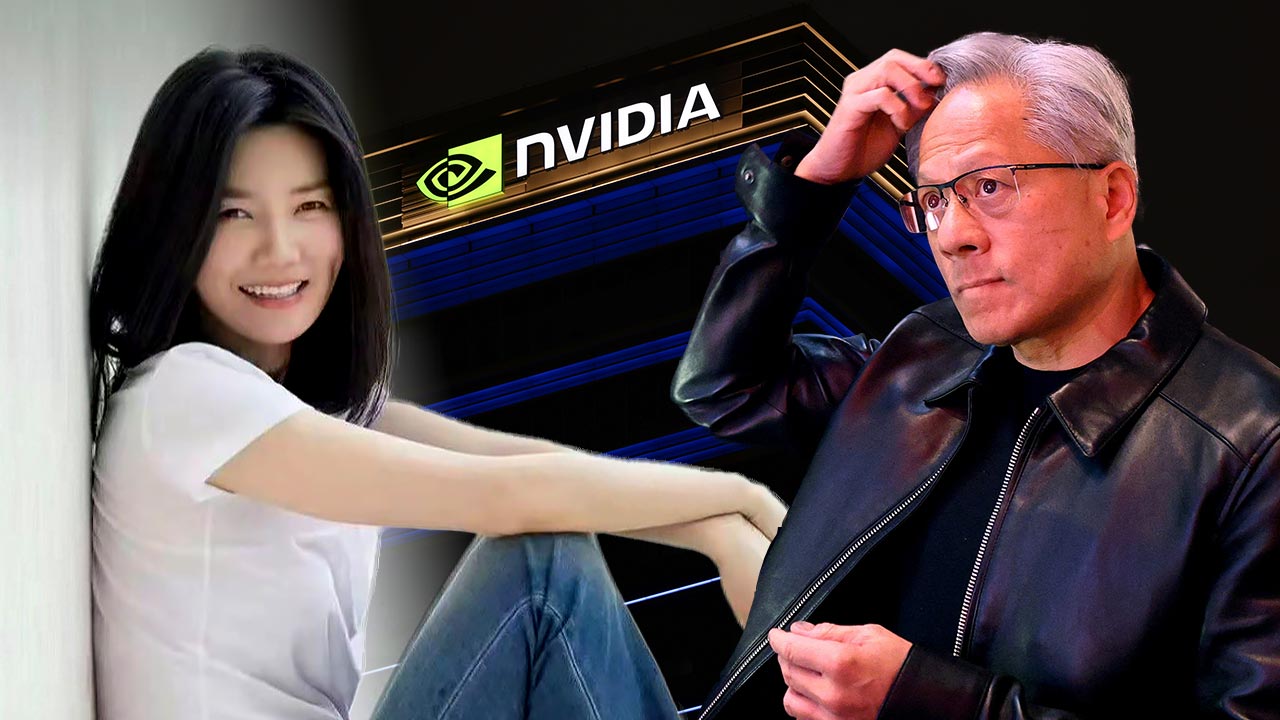
Three Days From Affair Admission to Removal Motion
NVIDIA didn’t wait long.
On November 8, the company’s board formed an independent committee to investigate CEO Jensen Huang’s personal conduct and issued a strikingly restrained statement: no evidence that classified information or national security had been compromised. The language was careful, measured — exactly what you’d expect from a board handling a domestic scandal rather than a geopolitical crisis.
Then something shifted between November 8 and November 11. Jensen Huang admitted to an extramarital affair. Three days later, the Wall Street Journal reported that the NVIDIA board convened a meeting specifically to decide his fate.
This isn’t a standard executive removal timeline. When CEOs fall in major American companies, boards typically give themselves weeks — sometimes months — to evaluate alternatives, secure interim leadership, and manage shareholder communications. NVIDIA moved at speed that suggests the underlying threat assessment changed fundamentally during those seventy-two hours.
The pivot almost certainly centers on Alice Huang.
According to reports cited by South Korea’s MBC News and originally published by the tech outlet The Information, Alice Huang — Jensen’s partner — has been identified as an agent of Chinese intelligence. The specific allegation is not merely diplomatic friction: she is accused of exploiting her relationship with Jensen Huang to facilitate the illegal importation of $7.5 billion worth of Nvidia AI chips that U.S. export controls explicitly prohibit from reaching China. That figure translates to roughly ten trillion won — a sum that represents one of the largest single violations of American technology export restrictions in the post-sanctions era.
If true, this transforms the story from a moral failure into an existential governance crisis.
Who Gains, Who Loses
Let’s be precise about what’s at stake. NVIDIA’s market capitalization sits above four trillion dollars. Its H100 and upcoming B-series GPUs form the foundational infrastructure layer for virtually every major AI training run globally — OpenAI, Google DeepMind, Meta, Microsoft, Anthropic, xAI all depend on them. Jensen Huang built NVIDIA into that critical node through a combination of technical vision, relentless execution, and a personal brand that functions almost as a CEO-level moat. He speaks the language of engineers better than most. His keynotes draw more viewers than many sporting events. That connection isn’t metaphorical; it’s commercially substantive.
Replace him overnight, and you introduce execution risk at a moment when AMD, Intel, and custom silicon programs at the hyperscalers are closing the performance gap.
But keep him after confirmed channels to Chinese intelligence facilitated banned hardware transfers, and you introduce regulatory risk that could reshape the entire company — mandatory reporting to the DOJ, potential indictment of individual directors for oversight failures, and most critically, renewed congressional scrutiny of export control enforcement that could constrain NVIDIA’s revenue model across multiple product lines.
The board’s calculation appears to be: the second risk outweighs the first.
What Changes Next
Several outcomes are plausible, and each carries different implications for the global AI infrastructure supply chain.
An interim CEO named on internal succession plans would be the fastest path. This person likely exists within the current C-suite — someone who can walk into the H100 and Blackwell roadmap meetings without triggering engineering confusion. A smooth handoff preserves the momentum around next-generation GPU launches and avoids the two-to-three week distraction that characterizes most executive transitions at large-cap technology companies.
A permanent replacement pulled from outside NVIDIA faces harder headwinds. The candidate pool for a CEO of this particular profile — someone who understands deep-learning compute economics, commands respect from GPU design teams, and can articulate strategy to both Wall Street and government regulators — is extremely narrow. Most potential external candidates carry their own baggage. Any name floated publicly will generate noise that competitors will exploit immediately.
Shareholder litigation is essentially guaranteed regardless of outcome. Institutional investors who opposed removal will argue the board abandoned a generational leader over a solvable problem. Those who supported removal will countersue if they perceive the response as insufficient given the severity of the allegations. Either way, the legal costs accumulate quickly and distract from operational priorities.
China’s reaction deserves separate attention. If the Alice Huang channel involved systematic diversion of banned equipment, Beijing may view NVIDIA’s cooperation with removal proceedings as either weakness or complicity depending on perspective. Chinese AI labs have already begun developing domestic GPU alternatives specifically to reduce reliance on American hardware — the SMIC advanced-node push is one signal, but Huawei’s Ascend lineage is another. Whatever NVIDIA does, China will continue investing in technological sovereignty. This crisis doesn’t change that trajectory.
The Broader Signal
The most important consequence of this episode may not be about NVIDIA at all.
It demonstrates that personal scandals involving executives at companies handling controlled technologies now carry implicit national-security dimensions automatically. Thirty years ago, an executive affair might have generated tabloid headlines and possibly a modest stock dip. Today, it generates board emergency sessions, potentially indictments, and international incident trajectories.
That boundary shift benefits no one cleanly. It creates perverse incentives for executives to hide relationships longer rather than disclose them early. It complicates succession planning by making personal conduct a de facto security clearance issue. And it gives adversarial intelligence services a novel recruitment vector — approaching family members and partners of technically sensitive executives remains one of the oldest tradecraft playbooks precisely because it works when deterrence relies solely on employment agreements rather than structural accountability.
What happens next depends heavily on what the independent committee uncovers. If the $7.5 billion figure proves accurate and Jensen Huang’s knowledge is established, we’re looking at the kind of case that reshapes how American semiconductor companies manage executive access, handle export compliance internally, and recruit successors under extreme visibility pressure. If the figures prove inflated or the connections thinner than reported, the board faces its own credibility reckoning.
Either way, the AI chip architecture that powers the next generation of models — and the company building it — enters a transition period far more volatile than anyone expected when Jensen Huang walked onstage six days ago.