Nvidia's CEO Scandal Could Reshape the AI Chip Wars
Jensen Huang's alleged ties to a Chinese spy threaten Nvidia's monopoly on AI chips and could trigger sweeping new export controls — and congressional chaos.
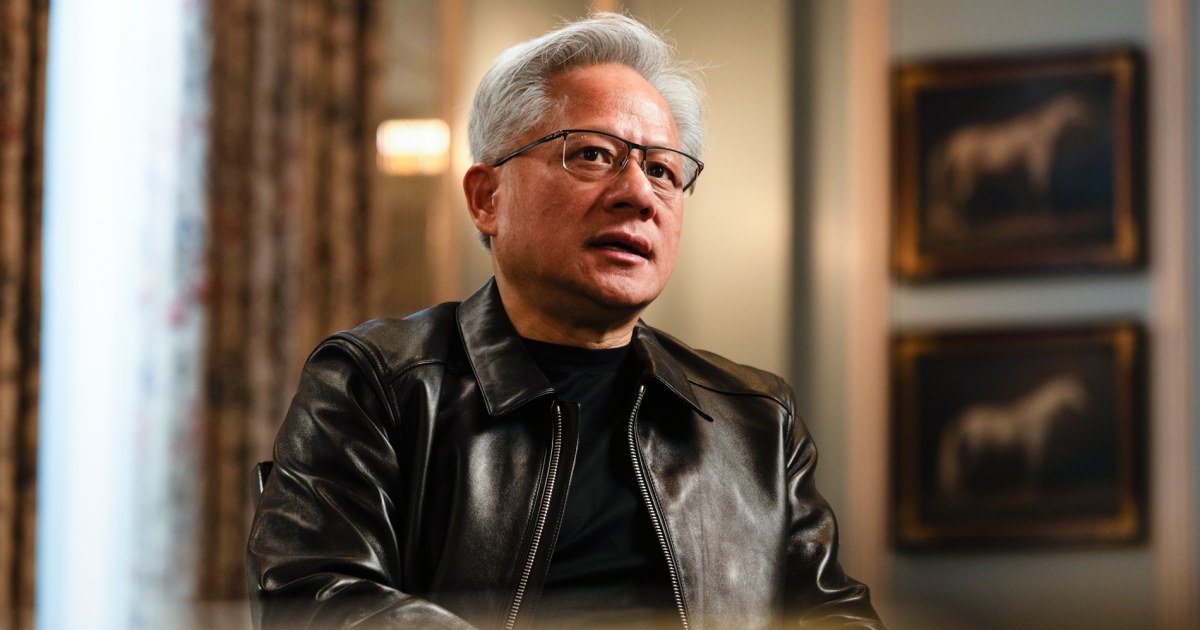
The $240 Billion Question
Nvidia lost more than $240 billion in a single day when its board announced an investigation into CEO Jensen Huang’s relationship with a woman U.S. intelligence agencies have identified as a Chinese spy. The market reaction was dramatic — the stock fell roughly five percent — but the true cost may not show up in the numbers at all. It shows up in trust.
Huang, who founded Nvidia in 1993 and has been the face of the AI revolution for over three decades, admitted in an internal memo that he had been unfaithful to his wife. The woman, Alice Huang (no relation), reportedly works for a company called Megaspeed. According to NBC News, multiple outlets confirmed that U.S. intelligence determined she is a Chinese agent. China has dismissed the claims as politically motivated smears.
What makes this moment so dangerous for the semiconductor industry isn’t just the personal scandal — it’s what happens if Washington decides that even indirect connections to Chinese intelligence are too risky for the companies building the world’s most powerful AI chips.
Who Controls the Chips?
Nvidia doesn’t just make GPUs. It has become the de facto infrastructure provider for the global AI arms race. Every major cloud provider, every startup building foundation models, every defense contractor running language models — they buy from Nvidia. The company sits at a market valuation above $4 trillion and its dominance in high-end AI silicon is nearly absolute.
That means any perceived vulnerability in Nvidia’s leadership chain ripples outward through every sector that depends on its hardware. And the timing couldn’t be worse. The United States has spent years tightening export restrictions on advanced chip sales to China, building a coalition with Japan and the Netherlands to restrict semiconductor manufacturing equipment. Now the head of the single most important company in that entire strategy is under federal scrutiny for associations with someone allegedly tied to Chinese intelligence.
Defense officials will want answers. Not whether Jensen Huang passed secrets — Nvidia’s board said there is “no reason to believe” national security or company trade secrets were compromised — but how deeply his personal life overlaps with someone the government identifies as an adversary operative.
The Congressional Onslaught
Dan Ives of Yorkville Ives put it plainly: this creates an overhang on the stock and invites multiple congressional inquiries. That inference is hard to dispute. Lawmakers who already view China through a lens of economic threat won’t hesitate to hold hearings. Expect questions about whether Nvidia’s sales practices, customer relationships, or access to restricted technology were influenced by Huang’s connection to Alice Huang.
Stacy Rasgon of Bernstein Research captured the structural problem better than anyone: “NVIDIA is not an ordinary company and Jensen is not an ordinary CEO; he IS NVIDIA.” The company’s valuation, strategy, and institutional knowledge are deeply concentrated in one person. If Congress strips away his ability to lead — or if the board removes him under pressure — there is no clear succession plan that preserves the current trajectory.
Trump publicly backed Huang on Sunday, telling CNN he thinks the CEO should stay. But presidential support offers limited shelter against congressional oversight. The White House can issue statements; only lawmakers can subpoena documents, compel testimony, and write new legislation.
The Ripple Through Export Policy
Here is where the scandal moves beyond corporate governance and into geopolitical consequence. The Biden administration and early Trump administration actions have built an expansive export control regime aimed at choking off China’s access to frontier AI computing power. Those rules depend on credibility — both domestically and among allied nations.
If a senior executive at America’s most critical chip company is linked to Chinese intelligence, two things happen simultaneously. First, lawmakers push for stricter enforcement and wider bans. Second, allied governments — particularly Taiwan and South Korea, whose foundries manufacture Nvidia’s processors — question whether American corporate oversight is rigorous enough to protect the alliance framework itself.
Taiwan Semiconductor Manufacturing Company, Qualcomm, Intel, and AMD all saw their shares rise Monday despite the drama. Markets quickly priced in the idea that this is a Jensen Huang problem, not an industry-wide contagion. But policy wonks know that regulatory responses don’t follow stock price logic. They follow headlines, political pressure, and worst-case scenario planning.
What Gets Sold Next?
The practical question investors and competitors alike are asking: what happens to Nvidia’s license to sell its most advanced chips to foreign customers, including those in countries America considers ambiguous strategic partners? There is currently no indication that Nvidia’s export privileges are in jeopardy. But the mere existence of this probe gives regulators new ammunition to impose conditions, require additional compliance reviews, or slow down approvals that previously moved quickly.
Every delay costs revenue. Every new restriction reshapes the competitive landscape. AMD and custom silicon efforts from Google, Amazon, and Microsoft gain breathing room while Nvidia navigates internal turmoil. For buyers waiting on H-series GPUs and upcoming Blackwell refreshes, uncertainty is now part of the procurement calculus.
The Human Factor
Huang’s email to employees contained a simple acknowledgment: “You deserve better from me.” He also stated his commitment to continuing as CEO without interruption. Nvidia’s board, led by independent directors, will oversee the probe. The timeline remains undefined.
What is clear is that Jensen Huang built Nvidia’s culture around speed, bold bets, and personal loyalty to his vision. Removing or sidelining him wouldn’t just change management — it would interrupt the strategic instinct that has kept the company ahead of competitors like AMD and Huawei’s Ascend line. Whether a successor can replicate that momentum is impossible to predict.
But one outcome is certain: the AI chip wars just got more complicated. Geopolitical risk was always baked into the sector. Now it has a human face, and the market is still learning how to price it.