NVIDIA’s DLSS 5 Promise a New Render Paradigm, but Early Tests Flag Performance Concerns
NVIDIA has officially revealed DLSS 5, its first-ever neural rendering technology designed to bring real-time game graphics closer to cinematic fidelity. However, early testing on dual RTX 5090 configurations has flagged frame-rate instability, raising questions about the trade-offs between AI-generated visual quality and raw performance.
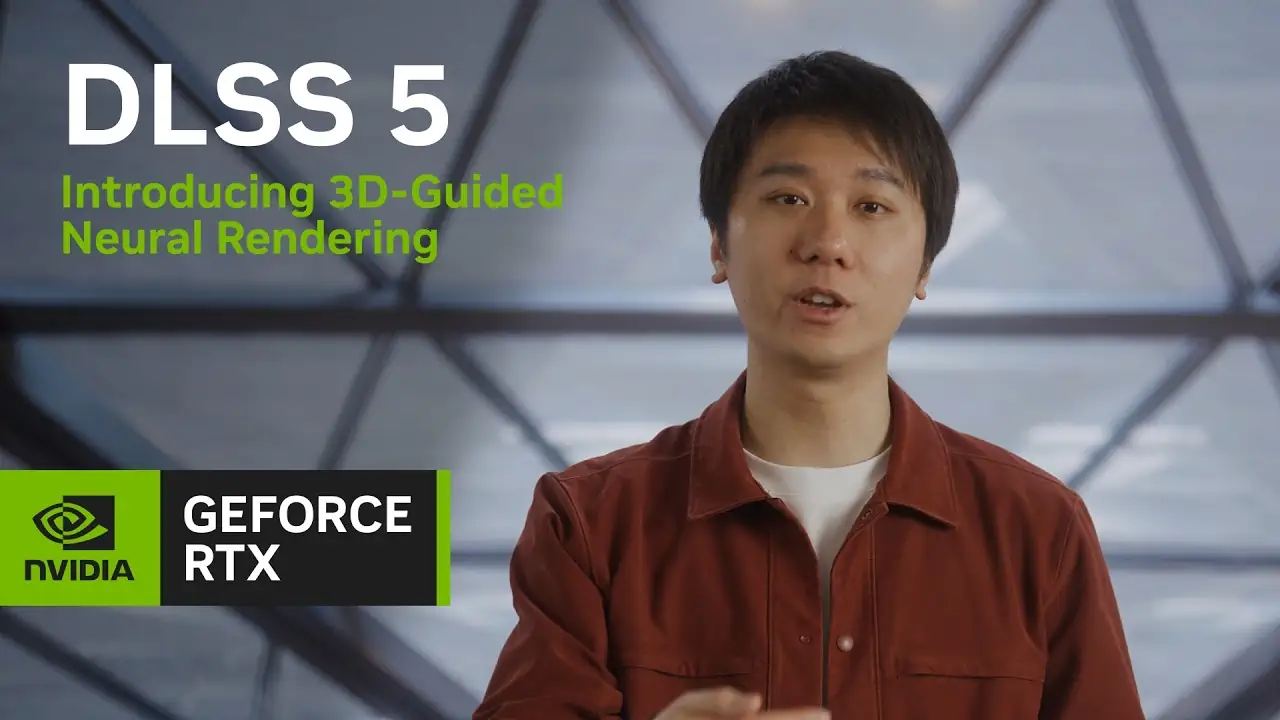
The Reveal
NVIDIA has officially pulled back the curtain on DLSS 5, and it is not simply an incremental update to the company’s existing super-resolution pipeline. This is its first foray into 3D-based neural rendering—a technology designed to push real-time game graphics to within touching distance of cinematic quality. The announcement itself is a milestone. What the early performance data is telling us, however, may complicate NVIDIA’s narrative.
The Korean tech site GameGPU has been closely tracking the early tests, and their findings are worth scrutinizing before the Western press cycle fully catches up. Sources familiar with the initial dual RTX 5090 configuration reports indicate measurable frame-rate drops during real-time neural rendering loads—a signal that NVIDIA’s most ambitious graphics technology yet may come with a performance tax that few consumers are prepared to pay.
How DLSS 5 Actually Works
To understand why the performance concerns matter, it helps to understand what neural rendering actually does. Unlike NVIDIA’s existing DLSS technologies, which rely primarily on temporal upscaling and frame generation, DLSS 5 introduces a fundamentally different architecture.
The system uses a deterministic neural network driven by motion vectors to generate graphics on a per-frame basis. This is not a text-to-image model generating scenes from prompts. Instead, it takes the game engine’s rendered reference frame as input—complete with accurate geometry, textures, and lighting relationships—and enhances it with features that traditional rendering pipelines struggle to produce efficiently: contact shadows, physically accurate reflections, and subsurface scattering effects that give skin, fabric, and foliage a lifelike quality.
The result should be a scene where light behaves more like it does in a film and less like it does in a conventional game engine. That is the promise. The performance data, at least so far, suggests the path to that promise is expensive.
The SDK’s Granularity
What makes DLSS 5 particularly notable from a developer perspective is the depth of control built into the SDK. NVIDIA is not handing developers a black box. The toolkit includes multiple pre-trained models optimized for different scenarios, allowing studios to deploy neural rendering selectively across indoor and outdoor environments.
A pair of sliders governs structural and tonal intensity, letting developers dial the neural network’s involvement anywhere from 25 percent to 95 percent. A semantic recognition and object-based masking system enables granular selection—boosting characters, clothing, foliage, or individual environmental elements without recomputing the entire frame.
That level of control is impressive on paper. It is also exactly the kind of flexibility that invites pressure from publishers demanding cinematic visuals at any cost. And when every studio pushes those sliders higher, the performance implications compound.
The Frame-Rate Problem
Here is where the early data from Korean reporting becomes critical. Tests running dual RTX 5090 configurations—essentially the most expensive consumer GPU setup money can buy—saw frame-rate drops during neural rendering workloads. NVIDIA’s engineers have since optimized the algorithm for single-GPU operation, but the fact that the initial benchmarks required two of the company’s flagship cards to run stably is a red flag.
The concern is not that DLSS 5 does not work. It does. The concern is whether the quality gains justify the performance costs across the full range of hardware that will eventually run the technology. GeForce RTX 50-series desktop GPUs and compatible gaming laptops will all support DLSS 5, as will GeForce NOW Ultimate users running on RTX 5080 servers. That is a broad rollout. But broad does not mean uniform.
A technology that requires dual RTX 5090s in its earliest trials and only stabilizes on single-GPU systems after optimization will inevitably perform differently across the mid-range. DLSS 4, which introduced neural frame generation alongside upscaling, already faced criticism for inconsistent quality depending on GPU tier. DLSS 5 raises the computational bar significantly higher. If the frame drops seen in dual-5090 tests are any indicator, mid-range 50-series cards could face serious struggles maintaining competitive framerates in titles that fully adopt the technology.
Who Wins, Who Loses
NVIDIA wins the narrative. This is exactly the kind of generational leap announcement the company needs to drive RTX 50-series adoption and justify premium pricing. The technical achievement is real, and the visual potential is substantial. Developers who can harness the SDK’s granularity will have tools that genuinely no other manufacturer offers at this scale.
Consumers, however, are the likely losers. The cost of entry is steep, the performance implications are unproven at scale, and the optimization work remains ongoing. Gamers who purchased RTX 50-series cards expecting a seamless upgrade path may find that DLSS 5 titles demand either significant setting compromises or hardware that sits at the very top of the lineup.
Competitors are watching closely. AMD’s FSR and Intel’s XeSS both lack anything approaching neural rendering capability. But if NVIDIA’s performance issues persist, the gap that currently looks insurmountable could narrow faster than expected, especially as third-party engines integrate alternative approaches to AI-enhanced graphics.
What Happens Next
The timeline for full DLSS 5 adoption remains unclear. NVIDIA has confirmed support across the RTX 50 series and GeForce NOW Ultimate, but actual game integration depends on developer adoption, and the performance data so far may give some studios pause. The technology will arrive, but the question is whether it arrives optimally or whether it arrives patched, and whether consumers who buy into it early will be running optimized software or early-access benchmarks.
The Korean reports about frame-rate concerns in dual RTX 5090 configurations should serve as a useful reminder: a technology can be groundbreaking and still come with trade-offs that matter. NVIDIA’s neural rendering is a milestone. Whether it becomes a standard or a cautionary tale depends on what happens in the months between now and full deployment.