NVIDIA's Fracturing Board Signals Bigger AI War
NVIDIA's leadership crisis isn't just corporate drama — it's a fault line in the US chip war. Co-founders, employees, and billionaires are publicly breaking ranks over China policy fallout.
The revolt starts at the top
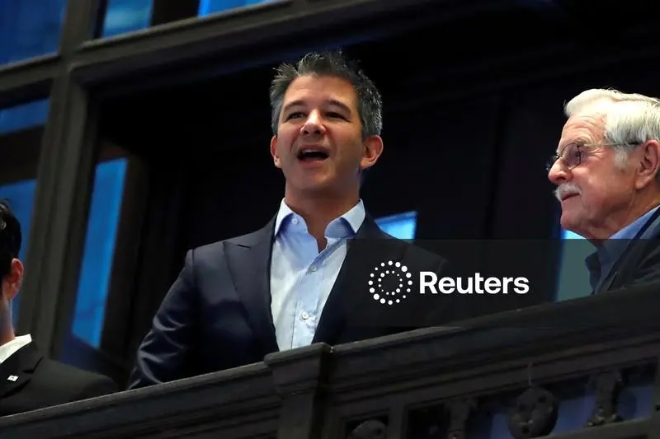
Travis Kalanick showed up to an investor event in Austin wearing a black leather jacket that — yes — was designed to evoke Jensen Huang. He wasn’t alone. On stage with him sat Antonio Grassia, a longtime Elon Musk confidant. The visual was deliberate: someone who had been forced out by investors himself, standing beside someone who commands billions in market cap, both making the case that NVIDIA should bring back its former CEO.
Kalanick didn’t stop there. He said he would personally lead NVIDIA employees in collective work stoppage if needed. That is not a typical Silicon Valley statement from an outsider. It is a declaration that the company has reached a boiling point.
What makes this moment unusual is not just the scale of dissent but its composition. This is not a standard activist investor campaign with a thinly veiled demand for cost cuts or share buybacks. This is a coalition of people who built parts of the modern tech ecosystem arguing that NVIDIA’s board made an error in judgment — one that could damage American competitiveness in the very sector Washington claims to be fortifying.
The coalition that built NVIDIA is breaking apart
This matters because it is not just about one man’s job. Jensen Huang co-founded NVIDIA in 1993 alongside Chris Malachowsky and Curtis Priem. The culture, the technical direction, the relationship fabric with customers and governments — all of it carries his fingerprints. When he steps away, even temporarily, those connections fray in ways that boards do not always account for in their meeting rooms.
Elon Musk made this explicit at the DealBook Summit. He compared firing Huang to benching Michael Jordan mid-season. More importantly, he confirmed he would hire Huang if given the chance. That is not casual language. Musk controls more capital and platform reach than almost any individual outside the traditional wealth dynasties, and his public positioning signals where factional lines are drawn inside the tech establishment.
Bill Ackman took the legal angle. The Pershing Square CEO argued that the NVIDIA board violated its fiduciary duty by moving against Huang without fully establishing the factual record. Ackman did not say whether Huang actually did anything wrong or right — he focused on process. But his intervention from a major hedge fund carrying that kind of capital weight means institutional money is watching closely. That changes the calculus for everyone involved.
Beyond these high-profile figures, the petition circulating among NVIDIA staff has drawn more than 200,000 signatures. These are not passive supporters signing an email chain. They are engineers, sales leads, and product managers whose careers and compensation packages are tied to the company’s trajectory. Their involvement transforms this from a celebrity-driven controversy into an organizational crisis with real operational consequences.
The China question no one else will name directly
Here is what the coverage has mostly missed: the entire episode is being driven by the collision between US export enforcement and commercial reality. Huang’s reported willingness to return “if it serves the company and shareholders” is code for a much harder question — can NVIDIA thrive under the current export regime without him steering it?
The United States has tightened restrictions on advanced chip sales to China year after year. Each round cuts off revenue that once flowed freely. For a company whose stock price depends on growth narratives tied to China’s AI buildout, every new restriction creates internal pressure. The board decided Huang’s path on this issue conflicted with shareholder or strategic interests. Huang appears to disagree.
That disagreement is not abstract. It is shaping lobbying efforts, executive recruitment talks, and now, in effect, a grassroots movement backed by people like Kalanick. The 200,000-plus signatures on the return petition are not just fan support — they signal employee anxiety and customer concern about continuity.
Second-order effects are already emerging. Chinese buyers of NVIDIA hardware — many of whom operate in environments where export control compliance is routinely tested — are reassessing their relationships with the company. Some procurement teams have reportedly shifted discussions toward alternative suppliers, including domestic Chinese chipmakers developing their own AI accelerators. Whether that shift translates into actual orders remains unclear, but the psychological impact on a business built on perceived supply certainty is real.
American defense contractors and government agencies that depend on NVIDIA’s custom silicon for classified programs face their own uncertainty. Leadership instability at the top creates delays in program approvals, certification reviews, and contract renewals. The Pentagon does not typically announce these disruptions publicly, but industry sources report quiet concerns about delivery timelines across multiple acquisition categories.
Who wins, who loses, and what comes next
If Huang returns, the board loses credibility. Harvey Jones has already stated there are no plans to reinstate him. Breaking that stance would make the chair look weak and the earlier ouster look rushed or politically motivated rather than strategically sound.
If Huang does not return, NVIDIA risks losing internal cohesion at a moment when competing American firms and Chinese alternatives are circling. The company’s moat is partly cultural as much as technical. Engineers and partners stay because of relationships built over decades — relationships Huang cultivated personally.
For US policymakers, this is an unwelcome embarrassment. Export controls are supposed to tighten America’s grip on competitive advantage. Instead, they are producing open rebellions inside the single most important company in the semiconductor stack. Every public statement from Musk, Kalanick, or Ackman amplifies the message that Washington may be shooting itself in the foot.
The likely path forward is uncomfortable for everyone. The board will feel pressure to keep its position publicly while quietly leaving room for negotiation. Huang will test whether he still commands enough influence to dictate terms. Employees will brace for volatility. And China-based customers of NVIDIA hardware will watch nervously, knowing that internal disputes at an American firm can translate into supply uncertainty overnight.
Investors should expect the coming months to produce additional revelations — leaked communications, partial resignations, or procedural maneuvers that neither side wants public yet. The current stalemate is sustainable only so long as earnings reports remain strong and no major customer defections occur. Once either threshold breaks, the situation escalates quickly.
The leather jacket stunt was entertainment. The revolt behind it is a warning shot.
NVIDIA’s crisis extends far beyond one executive’s fate. It exposes a fundamental tension at the heart of American technology strategy: how do you maintain global market dominance while artificially constraining your largest customers? The answer will determine not just NVIDIA’s future but the architecture of the AI economy itself. Whoever controls the reasoning infrastructure controls everything downstream — and right now, that power is being contested not in boardrooms but on social media, at investor summits, and in petition drives organized by rank-and-file engineers.
The board thought it was managing a personnel issue. It created a movement.