How Huang's Espionage Scandal Exposes AI's Dangerous Centralization
A founder's extramarital affair with a suspected Chinese agent collides with White House politics at a company so central to global AI that its fragility threatens the entire industry.
The Personal Becomes Structural
Jensen Huang admitted to an affair. What came next exposed a structural risk that extends far beyond Silicon Valley moral panic.
Huang, Nvidia’s CEO and face of the AI hardware boom, acknowledged last Sunday that he had an extramarital relationship with a woman who is alleged to be a Chinese intelligence operative. Within hours, former federal prosecutor Joon Kim stepped in to lead an internal investigation. The question Kim faces is simple on paper and nearly impossible to answer definitively: Did a man wielding access to some of the world’s most advanced chip designs compromise national security through personal indiscretion?
Nvidia says no. The company announced confidence in Huang and stated there was “no reason to believe that either national security or Nvidia secrets were compromised.” But belief is not evidence, and the market already priced in doubt — Nvidia shares fell roughly 10 percent after the admission, wiping an estimated half-trillion dollars off the company’s valuation overnight.
Here is what most coverage misses: the scandal is not merely about a CEO’s poor judgment. It is about a company whose market cap now approaches four trillion dollars operating with governance structures better suited to a mid-cap tech firm than to the most strategically important corporation in the global economy.
The Board That Lets a CEO Run Everything Alone
Nvidia’s board has long worried corporate governance watchers. Directors serve unusually long tenures. Huang reportedly maintains more than fifty direct reports. There is no clear succession plan. A company this large typically answers to a board with deep operational experience across multiple industries. Nvidia’s does not appear to have that depth.
Consider the investigation itself. Before landing on Kim, Nvidia briefly considered tapping its longtime outside counsel, Cooley, to run the probe. Cooley is best known for technology and intellectual property work. It is not ranked among the top firms for white-collar internal investigations. The suggestion revealed something telling: someone in the C-suite did not immediately recognize that using your regular law firm to investigate potentially criminal conduct could look like putting the fox in charge of the henhouse.
Wachtell Lipton itself carries complications. The firm joined Kim just last month. Its M&A advisory practice is currently advising OpenAI on its pending IPO. Nvidia is a major investor in OpenAI and supplies essentially all of its chips. This is not an active conflict — at least not yet — but the closer anyone looks at Nvidia’s web of relationships, the more tangled the picture becomes.
Trump Enters the Frame
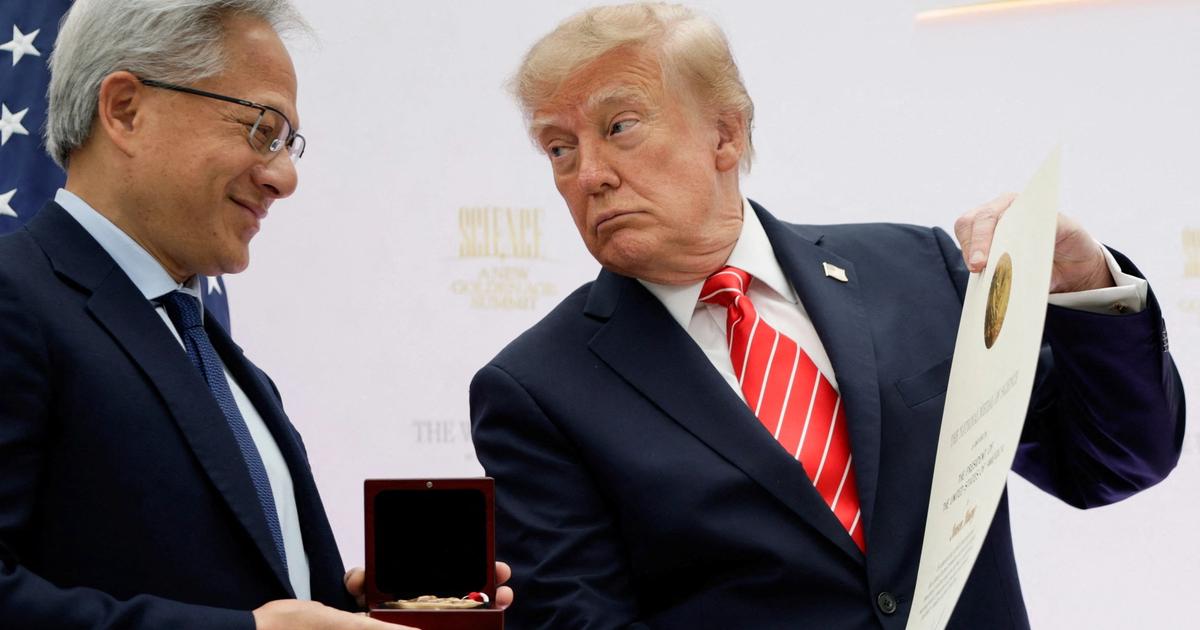
Trump’s proximity to Huang matters because of what it means for accountability. Huang has been described as a close confidant of the president. When personal misconduct collides with political patronage, the default instinct in Washington is containment. Nobody wants a scandal involving a foundational ally of the presidency dragging into uncertain territory — especially with an administration already navigating its own法律问题.
This is not conspiracy theorizing. It is standard operating procedure for companies embedded in political ecosystems. Founders who help shape administration policy expect protective cover when storms arrive. The expectation works until it does not.
Whether that cover holds depends on the scope of Kim’s investigation. If the probe remains narrowly focused on whether trade secrets were disclosed, the damage stays contained within corporate walls. If it expands toward questions about Chinese intelligence operations inside Nvidia’s leadership — questions that would naturally extend into diplomatic and geopolitical territory — then suddenly two of the most powerful figures in American public life share a vulnerability that neither would welcome scrutinized publicly.
The Bigger Point: Too Big, Too Fragile, Too Protected
The deeper danger Huang’s situation reveals is not individual corruption. It is concentration risk.
Nvidia does not simply sell graphics chips. It supplies the computational backbone for essentially every major AI project on Earth. Data centers powered by Nvidia hardware are financed through deals stretching up and down Wall Street. Companies across the sector depend on continued supply commitments, pricing terms, and technical support from a single firm led by a man whose personal conduct is now under investigation. This is not hyperbole. Nvidia finances data centers, invests in hundreds of AI companies, and functions as de facto clearinghouse for the global AI buildout.
When a company that size operates with thin governance, unclear succession planning, and a CEO whose loyalties are being examined by former prosecutors and a board that seems to lack institutional depth, you do not have a personnel problem. You have a systemic one.
The AI industry has spent years warning about dependency on foreign semiconductor manufacturing. It has not spent equal time warning about dependency on a single company’s leadership stability. That blind spot is precisely what a personal scandal exposes.
Who Wins, Who Loses, What Comes Next
If Kim concludes that no secrets were compromised, Huang survives politically and operationally. Nvidia stabilizes. The board avoids further reckoning. The concentrated-risk argument loses momentum — at least until the next crisis surfaces.
If Kim finds indications of information transfer to Chinese actors, the fallout reaches far beyond a CEO shower curtain. It triggers congressional hearings, export control overhauls, and potentially criminal proceedings. Markets punish concentration risk through repricing. Competitors see opening. Regulators gain precedent.
There is a third possibility, and it is perhaps the most realistic one: the investigation stalls in gray areas. Evidence remains ambiguous. The board accepts the conclusions without forceful pushback. Everyone moves forward with the lesson conveniently unlearned.
In any scenario, however, the conversation about AI governance changes. We spent 2024 and 2025 debating whether governments should regulate foundation models. Nvidia’s current predicament reframes that debate: regulation should start with understanding who controls the physical infrastructure those models run on, and whether the individuals making decisions about that infrastructure are subject to anything resembling meaningful oversight.
Four trillion dollars in market value deserves better guardrails than whatever system produced this outcome.