NVIDIA is Locking the Future of PC Graphics Behind a Subscription Paywall
NVIDIA's DLSS 4.5 Ray Reconstruction announcement at Gamescom 2026 reveals a deliberate strategy to make premium cloud rendering features exclusive to its most expensive subscription tier. The move reshapes what it means to own a gaming PC.
The Paywall Was Always the Point
NVIDIA announced at Gamescom 2026 that its next-generation DLSS 4.5 Ray Reconstruction technology will be available to GeForce NOW Ultimate subscribers. This is not a minor feature addition. It is a signal flare from the company about where the PC gaming ecosystem is heading — and who gets to afford it.
Ray Reconstruction is one of the most computationally expensive rendering techniques in modern graphics. It replaces traditional rasterized shadow rays with neural-network-driven approximations, producing globally illuminated scenes at a fraction of the raw GPU cost. The previous generation of DLSS did this on local hardware. You needed an RTX 40-series or 50-series card to run it. Now NVIDIA is moving that capability into the cloud, but only behind a subscription wall.
The GeForce NOW Ultimate tier starts at $20 a month in the United States, higher in some regions. That is a significant recurring cost for a player who already owns a $1,200 graphics card. Yet the architecture of this announcement suggests NVIDIA would rather you pay monthly than upgrade your hardware.
What GeForce NOW Ultimate Gets
The Gamescom reveal outlined several concrete upgrades. Ultimate subscribers now have access to DLSS 4.5 Super Resolution, Dynamic Frame Generation, and Ray Reconstruction — all rendered on cloud infrastructure that NVIDIA says supports RTX 5080-class performance. That means 5K HDR video streaming, full ray tracing, and NVIDIA Reflex latency optimization available to subscribers without owning the equivalent GPU locally.
For context, the RTX 5080 was announced as part of NVIDIA’s Blackwell refresh in 2025. It sits below the RTX 5090 in the consumer hierarchy but above the RTX 5070 Ti. When NVIDIA says the cloud now matches 5080-tier performance, it is effectively offering subscribers a graphics card they would otherwise need to buy outright. The subscription replaces the purchase.
The timing matters. The upgrade is live alongside a promotional window running from August 25 through September 27. Players who commit to a 12-month Ultimate subscription during that period receive Control: Resonant at no additional cost on launch day. That is an incentive to lock in annual revenue — and to migrate players away from casual month-to-month usage toward long-term commitments.
The Game Library Play
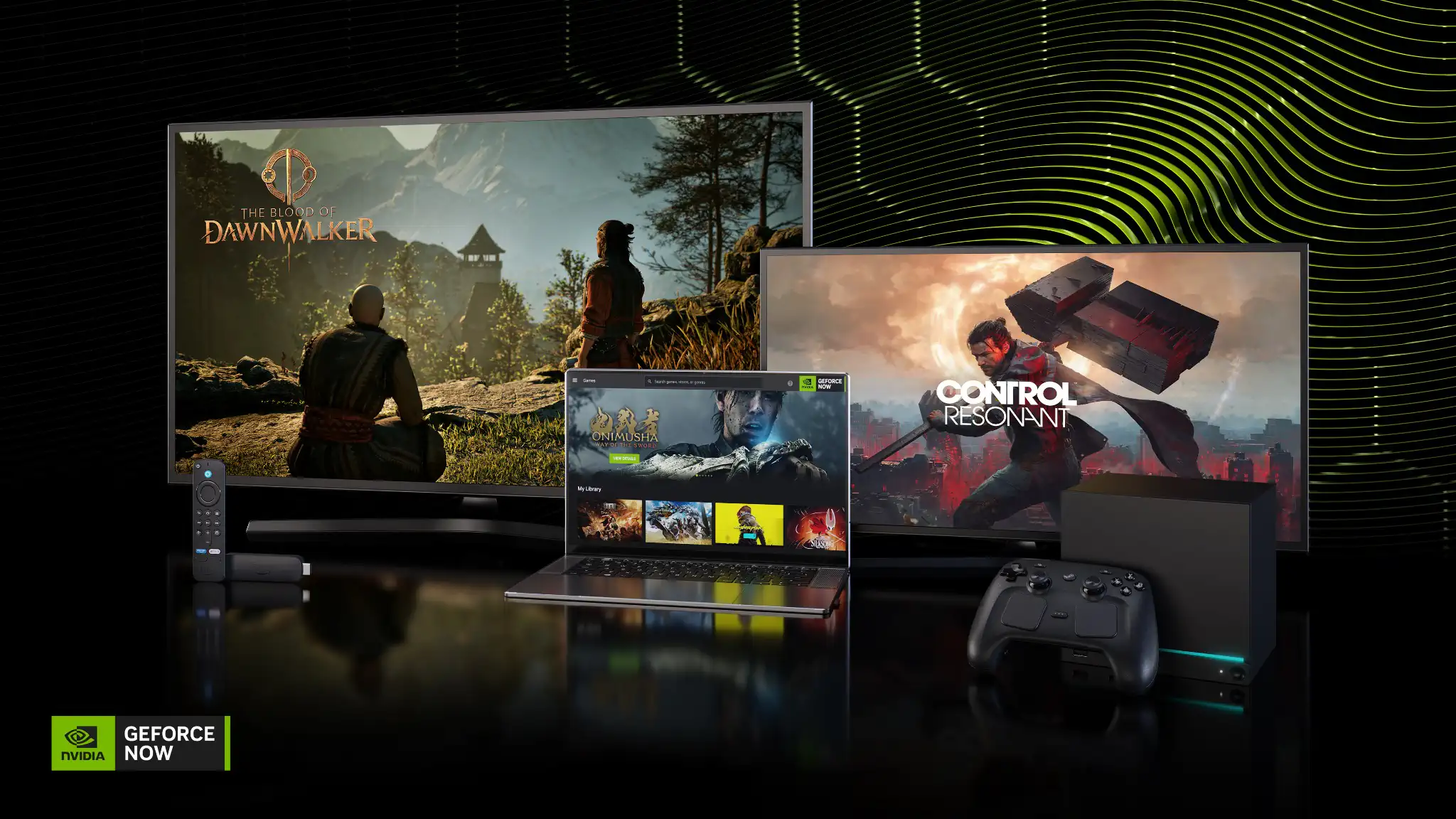
NVIDIA is simultaneously expanding its content catalog. Confirmed titles arriving on GeForce NOW include CONTROL Resonant, Gears of War: E-Day, Onimusha: Way of the Sword, The Blood of Dawnwalker, and STAR WARS Zero Company. Additional entries like Aliens: Fireteam Elite 2, Resonance: A Plague Tale Legacy, IRON NEST: Heavy Turret Simulator, and Paradise Killer are joining the library.
The GOG integration is particularly notable. Baldur’s Gate 3, Clair Obscur: Expedition 33, Kingdom Come: Deliverance II, Mount & Blade: Bannerlord II, and No Man’s Sky are now available as cloud versions. GOG users can authenticate directly within GeForce NOW. This is a platform play — NVIDIA is reducing friction between storefronts and its own service.
Call of Duty: Modern Warfare 4 is a separate case. It will launch through Battle.net first, with Steam and Xbox versions arriving later. This suggests Activision Blizzard is negotiating platform-specific terms, and NVIDIA’s cloud integration may come after the initial retail rollout. That delay could be significant for competitive players who follow seasonal meta shifts.
Who Wins and Who Loses
The winners are clear: players who already subscribe to GeForce NOW Ultimate get access to rendering technology that previously required both expensive hardware and local storage. Players who do not want to own a high-end GPU find a compelling reason to switch. The subscription model stabilizes NVIDIA’s revenue stream regardless of hardware cycle downturns.
The losers are harder to celebrate. PC gamers who own mid-range RTX hardware — the RTX 4070, the RTX 5060 Ti — face a relative degradation of their ownership value. Ray Reconstruction was positioned as a flagship-local feature. Now it is a cloud-exclusive benefit for the highest-paying tier. Local RTX owners still get DLSS 3 Frame Generation in many titles, but the neural reconstruction layer that defines DLSS 4.5 is absent from their hardware experience.
There is also a structural concern. When premium graphics features become subscription-bound rather than hardware-bound, ownership loses meaning. You are not buying a GPU. You are buying access to a rendering pipeline that NVIDIA controls and can modify, throttle, or retire at any time. The same logic that enabled Microsoft’s DirectX evolution now operates inside a service agreement.
The Browser and Controller Expansions
NVIDIA also announced that GeForce NOW is now officially available in Firefox. This was a notable absence for a service that historically prioritized Chrome and Chromium-based browsers. Firefox integration removes a friction point for privacy-conscious users and enterprises that standardize on Mozilla’s browser.
Steam controller support for Steam Machine devices is slated for fall 2026. Amazon Fire TV integration is expanding. These are not graphics features. They are ecosystem plays — each one widening the surface area where a GeForce NOW subscription can function, reducing the occasions when a player needs a Windows PC in front of them.
The ultimate goal is hardware agnosticism. If you can stream Ultimate-tier ray tracing on a Fire TV stick, a Steam Deck, a Firefox session, or a low-end laptop, then your local GPU becomes largely irrelevant. Your monthly payment becomes the only specification that matters.
What Happens Next
The immediate question is whether NVIDIA will extend DLSS 4.5 Ray Reconstruction to non-Ultimate tiers as the technology matures and data center capacity expands. There is no indication it will. Ray Reconstruction requires significant inference compute. Running it for every subscriber would dramatically increase NVIDIA’s cloud costs.
A more pressing concern is the precedent. Other GPU makers — AMD, Intel — do not currently offer an equivalent cloud-rendering subscription tier. NVIDIA is defining the premium cloud graphics market alone. If this model succeeds, expect competitors to build similar walls. The cloud gaming ecosystem risks becoming a series of walled gardens where feature parity depends on which subscription you pay, not which hardware you own.
The 12-month promotional window ending September 27 is a tactical move. NVIDIA wants committed subscribers now, not explorers. The free Control: Resonant bundle is a retention tool disguised as a gift. Players who lock in annually are less likely to churn during the following months when the novelty of new cloud titles fades.
NVIDIA’s Gamescom 2026 announcement was framed as a technology rollout. It is actually a business model announcement. Premium graphics are no longer something you unlock with a graphics card purchase. They are something you rent, month after month, from a company that controls both the silicon and the server. The DLSS 4.5 Ray Reconstruction feature is the headline. The subscription lock is the story.