NVIDIA's New Metric: Why GPU Sales Alone No Longer Move the Market
NVIDIA's latest earnings narrative has shifted from hardware shipments to customer monetization — a change that redefines what growth means and puts new pressure on every player in the AI supply chain, including Korea's Samsung and SK Hynix.
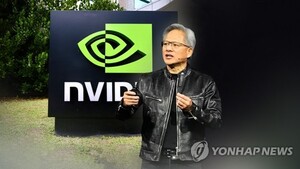
The question investors are asking has changed
Three years ago, the market asked whether AI demand was real. Last year, it asked whether NVIDIA would keep selling GPUs at this pace. This quarter, the question is sharper and far less forgiving: can the customers who bought NVIDIA’s chips actually make money with them?
The shift is visible in NVIDIA’s own language and it is accelerating globally. Jensen Huang has moved public commentary away from raw performance specs toward customer economics — citing Meta’s claim that its AI-driven ad tools improved click-through and conversion rates as proof that GPU spend can translate into revenue. That is not a casual rhetorical pivot. It signals that NVIDIA’s valuation multiples now depend on a metric the company cannot fully control.
What the numbers actually say
The latest quarterly figures show $96 billion in revenue and $89 billion from data centers alone. Next quarter’s guidance projects $108 billion, and management is projecting roughly 70% revenue growth through fiscal year 2028. On the surface, those are extraordinary numbers. But the growth-quality framework emerging from analysts is doing the heavy lifting now.
Kim Seok-hwan at Mirae Asset Securities outlined four dimensions that will define NVIDIA’s trajectory: customer AI return on invested capital, the expansion of non-hyperscaler demand, the company’s ability to supply next-generation products, and — critically — whether gross margins hold in the 71 to 72 percent range while free cash flow recovers after a period of rising receivables and inventory.
None of these questions can be answered by counting GPUs shipped. They require observing what happens inside customer data centers after the hardware arrives.
Why this matters for Korea
Samsung Electronics and SK Hynix sit in a structurally different position than NVIDIA. They do not set the pricing of AI memory or define the adoption curve. They supply HBM and other advanced memory products that ship inside NVIDIA-certified configurations. When the investment thesis for NVIDIA stock shifts from unit volume to customer monetization, the ripple effects move downstream with real speed.
If hyperscalers and large cloud customers begin treating AI infrastructure spend as a cost center requiring measurable returns rather than a growth investment with deferred accountability, procurement节奏 changes. Budget cycles tighten. Memory orders become more conditional on utilization rates rather than capacity targets. For Samsung and SK Hynix, this means demand for HBM could become more volatile and less predictable even if absolute volume continues to grow.
The opposite risk also exists. If NVIDIA’s customers demonstrably monetize their GPU investments — if Meta’s ad efficiency gains become an industry standard story — the case for additional infrastructure spending strengthens. The question then is not whether to invest but how much memory capacity each generation requires. Both outcomes favor different players at different times, which is precisely why the new metric matters.
The supply-side test that follows
Kim identified three concrete indicators to watch: the revenue conversion rate from Vera Rubin supply expansion, whether gross margins stabilize around 71 to 72 percent, and whether free cash flow rebounds after recent balance sheet expansion in receivables and inventory.
Vera Rubin is NVIDIA’s next-generation platform. Its supply ramp is not merely a production milestone — it is the first proof point that NVIDIA can continue delivering higher-margin products faster than demand can outstrip capacity. If Vera Rubin misses or stutters, the customer monetization narrative loses its momentum because the hardware itself becomes the bottleneck rather than the outcome.
Margin stability matters because NVIDIA’s current valuation embeds the assumption that the company can sustain premium pricing even as competition from AMD, custom silicon from major cloud providers, and domestic Chinese alternatives intensifies. A margin contraction would signal that the moat is narrowing faster than the revenue growth justifies it.
Free cash flow recovery is the third hinge. NVIDIA has accumulated larger receivable and inventory balances as it scaled production. If those balances do not convert into cash quickly, the earnings quality behind the headline growth figures weakens. Investors who priced NVIDIA as a compounding machine will recalibrate sharply if cash conversion drags.
What English-language markets are missing
Korean analysts are tracking this shift with unusual precision because Korean chipmakers’ fate is directly linked to NVIDIA’s ability to prove that every GPU dollar spent generates a measurable return. Western investors tend to focus on the top-line trajectory. The real risk and opportunity live in the gap between revenue growth and cash conversion.
The broader implication extends beyond semiconductors. Any company that has been purchasing NVIDIA GPUs for AI workloads — from mid-size tech firms to financial services and healthcare organizations — now faces a harder justification exercise. Internal boards and external auditors will increasingly ask for ROI evidence, not deployment plans. That changes the procurement timeline for the entire AI stack, including the memory, networking, and cooling infrastructure that Samsung, SK Hynix, and their suppliers produce.
Who wins and who loses
Customers that can demonstrate clear revenue lift from AI investments — particularly in advertising, search, and customer service — will access capital more cheaply and expand faster. Their supply-chain partners benefit from sustained order visibility.
Companies purchasing GPU capacity without a defined monetization path face budget scrutiny. Their memory orders may arrive but become more lumpy and easier to delay.
NVIDIA itself enters a tighter narrative. Its stock price will increasingly reflect the economic outcomes of its buyers, not just its own shipment numbers. That is a more sophisticated and arguably healthier feedback loop, but it also removes the cushion of untested demand that carried the stock higher.
The market is no longer asking whether AI is real. It is asking whether the people who built on top of it can now prove it pays for itself. NVIDIA, Korea’s memory giants, and every infrastructure buyer in between are waiting for the answer.