NVIDIA RTX 30 AI Unlock Exposes Crack in GPU Tiering Strategy
A Linux kernel module called GPU Unlock is bypassing NVIDIA's deliberate AI performance limits on RTX 30 series cards, delivering near-doubling of throughput for BF16 and TF32 workloads. The discovery has reignited debate over GPU pricing, accessibility, and the company's increasingly restrictive product tiering.
The Unlock
A developer going by Zagitta has published a Linux kernel module called GPU Unlock that strips away performance limits NVIDIA imposed on its consumer-grade RTX 30 series graphics cards for certain AI compute workloads. The tool runs before the official NVIDIA driver loads, rewriting internal GPU registers to disable restrictions on FP16, BF16, and TF32 tensor operations that were deliberately throttled on these cards.
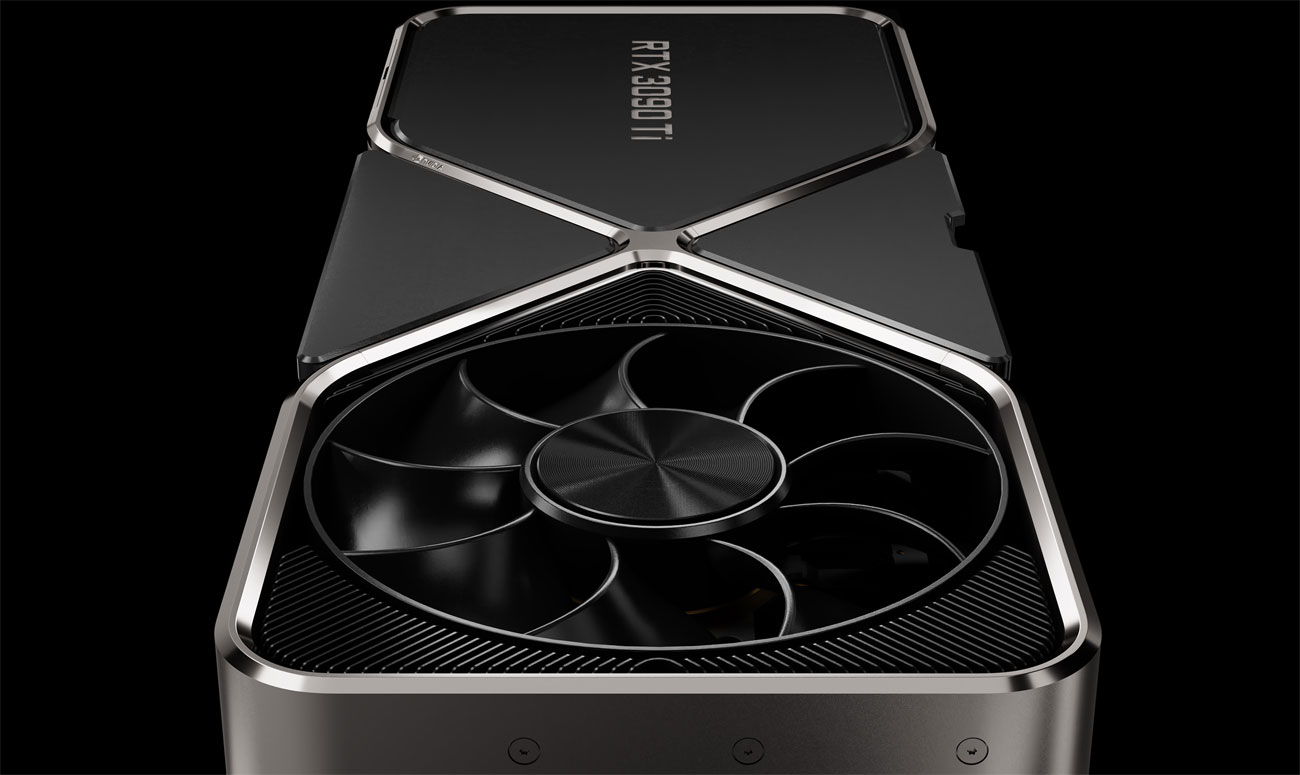
The results are not marginal. On an RTX 3090 Ti, BF16 throughput jumped from 87.5 TFLOPS to 157.4 TFLOPS — a near doubling. TF32 climbed from 42.6 to 82.6 TFLOPS. The RTX 3080 10GB reportedly saw FP16 performance rise from around 65 TFLOPS to 113 TFLOPS.
In practical terms, ComfyUI image generation tests showed a 56 to 59 percent increase in throughput depending on the model. Large language models saw a 33 to 36 percent improvement on initial prompt processing, though sequential token generation was largely unaffected. The distinction matters — the bottleneck in streaming inference is memory bandwidth and scheduler overhead, not raw compute, which explains the uneven gains.
The module currently supports four chip families — GA102, GA103, GA104, and GA106 — all found in the RTX 30 series. There are unsubstantiated claims that RTX 40 series cards might also respond to similar treatment, but no verified results exist yet.
Why This Exists
NVIDIA has been systematically capping the AI performance of its consumer cards for reasons that are equal parts regulatory and commercial.
Export controls on advanced computing hardware have forced the company to design around performance thresholds. But even domestically, NVIDIA has a strong incentive to keep its GeForce line significantly below its professional RTX and data center offerings in AI throughput. The gap between an RTX 3090 and an A100 is not just marketing — it represents real margin protection.
The technique behind GPU Unlock is not new in principle. Zagitta has said the approach borrows from methods previously used to disable power and temperature limits on cards designed for cryptocurrency mining. The difference now is the target: instead of unlocking power envelopes for hash rate, it is unlocking tensor core performance that NVIDIA’s own software stack deliberately suppresses.
What makes this technically interesting is the timing. By injecting into the GPU configuration before the driver takes full control, the tool sidesteps the software-level throttling that would normally reapply those restrictions on every initialization cycle. It is a low-level hack, not a driver patch — and that is exactly why NVIDIA cannot fix it with a simple update.
Who Benefits
The immediate winners are owners of RTX 30 series cards with large VRAM — particularly the 3090 and 3090 Ti at 24 gigabytes. Those cards were always popular in AI circles because their memory capacity allows them to run models that consumer cards with less VRAM simply cannot load. With the compute limits removed, they become significantly more competitive against the next generation of cards that NVIDIA priced far above their former peers.
The secondary market already reflects this shift. Listings for RTX 3090 24GB cards have appeared at prices exceeding $2,000, up from roughly $1,000 in recent years. The RTX 3090 Ti has been spotted approaching $3,000. Whether the unlock tool is the direct cause or simply a coincidental catalyst is unclear — demand for any functional AI hardware has been rising independently. But the perception is that a previously limited card now carries substantially more value than its advertised specifications suggested.
Local AI practitioners who cannot afford an A100, H100, or even a used RTX 4090 gain the most. Running inference on consumer hardware at home or in small labs becomes materially cheaper when you can extract performance that was always in the silicon but locked behind a software gate.
Who Loses
NVIDIA loses in the only way that matters: the perceived integrity of its product segmentation erodes. If a freely available Linux module can restore ~90 percent of the performance gap between a consumer card and its professional counterpart for certain workloads, then the justification for paying four or five times as much shrinks considerably. That does not make the professional cards obsolete — they still offer ECC memory, NVLink, driver support, and guaranteed stability — but it puts pressure on the pricing logic that has long underpinned NVIDIA’s market dominance.
The RTX 40 series also faces indirect pressure. Cards like the 4090 were already priced at a premium, and the 4080 was widely criticized for its price-to-performance ratio. If the older generation can be coaxed into delivering dramatically better AI throughput, the value proposition of waiting for the next generation softens.
Third-party resellers and scalpers benefit in the short term but risk accelerating their own burn rate. Artificial price inflation on used hardware attracts attention — and attention invites countermeasures.
What Happens Next
NVIDIA will almost certainly respond. The company has a history of addressing driver-level exploits through updates, firmware changes, and in some cases, legal action against tools that modify GPU behavior. The question is whether a kernel module that runs before the driver loads is something a driver update can fix. The answer is likely no — which means the response would have to come at a deeper level, possibly through the BIOS or via signed-firmware enforcement.
That escalation would only deepen the arms race. Kernel-level GPU configuration tools already exist in the open-source ecosystem. Any restriction NVIDIA imposes risks creating more incentive for the community to find workarounds, as it has with previous limitations on mining performance and overclocking.
There is also a policy dimension. US export controls have already shaped GPU design choices sold in certain markets. Tools like GPU Unlock add another layer of complexity to an already fragile regulatory environment — they demonstrate that software can undo hardware restrictions that were meant to comply with geopolitical directives.
For now, the tool remains a Linux-only, pre-driver exploit targeting a specific generation of cards. It will not transform the entire AI hardware landscape overnight. But it does confirm something that many in the field have suspected: the performance difference between NVIDIA’s product tiers is not always a reflection of what the silicon can do — sometimes it is a reflection of what the company has decided to allow.
The Bigger Picture
This is not the first time GPU performance has been software-defined. Crypto mining throttles, regional export locks, and power limit configurations have all shown that NVIDIA can dial performance up or down through code. What is different now is the scale of demand. When AI workloads move from data centers into personal labs, universities, and small studios, the economic pressure on product segmentation becomes impossible to ignore.
The RTX 30 series was never intended to be an AI workhorse. It was a gaming card that, because of its 24 GB of VRAM and relatively affordable used price, became one anyway. GPU Unlock is simply the acknowledgment that the intention and the capability were never the same thing.