Why NVIDIA's RTX 60 Delay Says Everything About the AI Chip Crunch
NVIDIA has greenlit the consumer RTX 60 series built on its Rubin architecture, but TSMC's AI accelerator demand has pushed the launch to mid-2027. What the delay reveals about the company's resource allocation—and what it means for gamers and the data-center market.
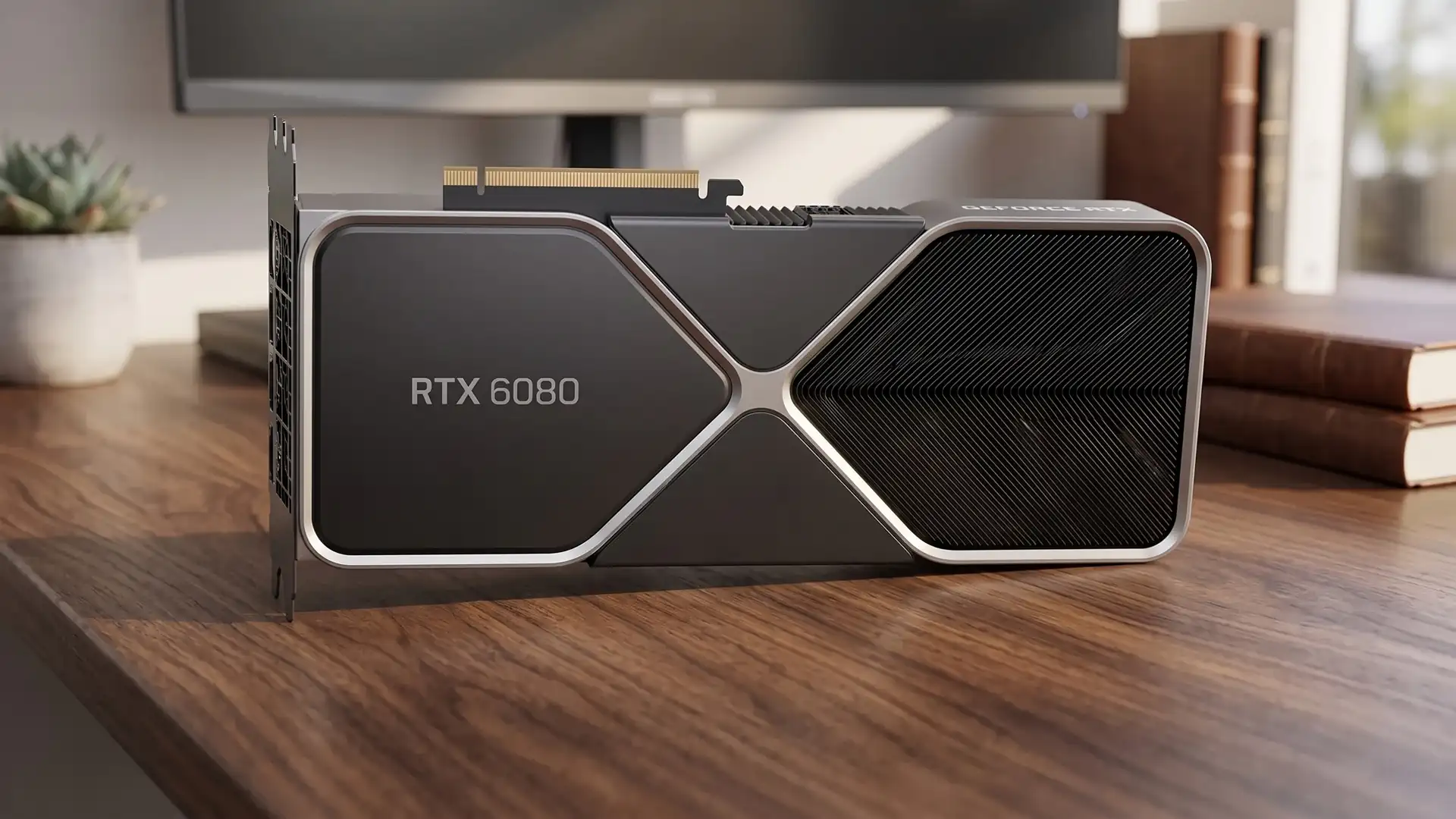
The Delay That Isn’t Really a Delay
NVIDIA has formally approved the GeForce RTX 60 series, and the project is now running on a strict internal milestone schedule. That much is clear from GameGPU’s reporting, which cites sources familiar with Moore’s Law Is Dead’s network—a Korean-language hardware forum that, despite its modest footprint, consistently sits closer to the supply chain than most Western outlets. The launch window has settled at the first half of 2027, and rumors of a 2028 push don’t align with what insiders are seeing.
The real story isn’t the new date. It’s why NVIDIA moved it.
TSMC Is Choosing Sides
The source says NVIDIA originally targeted a 2026 consumer launch but adjusted its schedule to let TSMC concentrate production capacity on AI server accelerators. That single sentence carries more weight than a full spec sheet.
TSMC’s advanced-node capacity—particularly at 2nm, which is now in the discussion for Rubin’s flagship—remains the most contested resource in semiconductor manufacturing. Every wafer allocated to a gaming GPU is a wafer not going to an AI inference or training chip. When NVIDIA reorders its own product queue to feed the data-center business, it’s an admission that the AI side of the house is consuming the factory.
This isn’t speculation. NVIDIA’s own financial disclosures have made clear that data-center revenue now dwarfs everything else. The RTX 60 delay is simply the manufacturing consequence of that revenue split.
What Comes After Blackwell
The architectural details still emerging from Korea are notable. According to the report, the flagship Rubin GPU may abandon the monolithic die approach that defined Ada Lovelace and Blackwell in favor of a chiplet-based layout. That’s a fundamental shift, not an iteration. Blackwell itself was described as an evolved scheduler architecture layered on Ada’s foundation; Rubin appears to be going further, restructuring how the die is physically assembled rather than just how it’s programmed.
A move to chiplets at the high end would have implications that extend well beyond gaming. It affects yield, packaging cost, interconnect design, and ultimately the price of the card. If NVIDIA is seriously considering this for Rubin, it may signal that the company is preparing for a generation where raw compute density outpaces what a single piece of silicon can deliver efficiently.
The 2nm Question
Whether Rubin actually lands on a 2nm process is still being debated internally, the report says. Parameters are in the adjustment phase. That uncertainty matters because 2nm at TSMC is not a given—it’s a capacity question as much as a technology question. If the consumer lineup does shift to 2nm, it would represent the first time NVIDIA has taken a mainline gaming product to that node, preceding even AMD and Intel in consumer GPU adoption.
But if 2nm slips, the chiplet pivot becomes the more consequential decision, regardless of process geometry.
The RTX 50 Super Ghost
One of the more interesting byproducts of this roadmap shift is what it says about the mid-range. The source indicates that an RTX 50 Super line is either unlikely or, if it ships, will occupy an extremely narrow market window before resources fully redirect to Rubin development. For buyers who were counting on a mid-generation refresh, the message is blunt: the super is being sacrificed to clear the deck for the next architecture.
That’s a unusual move for NVIDIA, which has historically used mid-cycle refreshes to maintain pricing momentum between generations. Skipping or compressing that step suggests the company views the Rubin transition as significant enough to warrant undivided attention.
Why a Korean Forum Knows This First
English-language coverage of NVIDIA roadmaps tends to lag or rely on analyst projections. Korean hardware communities like the one behind this reporting operate in a different information ecosystem. They draw on supply-chain contacts, component suppliers, and engineering-adjacent networks that often surface details months before official statements. GameGPU’s source citing Moore’s Law Is Dead is a well-known node in that network; their track record on architecture-level leaks is strong enough that this report deserves scrutiny, even if some details remain unconfirmed.
What English readers typically miss is the second-order implication: when a Korean forum reports an internal milestone schedule with this level of specificity—approved phase gates, hardened security policies around spec leaks, a compressed Super refresh cycle—it usually means the information has traveled through actual project channels, not speculation.
Who Wins, Who Loses
NVIDIA wins by protecting its highest-margin business. Data-center GPU sales fund the next generation; consumer cards are now treated as a parallel track rather than the primary driver.
Gamers lose on timing. The RTX 60 arriving in early 2027 instead of 2026 means another year of waiting, and the likely absence of a 50 Super refresh removes a midpoint purchase option for those who can’t commit at launch.
TSMC wins by default. Its AI accelerator orders are dictating NVIDIA’s consumer product schedule, which means the foundry’s pricing power and allocation decisions are effectively setting the rhythm of the entire GPU industry.
What Happens Next
If the report holds, expect NVIDIA to communicate the Rubin timeline more directly in the coming months—the tightened security policy around leaks suggests the company is preparing for a controlled rollout rather than hoping details stay contained. The chiplet versus monolithic debate will likely resolve publicly around Computex or GTC next year. And the 2nm question may be the louder one: if Rubin’s flagship does land on TSMC’s most advanced node, the performance delta over Blackwell could reshape expectations for both gaming and AI workloads running on consumer hardware.
The delay is real. The direction is clearer than it has been in years.