What NVIDIA's RTX Spark Means for the Laptop Industry
NVIDIA just integrated Blackwell GPU architecture directly into a laptop SoC for the first time. Here's why that changes everything for Apple Silicon and Qualcomm Windows PCs alike.
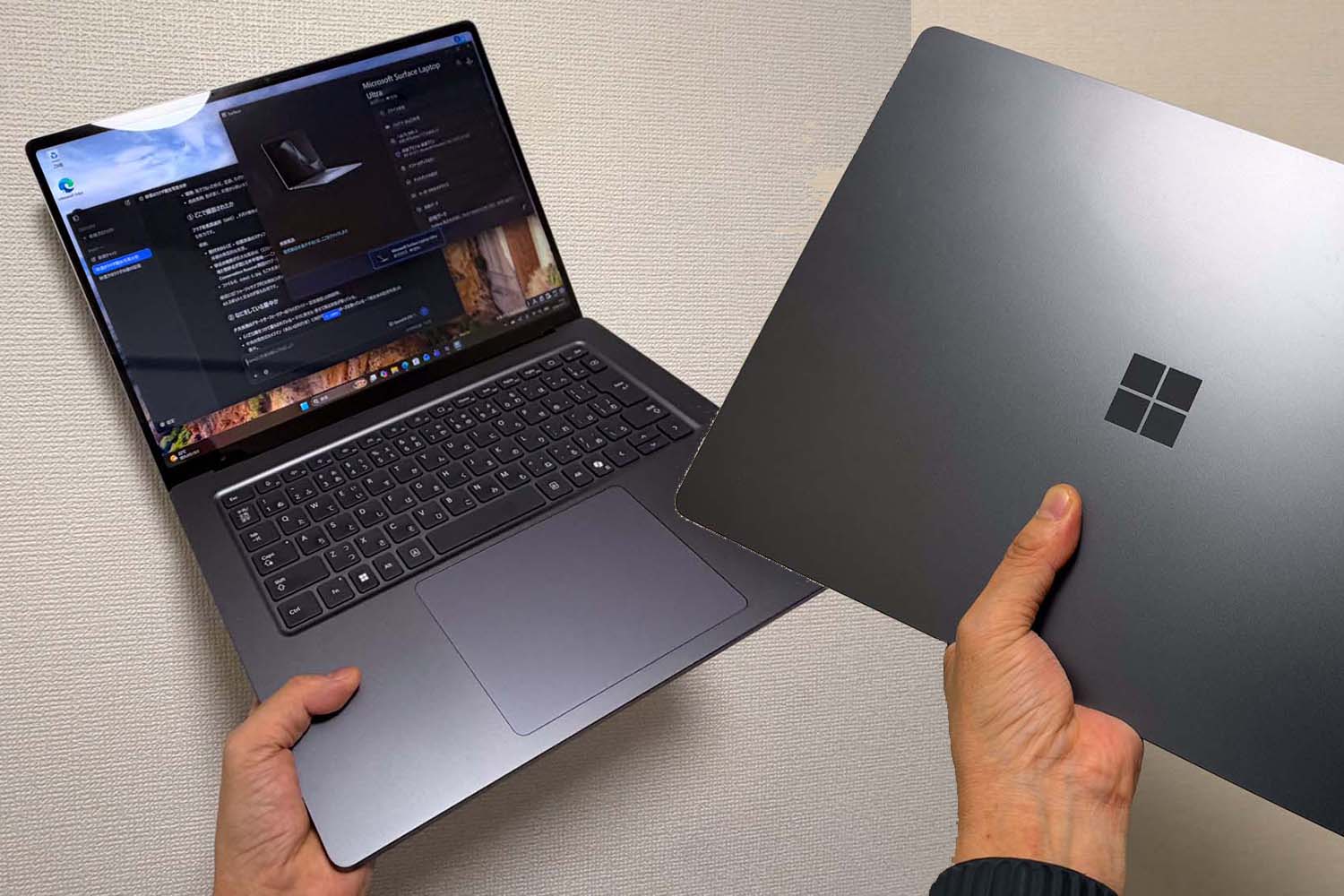
NVIDIA Just Put a Data Center GPU in Your Laptop. That Changes Everything.
Microsoft shipped the Surface Laptop Ultra on October 16. What makes it interesting isn’t the device itself — it’s what’s inside it. NVIDIA’s RTX Spark NX1, a system-on-chip that fuses Blackwell GPU architecture with an Arm CPU, represents something the laptop industry has been chasing for years: a single silicon solution that handles serious AI workloads, desktop-class gaming, and x86 game compatibility without needing an external graphics card.
The $810,000-yen evaluation unit Impress Watch tested comes equipped with a 20-core CPU and 64GB of memory. That pricing puts it firmly in workstation territory, but the architectural implications extend far beyond a single expensive laptop.
The CUDA Advantage Apple Can’t Replicate
The most striking benchmark result isn’t about raw compute. It’s about what happens when you run a real AI workload — one that matters to developers, researchers, and anyone running large language models locally.
Using LM Studio Bionic to analyze images with the Qwen 3.8 27B parameter model, the Surface Laptop Ultra beat the Mac Studio running the M5 Ultra with 256GB of memory. The Mac Studio has four times the RAM and roughly double the power envelope (200W peak versus 120W). Yet the RTX Spark won.
The reason is CUDA. Nearly all major AI frameworks — PyTorch, TensorFlow, the llama.cpp inference engine used in this test — are optimized for NVIDIA’s CUDA architecture first. Apple’s Metal framework has improved significantly, but CUDA remains the default path for AI tooling. When the software stack is already tuned for a platform, the silicon advantage compounds.
This matters because it means NVIDIA’s SoC strategy isn’t just about matching Apple Silicon on raw performance. It’s about owning the software layer that AI development runs on. A laptop that runs CUDA natively, in an Arm form factor, with reasonable power efficiency, is a product that simply doesn’t exist in any other form right now.
Where This Undercuts Both Apple and Qualcomm
The laptop Arm market has followed a predictable script since 2019. Qualcomm’s Snapdragon chips power most Windows on Arm devices. They handle office work, web browsing, and light creative tasks well. Gaming remains a weakness — not because the silicon can’t do it, but because the ecosystem around them wasn’t built for it. Anti-cheat software, x86 game compatibility, and driver support for consumer titles have all been friction points.
Qualcomm is making progress. But the RTX Spark takes a different route entirely. By bundling a Blackwell-class GPU with the Arm CPU, NVIDIA is delivering gaming performance that Impress Watch places between Apple’s M5 Pro and M5 Max — in a chip that draws less power than either.
The Cyberpunk 2077 benchmark results illustrate this. At middle settings, the RTX Spark trails the Mac Studio but clears the M5 Pro. At ray tracing overload, it sits between the M5 Pro and M5 Max. More importantly, those tests ran x86 binaries translated to Arm — games that previously wouldn’t have been viable on an Arm Windows laptop at all. Ace Combat 8, with its online anti-cheat layer, also ran without issues.
For Qualcomm, this is a genuine threat. The Snapdragon X Elite and its successors were positioned as the mainstream Arm Windows path. They compete well on efficiency and general productivity. But they cannot match a Blackwell GPU fused into the same die. NVIDIA isn’t trying to beat Qualcomm on battery life for web browsing. It’s trying to make the question irrelevant by offering something the other chips literally cannot do.
For Apple, the threat is quieter but real. The Mac Studio with M5 Ultra dominated the raw Geekbench CPU scores — no surprise given its desktop power and 256GB memory configuration. But in the AI task that actually matters to a growing segment of professional users, the notebook beat the desktop. That’s a message: portability plus CUDA access beats raw horsepower for certain workflows.
The Form Factor Statement
The Surface Laptop Ultra isn’t subtle about its ambitions. At 2kg for a 15-inch chassis, it’s not ultralight. The dual-layer underside design exists primarily for airflow — the cooling system is treating the processor’s thermal management as a performance feature, not an afterthought. The mini-LED display prioritizes brightness and contrast over the thinner profile an OLED would enable. Every design decision signals that this machine is built around the silicon, not the other way around.
The magnetic power connector — Microsoft’s equivalent to Apple’s MagSafe — uses a USB Type-C shape but requires a proprietary cable. It’s a practical compromise: the port functions as standard USB-C when not using the magnetic cable, but the dedicated connector prevents accidental disconnection during heavy workloads. It’s the kind of detail that suggests this product was designed for sustained GPU and CPU load, not casual use.
The 140W USB Power Delivery adapter is notably compact for a machine delivering this class of performance. Gaming laptops with similar GPU tiers typically ship with 200W+ bricks. The fact that NVIDIA’s integrated approach keeps thermals and power draw in check is itself a competitive signal.
What Comes Next
The RTX Spark isn’t just a chip for one laptop. It’s NVIDIA’s proof that Blackwell-scale GPU performance can live inside a mobile SoC alongside an Arm CPU. That architecture will appear in more devices — likely more than just Surface machines.
The implications ripple across the market. AI-focused laptop buyers who previously needed a desktop or a Mac Studio may now have a portable option that matches or exceeds those systems for CUDA-dependent workloads. Game developers targeting Arm Windows will face a platform that actually supports their existing x86 libraries while adding native GPU capabilities. Qualcomm’s Windows on Arm roadmap just lost its monopoly on the premium Arm segment.
Apple’s response will likely focus on tightening the Metal-to-CUDA gap and pushing more AI frameworks toward native Apple Silicon optimization. But CUDA’s entrenched position in the developer ecosystem means that advantage won’t vanish overnight — if it ever fully disappears.
The Surface Laptop Ultra at $810,000 yen is expensive and niche. But the architecture inside it is aimed at the mainstream. NVIDIA isn’t selling a laptop. It’s selling a direction the entire industry has to respond to.