Nvidia's 70% Growth Forecast Exposes the Real AI Capex Ceiling
Jensen Huang just said computation is now revenue — and Nvidia's 70% growth forecast reveals where the AI infrastructure cycle is actually headed, not where the PR team wants you to look.
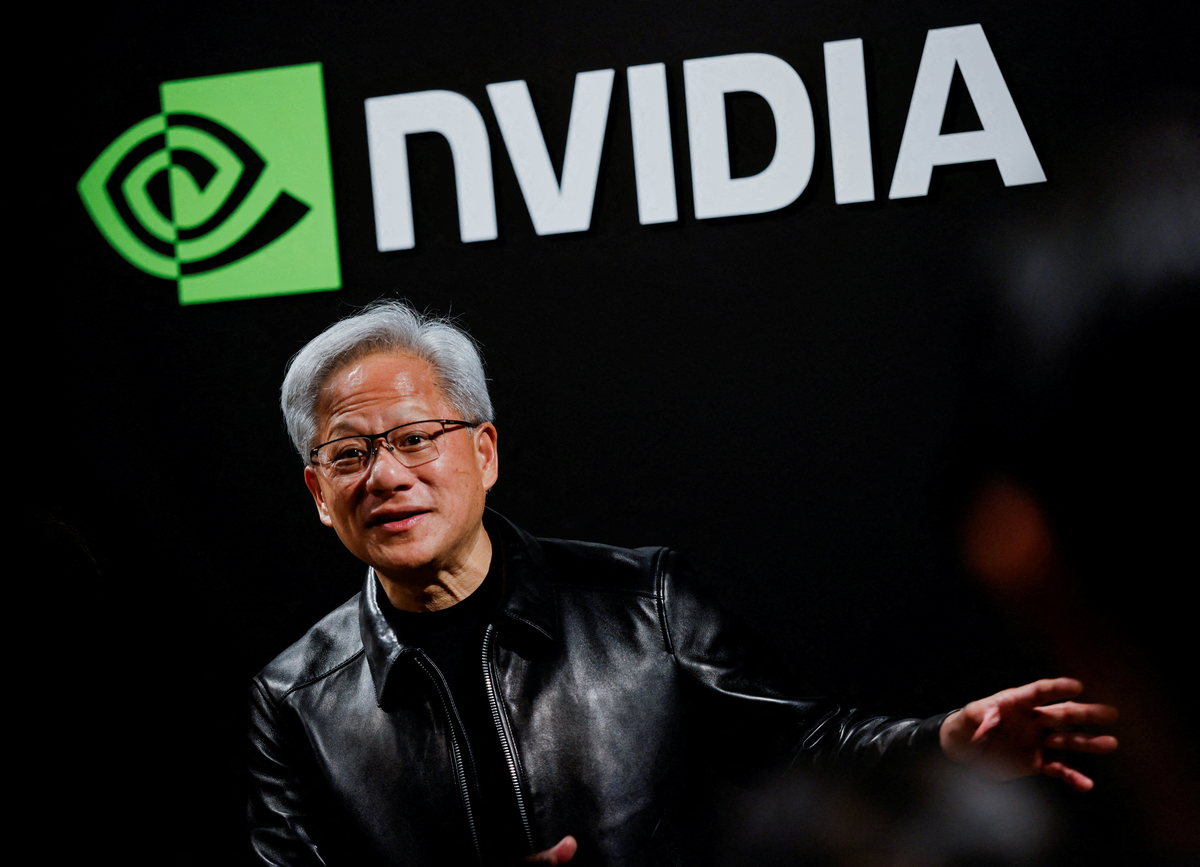
The Number That Should Make Wall Street Nervous
Nvidia reported $96.22 billion in revenue for its fiscal second quarter, topping consensus estimates by more than $40 billion. Thirteen consecutive quarters of record-breaking earnings. On the surface, this is pure corporate triumph — the kind of quarter that makes earnings call scripts glow.
But look at what Jensen Huang said alongside those numbers and the picture changes.
“Demand is close to 100 percent,” he told reporters. “The 70 percent growth we forecast for next year isn’t a ceiling on demand — it’s a ceiling on supply. If we could deliver everything the market wants, the growth rate would be far higher.”
That sentence matters more than the revenue headline. Huang just disclosed that the AI infrastructure buildout has not slowed down, not even slightly. The demand side is saturated. What’s capping Nvidia’s growth isn’t customer hesitation or ROI concerns — it’s TSMC’s fab capacity, CoWoS packaging bottlenecks, and the physics of building advanced chips faster than the universe seems to allow.
This is the hidden data point that American markets have largely ignored.
Computation Is the New Revenue Metric
Huang didn’t just announce a growth rate. He reframed the entire economic logic of the AI industry with one line: “Computation is now revenue.”
The implication is stark. For years, the AI narrative was about software margins, platform plays, and the promise that training costs would eventually drop to nothing while inference scaled profitably. Huang is saying none of that matters anymore. Compute capacity itself is the product. Every token generated, every inference run, every parameter trained is a line item on someone’s P&L — and Nvidia sits between every single one of them.
“Tokens are productive now,” Huang said. “They’re revenue-generating.”
This is not marketing language. It’s a disclosure that the AI capital expenditure cycle has entered a phase where hardware procurement is no longer speculative — it’s tied directly to operational output. The companies buying Nvidia’s GPUs aren’t buying for R&D experiments anymore. They’re buying because their models are already earning money, and they need more compute to earn more of it.
That distinction changes how you value everything in the stack.
Who Wins When Supply Constraints Are the Constraint
Let’s be concrete about winners and losers.
Winners: Nvidia, obviously — but also TSMC, which just became the bottleneck everyone has to negotiate with. Any company that controls advanced packaging capacity (not just transistor fabrication) now holds leverage over the entire industry. Samsung’s foundry business, which has stumbled on process leadership, gains indirect relevance because every extra node that TSMC can’t handle pushes demand toward alternatives.
Losers: Startups without access to allocation. This is the part Korean financial media has been circling around and US coverage has mostly missed. When supply is constrained, it doesn’t go to whoever needs it most — it goes to whoever can promise the biggest commitments first. The frontier labs, the hyperscalers, the companies already sitting on trillion-dollar balance sheets. New entrants are locked out not because the technology is too hard, but because they can’t get the chips.
Huang mentioned this directly: “A year ago, a single research lab was driving infrastructure buildup. Now there are new AI labs and startups in their golden age, multiple frontier labs scaling simultaneously, open models thriving, and physical AI ramping up. The momentum is global.”
Translation: the customer base is diversifying faster than the supply chain can respond. That’s good for the industry’s long-term health and brutal for anyone trying to enter it without existing relationships.
The Vera Rubin Factor
Huang specifically called out Vera Rubin as being in full production — a product timed precisely for this moment. Vera Rubin represents Nvidia’s next architectural generation after Blackwell, designed to deliver more performance per watt and more throughput per dollar. The fact that it’s entering volume production now signals that Nvidia isn’t riding the current cycle out — it’s already provisioning for the next one.
For the supply-constrained reality Huang described, this is both a solution and a confirmation of the problem. Vera Rubin helps, but it won’t remove the bottleneck. Advanced packaging, HBM memory, and silicon real estate remain tight. The 70 percent growth forecast assumes these constraints ease somewhat — but Huang’s own admission that demand is closer to 100 percent suggests the gap between what the market wants and what can be delivered is still enormous.
What This Means Beyond Nvidia’s Balance Sheet
The Korean angle here is worth noting. Major Korean conglomerates — Samsung, LG, SK Hynix — are deeply embedded in the supply chain that Nvidia depends on. SK Hynix supplies HBM memory. Samsung is both a foundry competitor and a potential alternate supplier. When Huang talks about supply constraints, he’s talking about his Korean suppliers too.
Any disruption to that relationship — whether from geopolitical tension, trade policy, or capacity decisions — would reverberate through Nvidia’s ability to hit even its conservatively stated 70 percent growth target.
The broader implication for the AI infrastructure cycle is clearer now than it was six months ago. The bull case isn’t that AI demand will suddenly evaporate. The bull case is that demand is so strong it’s outpacing the ability to build the hardware to serve it. That’s a different kind of bubble risk — not one where investment collapses because expectations were too high, but one where investment continues at an unsustainable pace because the supply side can’t keep up with the demand side’s appetite.
Nvidia’s next earnings call will tell you whether the supply constraints are loosening or tightening. Until then, Huang’s 70 percent forecast should be read for what it actually says: the AI capex cycle isn’t slowing down. It’s just running into the laws of physics.