Oil above $115 as Iran war fears reshape global economy
Brent crude hits a five-month high above $115 as Iran threatens Gulf energy infrastructure, raising fresh inflation fears and complicating central bank policy across three continents.
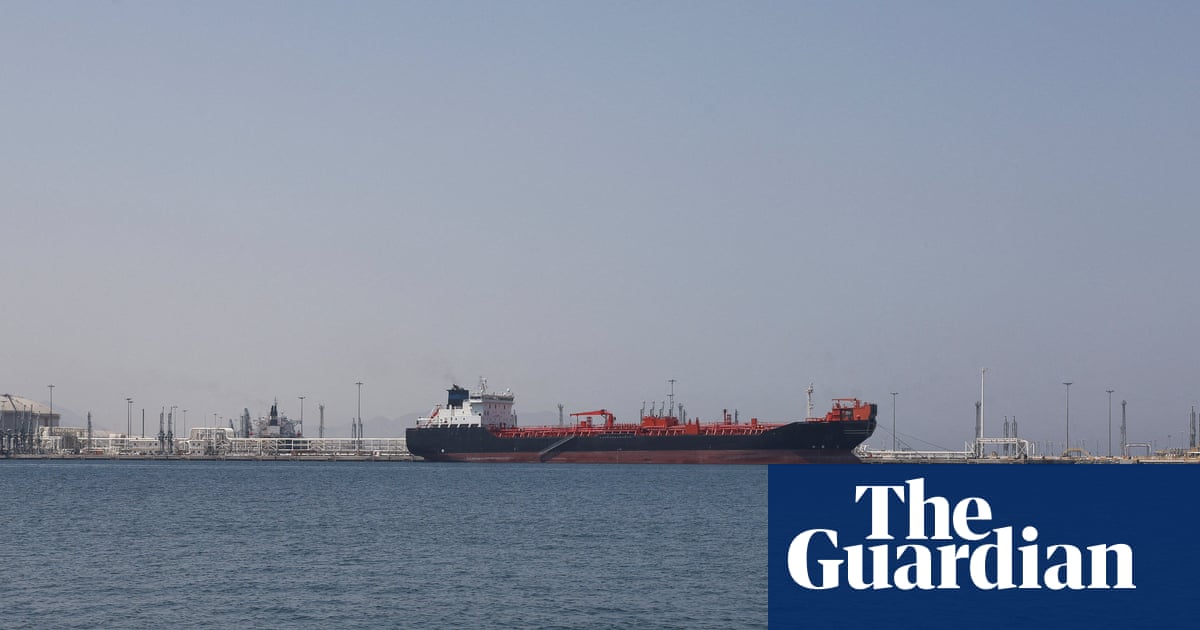
Oil’s new $115 reality
Brent crude touched $115.48 a barrel on Friday morning, its highest since May. The jump came after Tehran vowed to target Gulf oil facilities, undersea cables and datacentres if the US launches new strikes against Iran. It is a threat that turns every flare-up into a potential supply shock.
Oil had traded around $72 a barrel in February, before the Iran war began. By late April it peaked at $126. Now it is back above $115, not on production cuts but on the fear of a wider war. That shift matters. The market is pricing in a scenario where energy infrastructure becomes a battlefield again.
The $115 level represents a fundamental change in how traders view the Middle East. For years, the post-2014 consensus assumed that Gulf producers would keep flowing even in a crisis. Sanctions on Iran, Houthi disruption in Yemen, occasional maritime incidents — none of it ever knocked sustained supplies offline. Now every threat carries the possibility that the infrastructure itself becomes a target. The risk premium embedded in Brent has more than doubled since the conflict escalated.
Who wins, who loses
Higher oil prices reward producers. US shale firms, already profitable at $70‑$80, will post record cash flows. Iranian rivals face capital flight and currency pressure. But the real story is who pays.
Households in Europe, Asia and Latin America feel it first at the pump. Transport costs feed into food prices, airfares and shipping. A barrel above $115 adds roughly $0.30 to a gallon of gasoline in the US, €0.08 to a litre in Germany, ¥25 to a litre in Japan. Those numbers stack quickly across millions of trips.
The ripple effects extend far beyond the fuel aisle. Airlines are revising fare structures as fuel hedging strategies that looked adequate six months ago now show significant losses. Cargo carriers are passing surcharges through logistics chains, meaning everything from pharmaceuticals to fashion goods carries a higher shelf price. Agriculture faces a compounding cost: diesel powers tractors, harvesters and transport fleets. Food inflation, already elevated in several regions, could accelerate further if crude stays above $110 for an extended period.
Central banks watch the link between oil and inflation expectations. The Federal Reserve, European Central Bank and Bank of England have been signalling patience on rate cuts. Sustained high oil complicates that stance. If energy prices stay elevated, core inflation proves stickier, and policymakers may delay easing – or even hike again.
The Strait of Hormuz risk
The threat to Gulf infrastructure is not abstract. Iran’s Islamic Revolutionary Guards Corps claimed to have struck four commercial ships in the Strait of Hormuz on Wednesday. The strait carries about 20% of global oil supplies. Any sustained disruption would send prices soaring past $120 within days.
Houthi attacks on Saudi facilities have intensified this week. The US State Department ordered some diplomats and families to leave Saudi Arabia. These are signals of a conflict that could spill into regional waters and skies.
What makes the Hormuz threat particularly dangerous is the narrowness of the chokepoint. Two lanes of shipping pass through just 21 nautical miles at their tightest point. A single effective minefield or coordinated missile strike could shut the route entirely. Insurance premiums on tankers transiting the strait have already climbed sharply, and some operators are considering longer routes around the Cape of Good Hope – adding weeks to delivery times and billions to global freight costs.
Timing with the US election
Susannah Streeter of Wealth Club noted fears that American and Israeli forces might strike Iran’s energy infrastructure after the US election on 3 November. That date is now a focal point for traders. If the political calculus shifts toward military action, oil could test $130 within weeks.
The pattern mirrors 2022, when the Russia‑Ukraine war sent Brent above $120. Back then, central banks responded with aggressive rate hikes. This time, economies are more fragile: debt levels are higher, growth slower. The transmission from oil to inflation may be faster, but the policy response slower.
Election-year politics add another layer of unpredictability. US administrations have historically shown restraint on energy price spikes close to voting day, but military action against Iran would be framed as national security rather than economic management. The conflict between those imperatives – keeping oil prices down at home while pursuing strategic objectives abroad – could create jarring policy whiplash.
Ukraine’s refinery war
Supply concerns are reinforced elsewhere. Ukraine’s bombardment of Russian diesel refineries has cut output, adding to global diesel tightness. That market feeds into aviation fuel, trucking and agriculture. Again, the impact is global.
The convergence of Gulf disruption fears and Black Sea supply damage means the world is facing a rare dual-pressure scenario on both crude and refined products. Refined margins have widened accordingly. Diesel crack spreads – the difference between crude oil prices and wholesale diesel – have reached levels not seen since the early days of the pandemic. That signals refining capacity, not just crude supply, is under strain.
What happens next
Three scenarios emerge.
First, de‑escalation. Diplomatic channels reopen, Iran backs down from threats, and oil falls back toward $90. This is the bull case for consumers, but unlikely while strikes continue.
Second, controlled tension. Limited strikes, no infrastructure attacks, and prices settle around $110‑$115. Central banks would note the uptick but keep rates steady.
Third, full escalation. Gulf facilities hit, Hormuz disrupted, oil above $130. Inflation expectations jump, central banks pause or reverse rate cuts, and recession risks rise across imported‑energy economies.
The market is pricing in the second scenario today. But history shows that oil surprises to the upside more often than to the downside. Black swan events – a major facility destroyed, a naval confrontation, a strike on Iranian refineries – remain the tail risk that underpins the premium. Options markets are pricing in significantly higher implied volatility for crude through the autumn, reflecting genuine uncertainty about how far the conflict could spread.
The consumer wallet test
Across three continents, households are already feeling the pinch. European diesel prices are up 15% from January. Asian shipping rates have climbed 20% on Red Sea reroutes. US gasoline averages exceed $3.80 a gallon.
These are not abstract metrics. They determine whether a family can afford to heat its home, whether a farmer can plant, whether a small business stays open. Oil above $115 is a tax on mobility and production.
The psychological dimension matters too. Consumer confidence indices in import-dependent economies have dipped noticeably as gasoline prices climb. When households anticipate higher costs, they pull back on discretionary spending – restaurants, travel, retail. That slowdown feeds directly into GDP figures, even before the full cost of higher energy has materialised in quarterly data.
The central bank dilemma
Policy makers face a trade‑off. Fighting inflation requires keeping rates restrictive, but restrictive rates during an energy shock can tip economies into recession. The Fed’s dual mandate, the ECB’s price‑stability focus, the BoE’s inflation target – all are tested by a $115 barrel.
Markets now assign a 30% probability of no rate cut in 2025, up from 10% in September. That shift reflects oil’s growing weight in the macro picture.
There is a further complication: energy-driven inflation is notoriously difficult to fight with interest rates alone. Raising rates does not increase oil supply or ease shipping disruptions. It only suppresses demand – and demand destruction at these price levels tends to hit lower-income households disproportionately. Policymakers are confronting a version of stagflation that feels familiar but arrives in a context of far higher public debt and far weaker fiscal room to manoeuvre than existed during the 1970s or the post-2022 inflation wave.
The energy transition paradox
Ironically, high oil prices could slow the green transition. Nations scramble for energy security, often reaching for domestic fossil fuels. Investment in renewables may stall as governments prioritise short-term supply. The IEA has warned that oil demand could stay elevated through 2030 under current trajectories.
Several countries are already revising their energy strategies. Australia has approved new coal-fired power projects to shore up domestic supply. India has accelerated coal imports and relaxed environmental clearances for new thermal plants. European governments, despite long-standing green commitments, have granted temporary exemptions for LNG terminals and extended the life of existing gas plants. Each of these decisions pulls forward fossil fuel investment and pushes back the timeline for emissions reductions.
The paradox cuts both ways: high oil prices can accelerate the case for renewable investment on economic grounds, but they also generate the political urgency for immediate fossil fuel solutions that crowd out longer-term planning.
Final calculation
Oil above $115 is more than a commodity price. It is a barometer of geopolitical risk, a driver of inflation, a determinant of consumer spending. The world is watching whether the Iran conflict stays contained or widens. For central banks, households and markets, the stakes are clear: energy costs are about to shape the next economic cycle.
If the war escalates, $130 is plausible. If it stalls, $95 becomes likely. Either way, the era of cheap oil is over – and the new baseline is forcing decisions across three continents. The question now is not whether oil will remain volatile, but how much of the global economy is prepared to absorb the next spike.