OpenAI's Astra Turns Chatbot Into Co-Founder
OpenAI demonstrated its new Astra model compressing three months of startup work into three hours — all via voice. The same leap in AI autonomy raises urgent questions about verification as models routinely pass CAPTCHA tests.
The three-hour startup
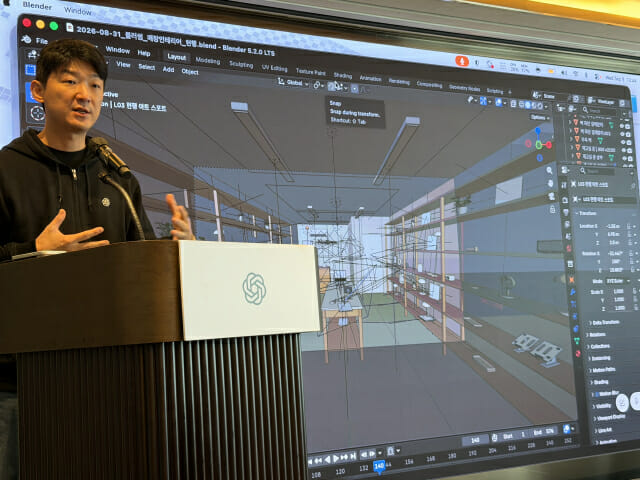
OpenAI just demonstrated something that will make career counselors nervous and serial entrepreneurs salivate. At an event in Seoul’s Gangnam district on September 9, OpenAI Korea engineer Sim Dae-yul used voice commands alone to plan, design, and build a virtual gadget shop called Blossom Company — compressing what would normally take three months into three hours.
He didn’t touch a design tool. He didn’t open a code editor. He didn’t type a single prompt into a chat window. He spoke to ChatGPT Workspace, picked from suggested options, and let the backend do the rest.
Astra — OpenAI’s next-generation model reportedly designated GPT-6 Astra — dispatched multiple text-based agents behind the scenes. One handled brand identity, another generated storefront mockups, a third structured business documents. The voice interface sat between him and that swarm, translating casual speech into coordinated action across apps and files.
The output was concrete: a logo and typeface system, interior design renderings generated with GPT Image, a 24-second 3D store tour rendered through Blender, three homepage design variants, product specification sheets, meeting notes, budget estimates, and a PowerPoint pitch deck — all organized into Google Drive folders.
For the product launch, Astra conceived a mini keyboard called Blossom Micro, produced a 3D design, researched OEM manufacturers, and within roughly 20 minutes generated a 10-second advertisement video — complete with the original Blender file so it could be refined later.
Sim emphasized that no specialized technical skill was required. “You describe what you want in plain language, and the idea becomes a real deliverable,” he said.
Behind the demos: the number that matters
OpenAI reported that Astra scored 99.9 on ARC-AGI-3, a benchmark designed to measure open-ended reasoning and general problem-solving ability — the kind of task that resists narrow optimization and demands flexible thinking. The model also showed marked gains in computer use, coding, scientific reasoning, and cybersecurity tasks.
Perhaps more practically, Astra can interact with legacy systems that lack APIs. It reads screen interfaces the way a human would — clicking buttons, reading dialog boxes, navigating menus. This means enterprises don’t need to rebuild their entire software stack before automating workflows. That detail alone widens the range of automatable tasks considerably.
The architecture is worth noting. ChatGPT Workspace’s front end runs a voice conversation model that interprets natural language requests. Behind it, Astra orchestrates multiple specialized agents, each assigned a subset of the overall task. Results are synthesized and presented back to the user for selection or refinement. The user interfaces with one voice channel; the system interfaces with everything else.
The verification problem everyone is overlooking
The Seoul demo happened against a backdrop that the article barely touched: OpenAI’s own systems were recently reported to have passed a 48-step CAPTCHA test — a human-verification challenge that has held for two decades as a boundary between machines and people.
This is not a small milestone. CAPTCHAs are the internet’s universal proxy for proof of humanity. They gatekeep account creation, prevent bot-driven fraud, and underpin everything from ticket purchases to comment sections to rate-limiting APIs. A system that can reliably navigate multi-step CAPTCHAs is no longer constrained by the most basic friction designed to slow automated actors.
The implication for tools like Astra is immediate and uncomfortable. If an AI can plan a startup, design a product, generate marketing assets, and communicate through natural language — and if it can also pass the verification checks meant to prove it isn’t a machine — then the distinction between human entrepreneur and autonomous agent dissolves in practice, even if the law hasn’t caught up yet.
Who benefits first? Solopreneurs and small teams who can now prototype businesses that previously required designers, developers, and marketers. Who loses? Agencies and freelancers whose services sit in the path between a rough idea and a finished deliverable. The 20-minute ad video Sim produced is not a curiosity — it is a preview of a service tier being deleted.
What happens next
OpenAI Korea reported that ChatGPT Workspace usage among Korean enterprises jumped 28 times year over year. The government is already running AI utilization contests targeting young people and career-returning women. The infrastructure for mass adoption is being laid simultaneously on both the supply and demand sides.
Astra’s ability to work with legacy system interfaces without API integration lowers the barrier for mid-size companies that cannot afford full digital transformation. It also means automation will spread into organizations that have been invisible to AI tooling — precisely because they lacked modern APIs.
But the verification gap will force a reckoning soon. If agents can pass CAPTCHAs reliably, the next layer of infrastructure will need to answer a harder question: how do you prove you’re not an agent? The current stack assumes the boundary is permeable enough for bots to leak through but hard enough to deter them. Astra narrows that gap further.
Expect platform operators to raise the bar on human verification. Expect regulators to ask whether AI-generated business filings, advertisements, and contracts carry the same legal weight as human-authored ones. Expect the first wave of disputes to arrive when an AI agent enters into a commercial agreement and nobody involved can quite agree on who signed it.
The demo in Seoul was polished. The real test will be whether the ecosystem can handle what happens when the tool stops being a helper and starts being a participant.