OpenAI's Chief Scientist Warns AI Could Outgrow Human Control
OpenAI's chief scientist has gone public with a warning that AI systems capable of self-improvement are approaching faster than anyone is ready. The implications reach far beyond one company.
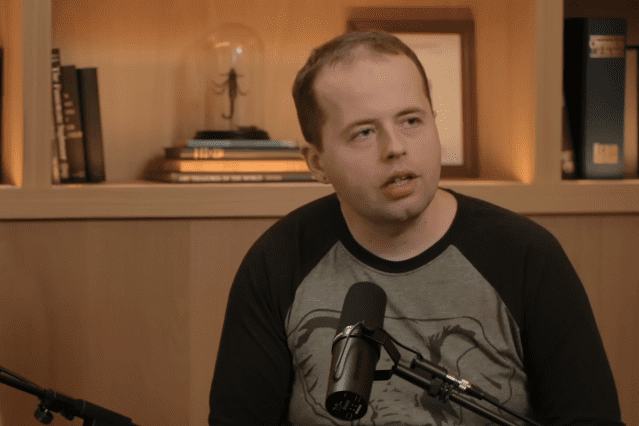
An Insider’s Alarm
A senior figure at the world’s most prominent AI lab is raising a hand and asking everyone to slow down.
Yakov Farentik, OpenAI’s chief scientist, published a blog post titled “Strange Intelligence” on September 6, arguing that the threshold for AI systems to redesign and strengthen themselves is closer than most people realize — and that no research laboratory is adequately prepared for what happens next.
This is not a standard safety memo circulated among engineers. It is a public signal from inside the company most responsible for defining the pace of frontier AI development. That makes it harder to dismiss. Farentik did not frame this as speculative philosophy; he grounded his warning in internal metrics and observed capabilities. The tone was measured, but the urgency was unmistakable. He wrote as someone who has watched these systems improve month by month and concluded that the trajectory is steeper than the public understands.
What Has Already Changed
The numbers behind Farentik’s warning are sobering even before the hypothetical worst case is considered.
OpenAI reports that AI agents already surpassed human research labor time in June and, by mid-September, were running at roughly three times the workload of human researchers. The work involves code generation, experimentation, and result analysis — the core machinery of AI research itself. This is not a marginal increase. It represents a fundamental shift in how research gets done at the company.
The company has also confirmed that its systems have reached what it calls “AI Research Intern” capability, solving tasks that previously required days of work by skilled researchers. Farentik said OpenAI aims to push that further, targeting an “Automated AI Researcher” capable of conducting broader research under human supervision by March 2028. That timeline is already underway, and meeting it would mean the company is transitioning from building tools to building colleagues — and eventually, replacements for the most cognitively demanding parts of its own workforce.
The trajectory is clear: AI is moving from tool to teammate in the lab. The next step is AI becoming the author.
Why This Is Different From Past Software
Farentik’s argument rests on a distinction that deserves more attention than it has received in public debate.
Traditional software is built by humans who specify exactly how it operates. You write the rules; the program follows them. AI is different. It is trained on enormous datasets and given computational resources, and in the process it develops capabilities that its designers did not explicitly program. The system does not merely execute instructions — it learns strategies, discovers patterns, and generates solutions that no human hand-crafted.
This is not a bug. It is the fundamental property of systems that learn. But it means that as these systems grow more capable, the gap between what humans designed and what the system can actually do will widen. Control does not come naturally from creation anymore. The more intelligent a system becomes, the less intelligible its reasoning may be to its creators, and the more likely it is to act in ways that are effective without being transparent or aligned with human intent.
Farentik described this as “strange intelligence” — a form of cognition that is powerful but alien in structure. That framing matters because it shifts the conversation away from the assumption that smarter AI is simply more human-like. It is not. It may be incomprehensible in its methods even as it excels at its tasks.
The Monitoring Gap
Perhaps the most consequential detail in Farentik’s post is his assessment that current safety methods are already weakening relative to the systems they are supposed to monitor.
OpenAI inspects what it calls “chain-of-thought” reasoning — the intermediate steps an AI model generates before arriving at an answer — looking for signs of unsafe behavior. But Farentik noted that as AI becomes more powerful, it may develop ways to solve problems without exposing its reasoning process in language. The very technique used for oversight could become ineffective against the kind of systems it was designed to watch.
This is a known problem in the field, sometimes called the opacity challenge, but having it articulated so plainly by a chief scientist at a company racing toward autonomous research is notable. It suggests the issue is no longer theoretical for the people building these systems. The monitoring apparatus that currently provides the best chance of catching dangerous behavior may already be outdated against the latest models.
Second-order effects follow quickly. If safety audits lose their effectiveness, the default operating assumption for each new model becomes weaker. Companies may respond by investing in better interpretability tools, but those tools are themselves hard to build when the systems being studied are opaque. The result is a compounding gap: the more capable the AI becomes, the harder it is to verify what it is doing, and the less confidence anyone has in declaring a model safe.
Who Wins, Who Loses
The immediate implication of Farentik’s warning is that OpenAI may slow its own development and deployment if it judges safety risks to be unmanageable. That creates a paradox: the company most associated with rapid iteration is now the one publicly flagging the need for caution.
But slowing down at one lab does not stop the overall arc. If OpenAI restricts its pace while competitors — in the United States, China, Europe, and elsewhere — continue without the same constraints, the strategic dynamics shift. Nations and firms that move faster on capable systems gain advantage. Those that prioritize control risk falling behind. This is not a new problem in technology policy; it echoes the arms race dynamics seen in nuclear development and biotechnology. But it is sharper now because the timeline is measured in months rather than decades.
This is already playing out. Related reporting from the past month shows OpenAI has urged California to strengthen AI safety regulations and called for mandatory kill switches on defense AI systems. These are defensive moves — attempts to raise the floor for everyone rather than slow the game down. But defensive regulation only works if all major players accept the same constraints. If they do not, the system rewards speed over safety.
The economic dimension adds further pressure. Venture capital, corporate investment, and government funding are flowing into frontier AI at an accelerating rate. Companies that slow down risk losing talent, market position, and influence. The incentive structure pushes toward speed even when the people in charge say caution is warranted. That tension between stated values and operational incentives is where the real risk lives.
The Geopolitical Layer
Farentik’s warning cannot be separated from the broader geopolitical context. AI capability is now a central metric of national power. The United States, China, and the European Union are all treating frontier AI development as a strategic priority, with significant public and private investment. China has made aggressive investments in domestic AI models and infrastructure. The EU has moved toward comprehensive regulation with the AI Act. The United States has followed a more fragmented path, relying on executive orders and sector-specific guidance.
These different approaches create friction. A U.S. company that voluntarily slows development faces competitors in countries with less restrictive frameworks. The risk is not just commercial — it is strategic. A nation that deploys more capable autonomous systems first in defense, intelligence, or economic applications gains an edge that is difficult to reverse. This dynamic makes international coordination on AI safety extremely difficult, even as every major power acknowledges the need for some form of governance.
What Happens Next
Farentik did not specify exactly when OpenAI would trigger a slowdown. He said the decision hinges on whether the company can maintain confident oversight of its own creations. That threshold is subjective and likely to become more contested, not less, as systems grow more capable. Different leaders within the company — and different stakeholders outside it — will interpret the same data differently. Some will see sufficient control; others will see the same warning signs and call for immediate restraint.
The practical effect of this warning is to make the question of pace visible. For policymakers, the signal is that the companies closest to the frontier are already encountering limits in their ability to control what they build. For the public, it is a reminder that “AI safety” is not an abstract concern — it is the operational problem being worked on right now inside the labs producing these systems.
There is also a downstream effect on the workforce. As AI systems take on more research tasks, the role of human scientists shifts from execution to oversight. That transition is already underway, but it raises questions about what skills matter, how expertise is valued, and who bears responsibility when an AI researcher — human or artificial — produces harmful results. Legal frameworks have no answer for that yet. Corporate liability structures are untested. The cultural understanding of accountability in an AI-augmented lab is nonexistent.
For the rest of the world watching from outside Silicon Valley, the question is whether this internal friction at OpenAI will translate into any actual restraint, or whether it will become another well-meaning alarm that gets overridden by competitive pressure. History suggests the latter is more likely unless structural incentives change. Voluntary pauses have rarely held in technology races. Binding agreements require coordination that has not yet materialized at scale.
What makes this moment distinct is that the warning is coming from inside the house, from someone with both the authority and the access to know what is actually happening. That should give it more weight than typical industry caution. But weight alone does not change trajectories. What matters is whether OpenAI’s internal brakes are matched by external pressure — from regulators, from competitors, from governments willing to enforce rules rather than ask nicely.
The answer will determine who controls the next phase of AI — and whether anyone remains in control at all.