Palworld Cards Ship 4.4M Packs — What It Says About IP Goldmines
Bushiroad's Palworld TCG moved 4.4 million packs worldwide in its first release. The milestone reveals how physical card sales can become a major revenue layer for viral game IPs — and why the industry should treat TCG demand as a cultural signal most publishers ignore.
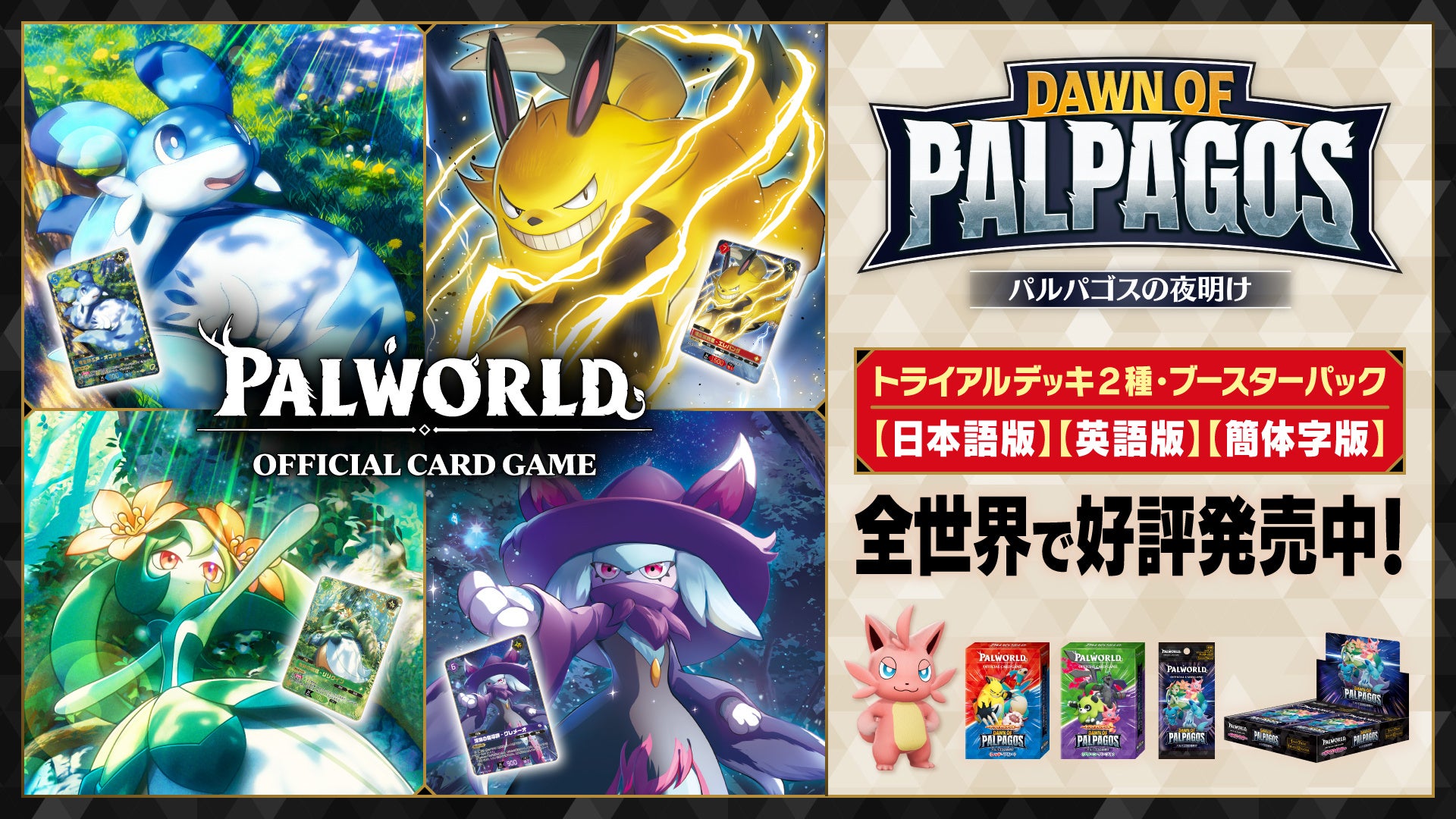
4.4 Million Packs. A Number Most Publishers Miss.
Bushiroad announced on July 30, 2026, that the first booster pack of the Palworld Official Card Game — titled “Palpagos Dawn” — had shipped 4.4 million copies worldwide. The pack went up for pre-order and retail the same day, in Japanese, English, and simplified Chinese simultaneously. A single booster holds seven cards. At a recommended retail price of 440 yen per pack, the wholesale figure alone clears 8.5 billion yen.
That revenue belongs to a game whose full release was less than a year away at the time of writing. It belongs to a franchise that became a cultural lightning rod for all the wrong reasons — allegations that copied Pokémon’s creature-capturing loop, accusations of exploitative labor mechanics, a Steam review-bombing campaign that eventually flipped when players stopped caring about the controversy and started having fun. And it belongs to a studio, Pocketpair, that has never made a TCG before.
The number matters because it reveals a revenue layer most game publishers still treat as a side bet.
The Untapped Layer
When a game goes viral, the immediate instinct is to squeeze more digital engagement: DLC, season passes, microtransactions, remasters. Physical card games are considered afterward, if at all, and usually by specialists. Pokémon dominates that lane. Yu-Gi-Oh! has built a decades-long ecosystem. But for every franchise that large, dozens more pass through the viral funnel each year and earn zero physical-card treatment.
Palworld’s 4.4-million-pack milestone shows what happens when a specialist publisher with deep TCG infrastructure meets a game IP that already has a built-in global audience. Bushiroad didn’t discover this strategy in 2026. They’ve been executing it for years across Weiß Schwarz tie-ins, Gundam card games, and their own Shadowverse IP. What’s new here is the speed of the crossover. Palworld was a breakout hit on Steam, expanded to console, and already had a fully shipped physical TCG on shelves with simultaneous regional releases.
Western publishers watching this should note that the card game is not a spinoff. It is a parallel product built to the same specifications as Bushiroad’s flagship TCGs — structured expansion cycles, collectible rarity tiers, constructed play formats, and official tournament support. The second booster, “Awakened Legends,” drops October 30, 2026. A full card lineup will be displayed at the Tokyo Game Show booth in mid-September. This is not a test run.
Who Wins, Who Loses
Bushiroad wins first. They already supply the production, distribution, and retail relationships. The 4.4 million packs are shipped, not necessarily all sold through to end consumers, but the gap between shipment and sell-through is where the real margin lives for the publisher. Retailers take the risk on unsold stock.
Pocketpair wins second. Their IP just proved it can sustain a secondary product category at scale. That validation changes how investors, partners, and platform holders view the studio’s long-term value. It also gives Pocketpair a template for future TCG or physical-media projects without having to build the infrastructure themselves.
Nintendo and The Pokemon Company lose the most by comparison. Palworld occupies the same emotional space as Pokémon — capture, collect, battle, trade — and it is pulling money from the same demographic of players who would have previously bought only Pokémon products. The Palworld TCG does not replace Pokémon. It fragments the addressable market for creature-collection card games, and that fragmentation is where opportunity lives for other IPs.
Small and mid-tier publishers lose the least. A studio with a popular game but no TCG infrastructure can still benefit from the proof-of-concept. If Palworld’s first pack ships 4.4 million copies, the industry now has a benchmark: the number that proves a viral game IP can support a physical card game at global scale.
Why Physical Card Sales Are a Cultural Barometer
Digital engagement metrics are noisy. Downloads spike, retention curves flatten, and live-service numbers can be manipulated or inflated by bots. Physical card sales are harder to fake. People spend real money on products they plan to open, trade, and keep. The 4.4 million-pack figure is a direct measure of fan commitment — not curiosity, not free-play sign-ups, but willingness to pay for collectible items tied to a game world.
This is the signal most publishers miss. A game can trend for six weeks on TikTok and then disappear from conversation. If that game can move millions of physical card units, the IP has crossed from internet moment into durable cultural property. The card game does not create that durability; it reveals it.
Bushiroad is already leveraging this readout. The TGS 2026 booth plans exclusive PR cards for attendees, limited-edition merchandise bundles, and wall displays of unreleased second-pack artwork. These are not marketing tactics for a product that needs discovery. They are tactics for a product that has already proven demand and now needs to sustain it across expansion cycles.
What Comes Next
The second booster, “Awakened Legends,” arrives October 30, 2026. If Palworld’s first pack established a baseline, the second will determine whether the IP can sustain repeat purchase behavior — the single most important metric for any TCG’s longevity. One-hit wonder IPs sell a first pack and then fade. Sustainable TCGs sell twelve, twenty-four, fifty expansions and build economies around them.
Bushiroad will announce competitive play dates, banned-list updates, and possibly ranked tournament support throughout the fall. The Tokyo Game Show run, September 17–21, is the first public test of whether collectors will continue showing up in person for a game that started as a PC survival title.
For publishers outside Japan, the takeaway is concrete: physical card-game demand is a measurable cultural signal that most digital-native strategies cannot capture. When a game IP moves millions of physical units, it is no longer just a game. It is a franchise with multiple revenue layers, and the studios and publishers who recognize that shift earliest will have a significant advantage in the next round of IP licensing deals.
The 4.4 million packs are a number. What matters is what the number means.