Paraguay's Impeached President and the Banking Scandal Reshaping
Paraguay's Senate has impeached and detained President Santiago Pena over the collapse of Ueno Bank, which froze millions of customers' deposits. The move fits a wider Latin American pattern where financial scandals trigger regime change.
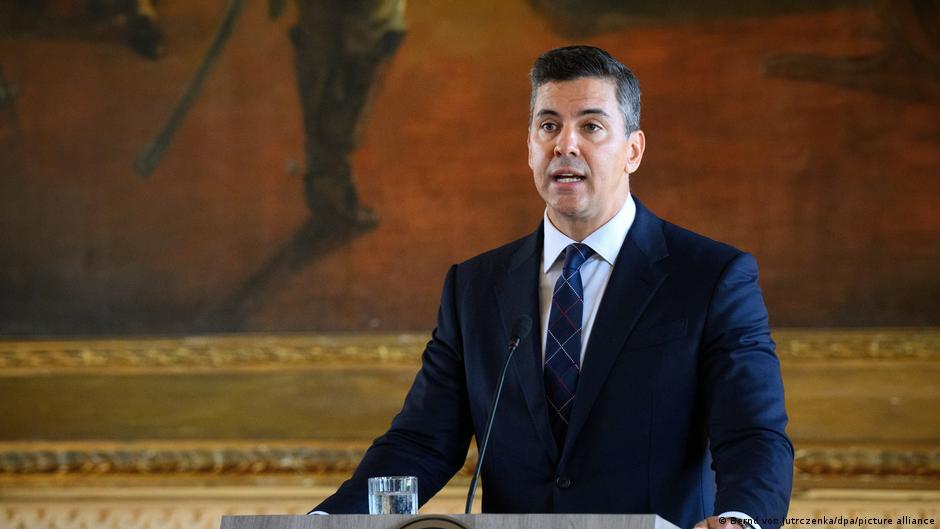
The Impression That Matters
When Paraguay’s Senate voted to impeach President Santiago Pena last Friday, they weren’t just removing him from office. They were deliberately avoiding the one exit route that would have protected him.
Pena had already resigned on Thursday, as any president facing an overwhelming vote would. But accepting his resignation would have preserved his lifetime seat in the Senate and presidential immunity — protections that would have let him walk away from criminal investigation untouched. Instead, senators convicted him. They stripped those shields. Within hours, prosecutors ordered his arrest and placed him under house arrest alongside former central bank chief Carlos Carvallo.
This is procedural ruthlessness of a kind you see in transitional moments. And it signals something important about Paraguay’s political trajectory: the ruling Colorado Party and Congress are willing to sacrifice their own to contain a crisis that threatens the entire institution.
The Mechanics of a Collapse
To understand why Pena fell so fast, you need to understand Ueno Bank.
Ueno served roughly 60 percent of Paraguay’s adult population — 2.94 million customers. It held $800 million in public-sector deposits, including money from the operators of Paraguay’s giant hydroelectric dams and $355 million from the Social Security Institute (IPS), which manages pension and healthcare funds for most Paraguayan workers. When the central bank found Ueno’s solvency ratio below half the required minimum, it forced a closure process. Accounts froze. Card payments stopped. Withdrawals vanished. Millions of Paraguayans woke up unable to access their life savings.
And then they discovered their president had taken out loans from Ueno. He’d sold his shares in Ueno Holding in April 2025, but lawmakers pointed to two outstanding loans — and argued the timing was suspiciously convenient.
The allegations ran deeper. Pena appointed Carvallo as central bank chief in 2023. Carvallo had previously chaired Financiera Ueno. Just 83 days after that appointment, the central bank approved Ueno’s conversion into a full bank. Lawmakers called it institutional capture — the state regulator turning a blind eye to its own political benefactor’s enterprise.
Thirty-five opposition lawmakers and ruling-party dissidents filed impeachment articles accusing Pena of conflicts of interest, misuse of pension funds, and cover-ups. The vote passed overwhelmingly. The party boss who backed him — Colorado Party leader Horacio Cartes — withdrew support. Congress President Basilio Nunez did the same. By Thursday evening, Pena was politically alone.
A Regional Pattern
What happened in Asuncion didn’t happen in isolation. It happened in a neighborhood.
Latin America has seen a familiar sequence play out over the past decade: massive state-backed or politically connected banks accumulate risk, a catalyst exposes the rot, citizens take to the streets, and the political establishment responds by jettisoning its most exposed figure. Venezuela’s PDVSA collapse followed a similar arc, though with more catastrophic consequences for the country. Argentina’s banking crises of the early 2000s produced a different kind of explosion — social, not just political. Brazil’s Petrobras scandal brought down presidents and sent executives to prison.
Paraguay’s case is notable because it shows the system still working — however violently. The courts moved. The legislature acted. Detainees included eight senior Ueno executives, with 27 officials and associates charged. Prosecutors are treating this as a criminal matter, not a political inconvenience.
But the speed of the collapse also reveals how fragile the arrangement was. Pena took office in August 2023. His term runs through August 2028. He lasted two years and three months before the ground gave way.
Who Wins and Who Loses
Pedro Alliana, the vice president, succeeds Pena and will serve out the remaining term. He inherits a constituency furious at the political class and a banking sector in rescue mode. The question for his administration is whether he can deliver restitution quickly enough to prevent further unrest — or whether the anger will redirect toward his government regardless.
The Colorado Party loses credibility even as it saves itself. Cartes and Nunez both distanced themselves from Pena before the vote. That tells you the party’s instinct is survival, not loyalty. But surviving a scandal doesn’t rebuild trust. If Ueno depositors don’t get their money back, the next election won’t reward the party that presided over the crisis.
Ueno’s customers win in theory — the political pressure should accelerate asset recovery and restitution. In practice, they face a long road. Recovering $800 million in frozen deposits from an insolvent lender takes years, not weeks. Pensioners are especially vulnerable: the IPS holds $355 million at Ueno, money earmarked for healthcare and retirement benefits that may now be permanently impaired.
Regional investors watching closely. Paraguay is a small economy, but it’s a member of Mercosur and sits at the intersection of Brazilian, Argentine, and Paraguayan capital flows. A banking collapse of this magnitude — touching 60 percent of the adult population — raises questions about regulatory capacity across the region. If Paraguay’s central bank couldn’t catch a solvency ratio falling below half the required minimum until it was too late, what does that say about the supervisors elsewhere?
What Comes Next
Pena remains under house arrest while prosecutors finalize charges. The public prosecutor’s office has yet to announce the final indictment. Criminal proceedings against a former head of state in Paraguay would be unprecedented — which makes the timing of that announcement critical.
The immediate practical concern is liquidity. The central bank and treasury will need to step in to restore confidence in the financial system. Depositors who can’t access their accounts today may try to flee to other banks tomorrow, creating a contagion risk that extends beyond Ueno.
On the political side, the impeachment sets a tone. A sitting president removed for banking mismanagement — not corruption per se, not violence, not constitutional violation, but financial impropriety — sends a message to every politician with a stake in the financial sector: the guardrails are tightening.
For emerging-market investors, Paraguay presents a binary scenario. The institutional response so far suggests functioning checks and balances — rare in the region when elite-connected banks fail. That’s positive for rule-of-law assessments. But the underlying fragility — a single bank holding nearly a quarter of all public deposits and serving six in ten adults — is a structural warning sign. Any shock to that concentration could repeat. The lesson from Asuncion is that the political system can absorb the shock. The economic system may not be so resilient.