Pattinson As Bond Signals A Franchise Bets On Longevity Over Legacy
Robert Pattinson's casting as James Bond is less about finding the next Connery or Craig — it's about what happens when a studio buys a 60-year IP and treats it like a portfolio asset rather than a torch to pass.
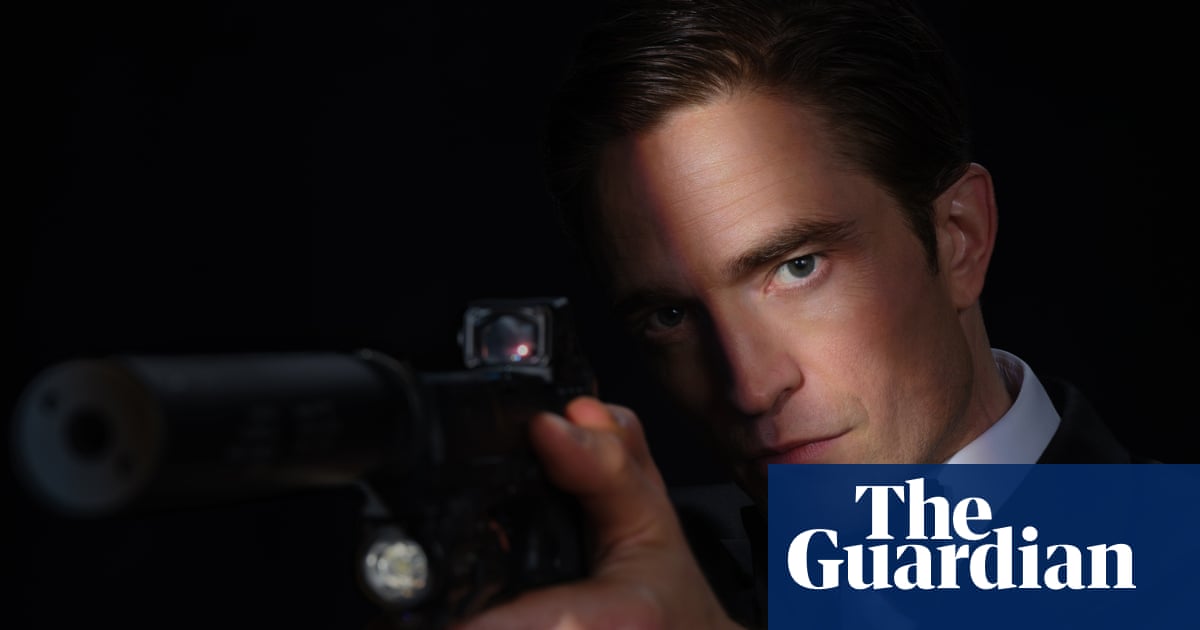
The Announcement Was Built To Break The Internet
At approximately 3pm GMT on Monday, the official James Bond accounts on X and Instagram erased everything — photos from Skyfall, clips from No Time to Die, decades of promotional imagery — leaving behind nothing but a repeating text string: “Identity confirmed.”
It was the digital equivalent of tearing down a set mid-rehearsal.
A press release arrived shortly after, confirming Robert Pattinson as the seventh actor to play James Bond in an official Eon Productions film. He’ll star in the 26th installment, directed by Denis Villeneuve and written by Steven Knight. David Heyman and Amy Pascal will produce. The project arrives under Amazon-MGM Studios, which acquired the Bond franchise for more than $1 billion in 2025 from Barbara Broccoli and Michael Wilson.
Pattinson, 40, called it “the honor of a lifetime.” It sounds genuine. But looking past the statement’s carefully calibrated gratitude is where the real story lives.
This isn’t just a casting choice. It’s a strategic document.
The Math Behind The Moment
James Bond has earned $7.8 billion globally across its feature-film run, making it the fifth-highest-grossing franchise in cinema history. That figure excludes merchandise, licensing, video games, theme park deals, and streaming revenue — streams that collectively are estimated to exceed the theatrical total.
When Amazon paid over $1 billion for MGM, Bond wasn’t a nice addition. It was the anchor asset. And an anchor asset doesn’t get treated like a legacy project waiting for its final bow. It gets treated like one that needs to compound.
Daniel Craig’s five films — beginning with Casino Royale in 2006 — established the template. His era turned Bond into a reliable blockbuster engine. Skyfall alone grossed $1.1 billion, a record that stood until Marvel started rewriting the ceiling. Craig’s Run-Time to Die crossed $770 million worldwide before opening weekend turbulence from COVID hit, and even then it represented a franchise resilience many executives were still recalculating.
But here’s what the box office numbers don’t capture: the demographics behind them. Craig’s Bond appealed broadly but skewed toward audiences who associated the character with physical grit, emotional realism, and star-driven event cinema. That model worked brilliantly for fifteen years. It’s no longer sufficient.
Why Pattinson Isn’t A Compromise — He’s An Upgrade In Disguise
There were whispers during the casting process that Amazon wanted someone with mainstream reach. Josh O’Connor and Callum Turner made a shortlist. Both carry enough prestige to justify critical attention without bringing the kind of global name recognition that matters when you’re spending upwards of $200 million on a single entry and marketing it worldwide.
Pattinson fits neither the traditional Bond mold nor the easy compromise bucket.
He became famous playing a vampire teenager in Twilight — a franchise that earned nearly $4.5 billion globally before fizzling. He then spent years making difficult, art-house-adjacent films with directors like David Cronenberg, Robert Eggers, and Lynne Ramsay. Most recently, he starred in The Batman, which grossed over $770 million and proved he could carry a tentpole without leaning on his earlier brand of supernatural romance.
In between, he appeared in Poor Things, The Lost City of Z, and several projects that won awards attention without moving unit sales. This is an actor who can do both sides of the contemporary box office split — prestige credibility and commercial gravity — simultaneously.
That’s rare. It’s also precisely what a buyer like Amazon needs.
The Franchise Risk Calculus Has Changed
Hollywood used to select Bond actors based on a narrow checklist: British or Anglophone, physically imposing, charmingly ruthless, old enough to be credible, young enough to survive four releases. The system produced mostly safe choices because safety mattered. Studios wanted guaranteed returns on expensive productions.
IP ownership has inverted that logic.
When you own a 60-year-old library with 28 entries and counting, your calculus shifts from maximizing individual release profits to extending the entire franchise lifecycle. Every decision should optimize for longevity, not just opening weekend.
Pattinson being Bond signals that Amazon is thinking about the next decade, not the next theatrical window. He turns out a new film every few years — he’s not chasing volume. He can shift between genres without losing audience credibility. He has demonstrated the kind of adaptability that lets a franchise pivot if cultural tastes change, which they inevitably will over the coming years.
Compare this with how studios approached the early 2000s, when the goal was simply maintaining momentum with whoever could fit the tuxedo. Under those conditions, casting meant filling a costume. Today it means investing in a franchise engine that has to survive algorithmic attention spans, regional market fragmentation, and the erosion of the traditional theatrical calendar.
What Could Go Wrong
Nothing succeeds without friction. Pattinson is 40, entering Bond territory at an age most actors have already moved on from the role. Sean Connery was 32 for Dr No. Roger Moore was 45 but had already been working in film for two decades before taking over. Patrick Stewart would be closer to Pattinson’s age today if he ever took the part — and nobody made that suggestion seriously.
Critics will argue Pattinson lacks the traditional swashbuckling charisma that defined previous Bonds. Some fans genuinely dislike him. That’s not going away. Online backlash is expected and has always accompanied each casting announcement; it fades faster than people think.
Denis Villeneuve is directing. Villeneuve makes deliberate, atmospheric films at a glacial pace. Dune: Part Two took four years. If Villeneuve brings that same deliberation to Bond, the franchise risks stagnation between entries — something no amount of box office success can compensate for once audience interest begins declining.
And there’s the elephant in every post-Covid discussion: the theatrical model itself. Streaming revenue may now constitute the majority of franchise income. If so, does a Bond film need to earn $1 billion in theaters, or just perform well relative to production cost? The answer changes what counts as failure, and Amazon clearly understands it.
Who Wins, Who Loses
Amazon wins immediately. It gains a younger James Bond with demonstrable staying power, attached to one of cinema’s most respected current auteurs, positioned for multiple releases and ancillary revenue streams stretching years ahead. Pattinson earns institutional credibility in a genre that historically rewards convention over choice.
Pierce Brosnan’s estate loses relevance more quickly than anyone anticipated. With Bond firmly in the hands of an American megastudio and an actor whose career defies nostalgic categorization, the franchise is moving far from the Britain-and-elegance tradition that Brosnan represented. The emotional closure of Craig’s tenure feels less like an ending and more like a transition point.
Casinos, luxury brands, and heritage partners who tied their identities to a certain idea of Bond may find themselves renegotiating relationships. The character hasn’t changed much on screen, but the business context surrounding him has shifted dramatically.
The Longer View
Bond survived Ian Fleming dying in 1964, never made a film in 1965, went through three unofficial entries before continuing officially, changed tone seven times, and survived two decades of critical derision that suggested the character was past its prime. Each era reinvented the protagonist for whatever cultural moment demanded it.
Today, reinvention looks different. It doesn’t mean updating Bond’s politics or making him younger and edgier for TikTok. It means recognizing that a 60-year-old property owned by a tech company competing for global attention requires different strategic priorities than a movie franchise did in 1997.
Amazon didn’t buy Bond to finish what Daniel Craig started. They bought it to start something else entirely.
The fact that they chose Pattinson suggests they believe the character can survive — perhaps thrive — under a version that acknowledges what changed instead of pretending nothing did.