Why the Pattinson Bond Changes Everything
Robert Pattinson's casting as James Bond alongside Denis Villeneuve isn't just a star swap — it signals a fundamental rethink of how franchises are stewardship-built for the streaming age. The Korean press is already ahead on what this means.
The Quiet Earthquake in Mayfair
The announcement landed exactly how these things always do — through an Instagram account no one checks until they have to. The official 007 page posted a still. Then Piccadilly Circus turned it into a screen-sized event. Seven names had been floating for months. Columbo Turner. Josh O’Connor. Jack Lowden. By process of elimination or something closer to instinct, they chose Robert Pattinson.
What happened next was less interesting than what did not happen: no panic from producers, no scramble to define a brand-new tone, no leaked battle between studio executives over whether this was too risky. The decision arrived with a director attached almost simultaneously. Denis Villeneuve. Not a reboot in the traditional sense. A stewardship pivot.
What the Korean Press Saw First
Elle Korea ran its coverage in under ten seconds of summary, yes, but buried inside that brevity was a sequence most English-language outlets will take days to unpack. It led with suits. Not the character arc. Not the box office projections. The fit.
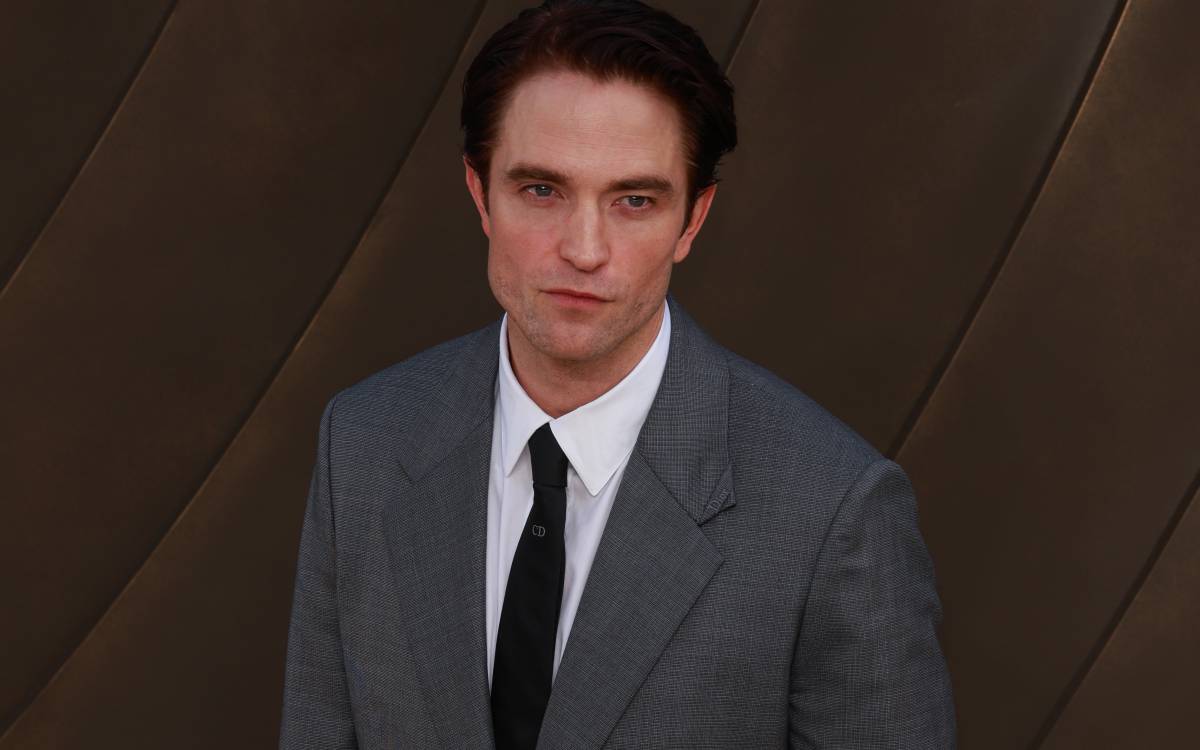
That is not trivial. The Korean entertainment press approaches Bond the way fashion editors approach a lead actor’s red-carpet history: as a text. Pattinson’s Dior double-breasted pinstripe at Venice, his buttoned-to-the-neck black suits, the deliberately undone look with a sky-blue shirt and half-buttoned collar — these were read as evidence that he has been preparing for this role through styling long before the contract was signed. That reading matters because it reframes the entire casting question. This is not an actor being handed an icon. This is an actor whose visual grammar already aligns with where the franchise seems to want to go.
English-language coverage is still catching up to that frame. Most headlines treat the announcement as celebrity news. The Korean outlet treated it as cultural continuity.
The Four-Film Year Problem
Let us be concrete. In 2026 alone, Pattinson appeared in four released films: The Drama with Zendaya, Christopher Nolan’s Odyssey, Primetime (premiering at Venice), and upcoming Dune: Part Three in December. On top of that sits a seventh James Bond film currently in development with Villeneuve.
That is not a schedule. That is a stress test. And it reveals the real fracture in how the industry treats its flagship properties. Studios used to space iconic roles across years. Now they stack them until the performer becomes interchangeable with the brand. Pattinson did not win this part despite his workload. He won it because his workload proves exactly what the producers needed him to prove: durability.
The old franchise model selected for scarcity. The new one selects for capacity. That shift explains the silence around “is he overbooked?” Any outlet still asking that question is operating on a calendar that no longer exists.
The Villeneuve Factor Is Bigger Than You Think
The pairing of Pattinson and Villeneuve is being treated like a dream collaboration. It is better described as a structural recalibration. Villeneuve arrives from Dune, a franchise whose economics have forced him to treat spectacle as architecture rather than decoration. His approach to world-building does not rely on gadget montages or exposition dumps. It relies on atmosphere, which happens to be the one thing the Bond franchise has struggled to sustain outside of Craig’s later entries.
More importantly, Villeneuve knows how to shoot menace in stillness. That is precisely the muscle the seventh Bond needs to flex. The character has spent decades oscillating between action hero and emotional cipher. Pattinson has spent his career occupying that same oscillation without resolving it. Placing him under Villeneuve’s direction is not romantic casting. It is tactical alignment.
Who Wins, Who Loses
The winners here are straightforward. Pattinson’s stock price in Hollywood just became numerical. Villeneuve gains access to a property with deeper distribution infrastructure than anything he has touched since Blade Runner 2049. Amazon MGM, now the owner of the Bond canon, gets a director and performer who can legitimize theatrical release windows in an era that still pretends streaming is the future of everything.
The losers are harder to name because they are abstract. They include the mid-budget spy thriller that used to exist in this genre’s shadow, the actors who believed a Bond nomination required three Quentin Tarantino cameos first, and the marketing teams that relied on vague teaser campaigns to generate pre-release interest. None of those models survive intact when the framing shifts from star power to creative authorship.
The Suit As Signal
There is a reason Elle Korea opened its analysis with tailoring. Suits in Bond films are never just clothing. They are world-building shorthand. Connery’s sharp lines announced confidence. Moore’s wider cuts signaled irony. Craig’s fitted silhouettes promised grit. Pattinson’s range — from bow-tie classicism to deliberately sloppy weekend dressing — suggests a Bond comfortable enough with ambiguity to carry a film without leaning on aesthetics for authority.
That may sound like fashion criticism. It is actually franchise forecasting. The next Bond era will not be defined by how many gadgets appear in act two. It will be defined by whether the character can hold attention through silence. Pattinson’s existing filmography proves he can. Villeneuve’s directors’ chair ensures someone will know how to shoot it.
What Comes Next
Expect the Korean press to continue tracking this story through styling choices long before English outlets catch up to the economic implications. Expect distributors to adjust release calendars around theatrical priority rather than streaming rollout plans. Expect other franchise holders to study this pairing quietly instead of making public statements about “next chapters.”
The announcement itself was routine. What follows will not be.