Pennsylvania’s First Measles Deaths in Decades Signal a Public Health Emergency
Butler County just confirmed its first measles case, while two Lancaster County residents died — the first U.S. measles fatalities this year. The outbreak exposes the fragility of vaccine coverage and carries warnings that extend far beyond Pennsylvania.
A County, Two Deaths, and a Pattern That Should Terrify Public Health Officials
Butler County just confirmed its first laboratory-confirmed case of measles. The patient, unvaccinated and from Western Pennsylvania, walked into a FasterCare urgent care center on August 20 — the kind of place people go when they’re sick but don’t want to wait weeks for a specialist appointment. Within days, the diagnosis was locked in by the state lab.
That the case itself is notable would be an exaggeration. Measles in the United States is not unusual — the country has seen sustained outbreaks since the virus was declared eliminated in 2000, mainly through imported cases that ignite local transmission in under-vaccinated communities. What is notable is the timing and the context. This confirmation arrived on the same day the Pennsylvania Department of Health announced that two Lancaster County residents had died of measles, likely the first U.S. measles fatalities this year.
Death from measles in America is supposed to be rare. Before the vaccine, it killed roughly 400 to 500 Americans annually and hospitalized thousands. Routine immunization drove those numbers to near zero. Now, a county in the Philadelphia sprawl and a county in the Pittsburgh region are both in the frame of the same outbreak, and people are dying again. The arithmetic of vaccine-derived herd immunity is unforgiving: measles requires approximately 95 percent coverage to stay contained. Every percentage point below that threshold opens a door.
What the Butler County Case Reveals
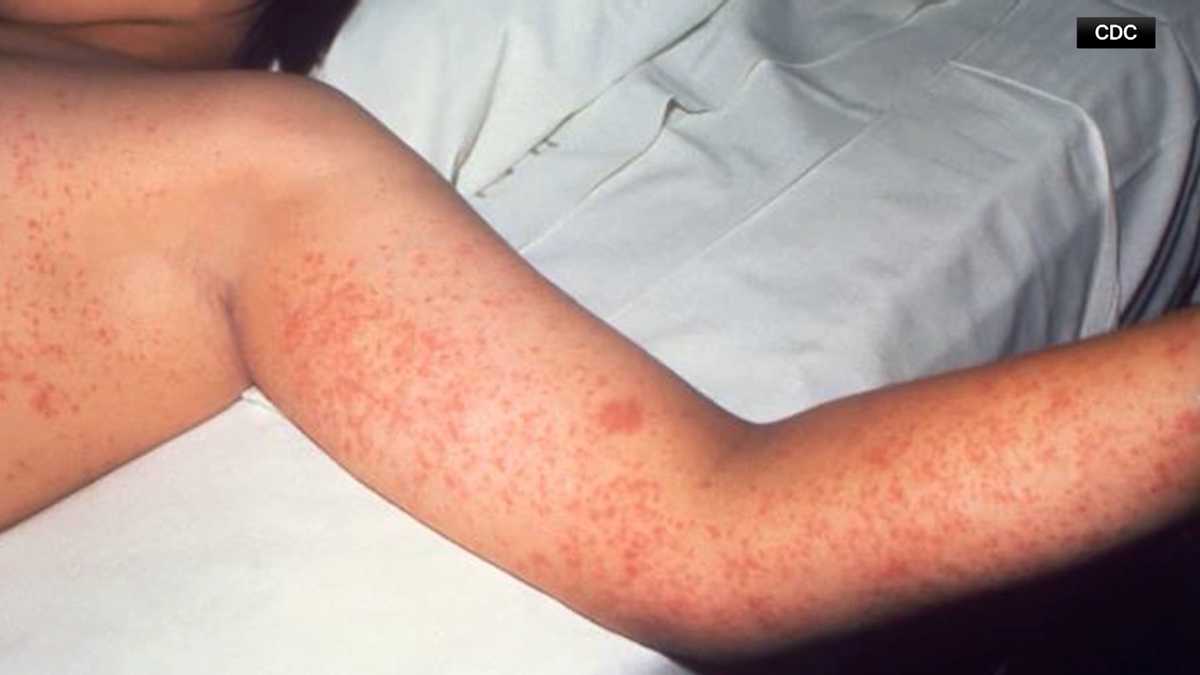
Dr. Michael Fiorina, chief medical officer at Independence Health System, did not release details about the patient beyond their isolation status. But the clinical pathway tells its own story. The patient presented with symptoms severe enough to seek urgent care — high fever, cough, runny nose, red eyes, followed by the characteristic rash. By the time a measles case walks into a shared-traffic urgent care facility, it is often too late to prevent exposure. Contact tracing is now underway for everyone who was in that Buffalo Township clinic during the visit. Staff and patients will be notified. The clock is ticking on quarantine windows.
The urgency here is not merely administrative. Measles is one of the most contagious viruses known to medicine. An infected person can transmit the virus up to four days before the rash appears, and the virus remains airborne in a room for up to two hours after the patient leaves. A single case in a waiting room — a place where immune-compromised patients, infants, and elderly individuals sit shoulder to shoulder — is a public health event.
The Pennsylvania Picture Is Worse Than It Looks
Two deaths in a single state may sound contained. But measles mortality rates in under-vaccinated populations have historically ranged from 1 to 3 percent among confirmed cases, and can climb far higher in malnourished or immunocompromised groups. The Pennsylvania deaths are described as “likely” the first U.S. fatalities this year, which implies the count could rise as cases with similar risk profiles go unreported or are still recovering. There is also the possibility that these deaths are the visible tip of a much larger outbreak curve — cases that have not yet been diagnosed, or that have been misdiagnosed as something else in the early stages.
Pennsylvania has struggled with vaccine compliance for years. School immunization laws here have loopholes that allow philosophical exemptions, and certain counties have rates of non-medical exemption filings well above the national average. The rural and suburban spread — Butler in the northwest, Lancaster in the southeast — suggests the virus is moving through communities where vaccination rates sit below the 95 percent threshold, not just in single enclaves but across multiple regions simultaneously.
Why This Should Alarm the World
The American measles story is not unique. Similar dynamics are playing out in the United Kingdom, where the WHO declared endemic measles transmission had returned in 2024 following a decade of steady decline. France, Italy, and Germany have all grappled with significant outbreaks driven by the same pattern: complacency after decades of vaccine success, followed by a resurgence in pockets of low coverage. The World Health Organization’s European region alone recorded over 100,000 measles cases in 2024, a figure that understates the problem because testing and reporting capacity varies wildly between member states.
What Pennsylvania is experiencing is a microcosm of a global regression. The tools to prevent measles exist — the MMR vaccine is one of the safest and most effective interventions in the history of medicine, with protection rates above 97 percent after two doses. What does not exist is the political and social infrastructure to ensure those tools reach the right people at the right time. Vaccine hesitancy is not a marginal phenomenon anymore. It has migrated from the fringes into mainstream discourse, reinforced by social media algorithms and, in some cases, by political figures who have made skepticism of public health institutions a component of their identity.
Who Wins and Who Loses
The winners in this scenario are the vaccine manufacturers and the public health systems that maintain robust surveillance and contact tracing — though neither group benefits in any moral sense from an outbreak occurring. The immediate losers are the people already infected: the Butler County patient, the two deceased Lancaster County residents, and whoever else has not yet been counted. The longer-term losers are children who will miss school during quarantine, healthcare workers who will spend nights on contact tracing calls, and communities whose trust in public health institutions will erode further after this episode.
There is also a quieter loser: the concept of herd immunity itself. Every measles death and every prolonged quarantine is a reminder that population-level protection is not permanent. It requires maintenance, like a levee that must be patched after every storm. Pennsylvania’s current outbreak is a crack in that levee.
What Happens Next
The Pennsylvania Department of Health will issue advisories. Urgent care centers and hospitals will be reminded to screen for measles in any patient presenting with fever and rash. Schools in affected areas may see temporary closures if exposed students cannot produce proof of vaccination. Governor办公室 will likely make a statement. And then, hopefully, the outbreak will begin to recede — not because the virus has disappeared, but because the number of susceptible hosts in the immediate vicinity has been depleted or immunized.
But the real question is whether Pennsylvania — and the United States, and the world — learns anything from the fact that people are dying from a vaccine-preventable disease in the 2020s. The science is settled. The policy debate should be over. What remains is a gap between knowledge and action, and that gap is where measles lives.