The Penny Is Dead. What Happens Next For Cash And Consumers?
Trump signs bipartisan bill ending penny production after nearly 250 years. With 114 billion pennies still circulating and businesses now allowed to round to five-cent increments, the death of the cent triggers fresh debates over cash access, tax fairness, and what comes next for small-change economies worldwide.
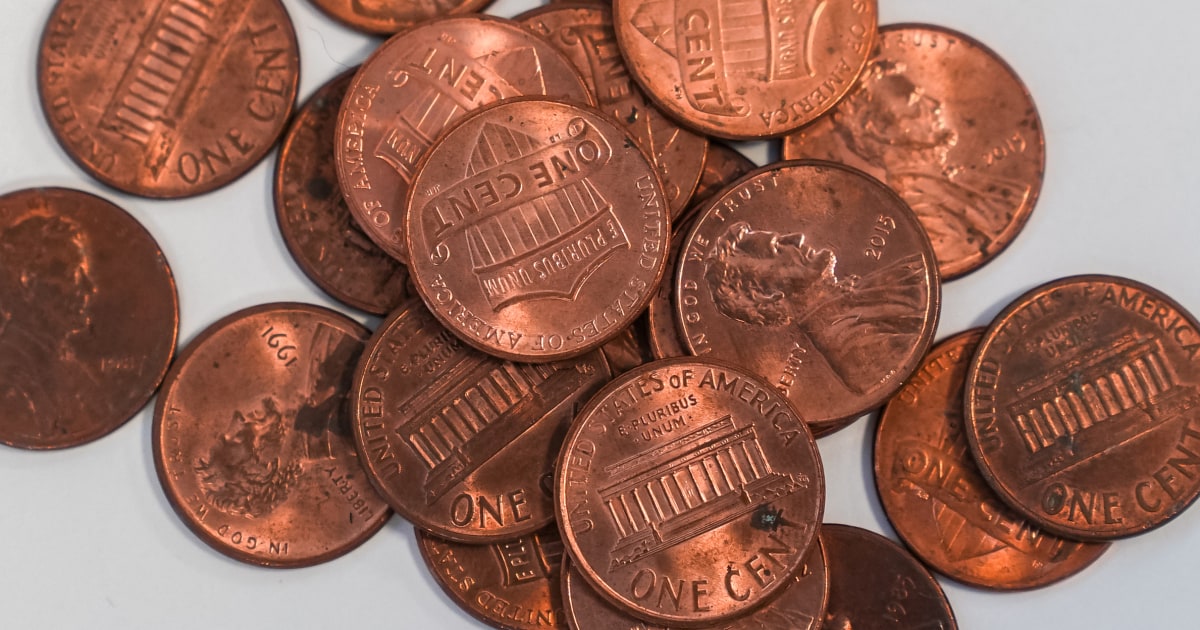
The Death Of A Two-Hundred-and-Thirty-Year-Old Symbol
On Friday, Donald Trump signed the Common Cents Act into law, formally directing the U.S. Mint to stop producing pennies — ending a run that began in 1793. Both chambers passed it by voice vote. There was no opposition worth noting.
The savings are real but not dramatic. Rep. Lisa McClain put the annual figure at $85 million. The U.S. Mint itself estimated closer to $56 million last year. Each penny costs nearly four cents to manufacture. That imbalance — the coin costing more than its face value — has plagued policymakers for decades. It finally caught up with political will.
But the number that actually matters is 114 billion. That is the approximate count of pennies currently in circulation, according to Treasury Department figures. They are still legal tender under the new law, valid for all debts, public charges, taxes, and dues. The Federal Reserve has said it will continue recirculating them for as long as possible. What happens next depends on how those coins leave our pockets — and whether we notice they are gone.
Rounding Rules And The Quiet Tax On The Poor
The most consequential part of the bill is not the production halt. It is the clause that gives businesses permission to round cash transactions to the nearest five-cent increment. Grocery stores, drugstores, gas stations — anyone that accepts cash can now charge $3.99 and accept $4.00 instead. Or charge $4.01 and take $4.00.
This is not new territory. Canada eliminated its penny in 2012 and moved to similar rounding rules. Australia phased out one-cent and two-cent coins earlier. In both cases, consumers adapted quickly, and the friction turned out to be smaller than expected. But adaptation and equity are different questions.
Researchers at the University of Toronto studied Canada’s changeover and found the rounding rules had a regressive effect — low-income shoppers paid more often than they received change back. The asymmetric implementation mattered: cash buyers rounding up slightly more frequently than sellers rounded down, especially at lower price points. That dynamic does not disappear because lawmakers declare it gone.
The question for the United States is whether 114 billion remaining pennies softens the blow or intensifies it. People who carry loose change — elderly households, cash-dependent workers, families without debit accounts — already understand the economics of the penny. They also understand what it feels like to lose something small repeatedly.
Critics of the reform argue exactly this: that eliminating the penny is a step toward cash exclusion, that it pushes vulnerable populations further toward card-based systems where fees, overdrafts, and credit-interest rates do far more damage than half a cent here and there. It is an argument with empirical grounding, not just sentiment.
Who Wins And Who Loses When Cents Die
There are clear winners here. The U.S. Mint saves money on production. Retailers save time — studies in other countries consistently show cashiers spend less per transaction when pennies are removed from the counting equation. Collectors get limited-run memorial pieces; the Mint confirmed those will still exist. Congress gets a bipartisan win with no controversial votes required.
The losers are harder to catalogue. Not everyone uses digital payments. An estimated 6% of American adults remained unbanked or underbanked as of recent Federal Reserve surveys. To those people, the penny was never worthless — it was the only denomination that guaranteed precision. Its elimination is a polite way of saying precision no longer matters for cash transactions.
Small-business owners with thin margins may welcome the rounding, but they also live inside a cash ecosystem. Some will absorb the rounding losses voluntarily. Others will pass them through. Either way, the burden shifts from government coffers to individual register drawers.
And then there is the psychological dimension that economists struggle to quantify. The penny lost purchasing power long ago, but it retained symbolic weight. It represented the principle that even one cent deserved to exist. Removing it signals that principle no longer applies — and that the threshold for what counts as economically rational keeps moving upward.
What Comes Next For Nickel Manufacturing
A lesser-known provision in the bill deserves attention. With the penny officially retired from regular production, the nickel — now the lowest-value circulating coin — can change its composition. Currently made of a nickel-copper alloy, it will shift to a zinc core with a nickel outer layer. The Treasury Department flagged this as a cost reduction measure. Copper and nickel are significantly more expensive than zinc.
This might sound like minutiae. It is not. Metal content in coins matters because it creates incentives for melting and exporting. In the late 2000s, the U.S. Mint faced serious pressure from bullion traders wanting to purchase pre-1982 copper pennies for their metal value. Changing the nickel’s composition avoids repeating that scenario — but it also raises a deeper question about how much precious metal a nation should embed in its smallest denomination when that denomination exists only to make accounting simpler.
If the nickel itself eventually becomes too costly to produce relative to its face value, the same logic that killed the penny will apply to it next. That timeline is uncertain but the direction is predictable.
Will Other Countries Follow?
The answer is almost certainly yes — but not everywhere at once, and not for the same reasons.
The United Kingdom abolished its one-penny and half-penny coins in 1984. Canada’s 2012 move was faster than America’s because the Canadian cent had already lost virtually all domestic utility. Mexico has discussed phasing out its smallest coins without taking decisive action. The Eurozone treats cent-level coins as transitional by design.
What makes the U.S. case distinctive is the sheer scale. 114 billion pennies is an extraordinary number for any single country to manage. No other major economy holds that much physical sub-cent mass in active circulation. The logistical footprint alone — transportation, sorting, vault storage — makes the American experiment unusually visible to foreign central bankers watching from abroad.
Emerging markets face a different calculus. Where inflation erodes small denominations faster, governments tend to drop them sooner. Where cash remains dominant, the social contract around minimum-unit exchange carries heavier weight. India recently demonetized its smallest rupee coins without fanfare. Brazil phased out its menor centavo decades ago. The pattern is universal: once the decision is made, the speed of implementation depends on political courage, not economic necessity.
The Real Cost Of Ending The Penny
$85 million a year in government savings sounds significant until you divide it across 330 million people — roughly 26 cents per person annually. The penny’s true cost was never fiscal. It was political. It asked every generation of Americans to decide whether something with near-zero purchasing power still deserved institutional support. For 230-plus years, the answer kept coming back yes.
Friday’s vote changed that answer permanently.
The Common Cents Act does not ban pennies. It does not require merchants to offer decimal-only checkout. It does not compel digital payment adoption. It simply removes the government’s obligation to keep creating coins that cost more than they are worth and grants private actors permission to round. Everything else is up to market forces, consumer habits, and the informal agreements people reach at store counters.
That arrangement — part deregulation, part social experiment — is what makes this moment larger than a coin. Cash economies evolve through gradual erosion, not sudden declaration. The penny’s retirement marks another quiet milestone in that slow transition. How Americans adapt to a world without the smallest denomination of their currency will reveal more about the future of money than the press release announcing it ever could.