Perplexity's zero-token local agent flips the cloud AI cost equation
Perplexity's Portable Computer runs AI agents on-device using tiny models, eliminating token fees for local work. It's a gamble that could redefine how cloud-dependent AI companies compete.
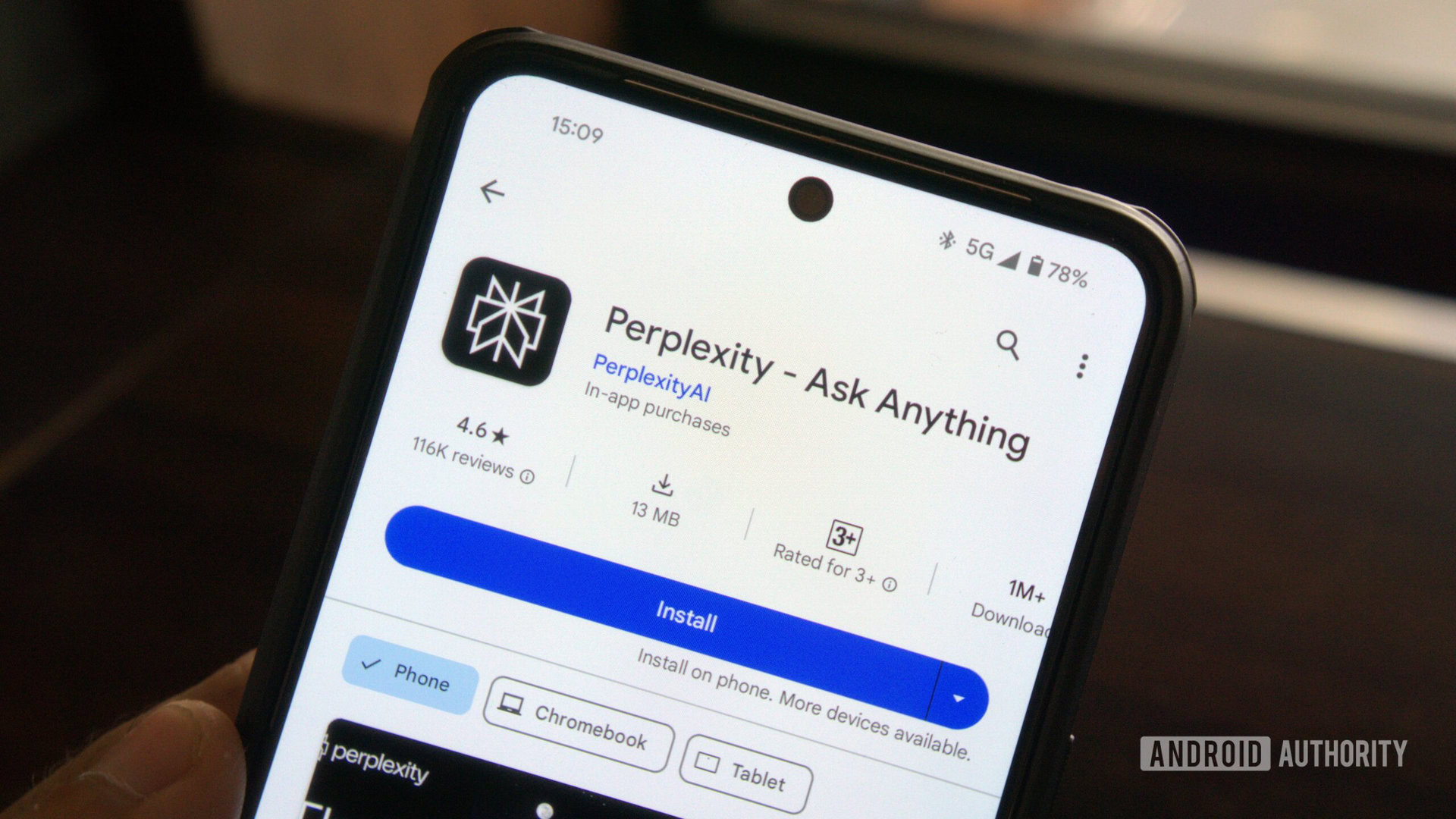
Perplexity is betting your hardware will replace its cloud
Perplexity’s new Portable Computer changes something most AI companies pretend doesn’t matter: how it gets paid.
The company announced the local-first AI agent today, running entirely on the user’s machine instead of in Perplexity’s cloud. The result is a zero-token-cost experience for tasks handled locally. That may sound like a minor discount. It isn’t.
For years, the dominant AI business model has been simple — charge per token, scale with usage, and keep the compute in the cloud. Perplexity built its core product on that model. Search queries, reasoning chains, tool calls — all flowed through Perplexity’s servers, all billed against user subscriptions or pay-as-you-go credits.
Portable Computer inverts that. When a task runs on-device, Perplexity earns nothing from it. The user pays for nothing more than their own hardware and their existing Pro or Max subscription.
This is not a small bet. It means Perplexity is accepting a revenue model where a growing share of useful work generates zero marginal income. The company is effectively arguing that ecosystem lock-in and user habit formation matter more than immediate per-task extraction — a bet that could pay off if the local layer becomes the default onboarding point for an entire generation of AI users.
The hardware partner that makes it possible
Perplexity didn’t build this alone. The launch is partnered with NVIDIA, which provides both the chips and the optimized small models that make local execution feasible.
The supported models are deliberately small: Qwen 3.8, NVIDIA’s Nemotron 3.5 Lightning, and PPLX 27B — a post-trained variant of Qwen 3.8 designed for agentic workflows. These are not flagship reasoning models. They are efficiency models, engineered to run on consumer-grade GPUs or dedicated edge hardware like NVIDIA’s DGX Spark.
DGX Spark support is available today for Perplexity Pro and Max subscribers. RTX GPU support and Nemotron 3.5 Lightning are coming soon.
The choice of hardware matters. DGX Spark is NVIDIA’s compact, desktop-friendly inference platform — not a data center card. It’s positioned for users who want serious local compute without enterprise infrastructure. That’s a deliberate signal: Perplexity is targeting the enthusiast and power-user segment first, not the casual search user. Those are the people who already own GPUs, who tinker, who will write about their setup online — free marketing for NVIDIA and a proof-of-concept that Perplexity can expand from once the hardware base grows.
Who wins, who loses
The winners are obvious.
Users who run high-volume tasks locally save money. No tokens burned. No fear of unexpectedly large bills from long reasoning chains or repeated tool calls. Privacy is also a winner — data never leaves the machine.
NVIDIA wins too. Portable Computer is a showroom for its DGX Spark and RTX platforms. Every user setting up the agent is effectively running a NVIDIA hardware demo. That’s marketing at scale, disguised as a product feature.
The losers are less visible but real.
Perplexity’s own token-revenue stream faces pressure. The more capable local models become, the more work shifts off-cloud, and the less Perplexity earns from active users. The company is trading short-term margin for long-term ecosystem control. If the local experience proves sticky — if users come to rely on the seamless handoff between edge and cloud — Perplexity may end up with a massive installed base that generates far less revenue per capita than the current model predicts.
Cloud AI providers that don’t adapt face a similar squeeze. If users can run acceptable-quality agents locally for free, the value proposition of paying per-token for cloud inference weakens — especially for routine tasks. Anthropic and OpenAI may watch Perplexity’s experiment closely and respond by lowering prices or launching their own local offerings, but neither has moved aggressively yet.
The larger bet: edge AI as infrastructure
Portable Computer arrives at a moment when the AI industry is splitting into two camps: cloud-dependent models and on-device models.
The cloud side offers stronger reasoning, broader tool access, and constant model upgrades. The edge side offers privacy, zero marginal cost, and independence from internet connectivity or provider outages. Neither side has proven dominance yet. But the economics are shifting. As local models improve and hardware gets cheaper, the boundary between cloud and edge will blur — and Perplexity is positioning itself on both sides.
The company still routes non-local tasks to the cloud. Web search, advanced reasoning, and any operation the local model can’t handle trigger a prompt asking permission before calling cloud models. That hybrid approach means Portable Computer isn’t a replacement for Perplexity’s core service. It’s an expansion.
This hybrid framing is the differentiator. Most competitors treat local and cloud as separate products. Perplexity is treating them as layers in a single agent architecture — the local layer handles the cheap, private, routine work; the cloud layer handles everything else. The pricing experiment here is whether users will accept a flat subscription for unlimited local use and only pay per-token when they choose the cloud path. If they do, the per-token model becomes optional rather than mandatory — a much harder thing to defend to investors.
What happens next
Expect competitors to respond. Anthropic, OpenAI, and Google all have local or edge strategies in various stages. None have matched Perplexity’s hybrid framing yet — a single agent that seamlessly splits work between local and cloud based on task complexity and user consent.
The pricing implications are the real story. If zero-token local execution becomes standard, the subscription model replaces the usage model for a growing class of users. Perplexity is effectively testing whether people will pay a flat fee for unlimited local AI and only pay per token for cloud tasks that exceed local capability.
That experiment could define the next phase of the AI market. If it works, the per-token era fades. If it fails, cloud AI stays dominant and local agents remain a niche.
Perplexity is making the bet that its users will prefer control and cost certainty over cloud convenience. The question isn’t whether the technology works — it already does, for a subset of tasks. The question is whether the economics can sustain a company whose most loyal users increasingly do everything locally.
That’s a risk worth watching. If the local-first path pays off, Perplexity redefines the market and builds a moat that no per-token competitor can match without cannibalizing its own revenue. If it doesn’t, the company may find itself with a product that users love and a business model that can’t support it. Either way, the next twelve months will show whether zero-token is a gimmick or a gateway.