How Persona Survived 30 Years — and Why It Matters Now
Atsushi Gotoda's franchise has outlived every gaming trend since 1996. The 30th anniversary live broadcast and expanding merchandise ecosystem reveal Atlus's quiet strategy for sustaining a multi-generational brand.
The Live Broadcast Is Only the Surface
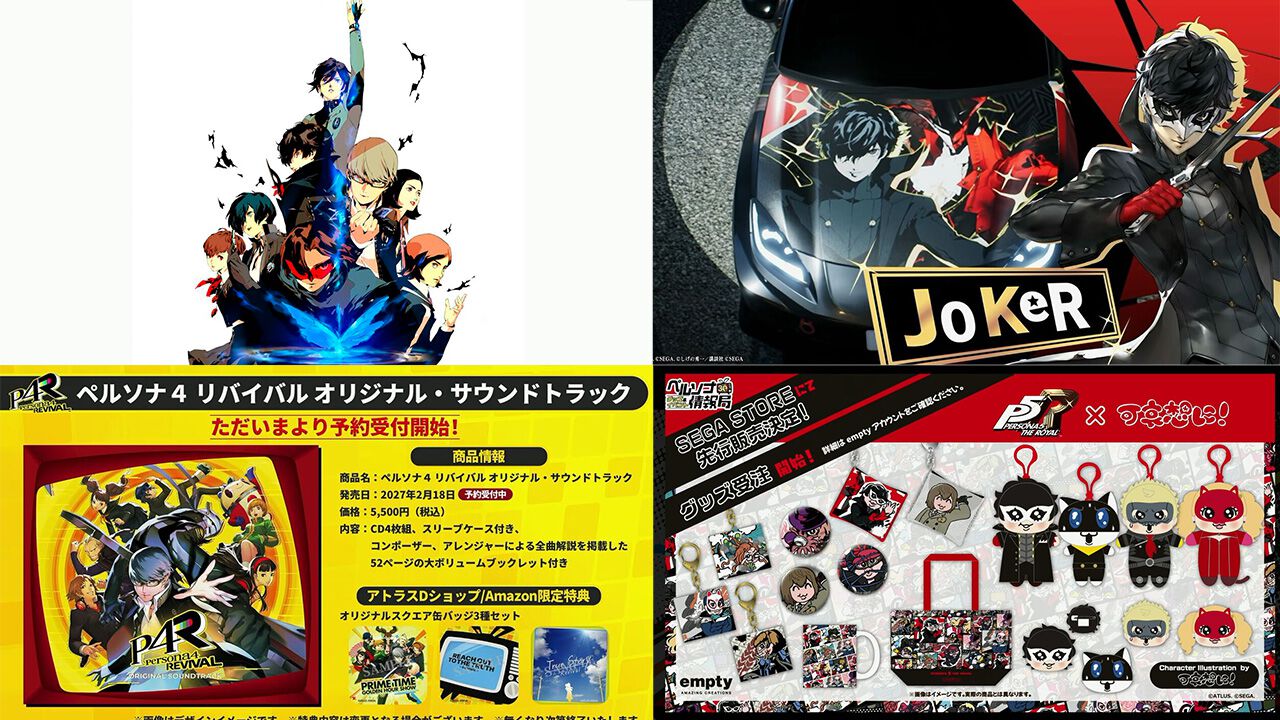
The September 20 special live broadcast marking Persona’s 30th anniversary may look like standard franchise celebration fare — voice actors, merchandise reveals, a “goods and event information bureau” sidebar — but the guest list itself tells a quieter story about how deep this franchise runs.
Daisuke Namikawa, Jun Fukuyama, Shiori Sakasaki, Lyn, Azumi Takahashi, Lotus Juice, and producer Kazuhisa Wada all appeared. That roster isn’t just a who’s who of Japanese voice talent. It’s a chronological map of the franchise’s expansion: Namikawa and Fukuyama carry the iconic roles from the early Persona 2 and Persona 3 era, while Sakasaki and Takahashi represent the newer generation of Persona vocalists and performers. Lotus Juice, the hip-hop producer behind much of the series’ recent musical identity, bridges the aesthetic gap between Atlus’s traditional sound design and the globalized pop-rap direction the series has taken since Persona 5.
The presence of all these voices in one broadcast suggests something about Atlus’s strategy: they’re not just celebrating a game series. They’re curating a living archive.
How a Niche JRPG Became a Multi-Generational Brand
Persona first appeared in 1996 as a spinoff within the Shin Megami Tensei franchise. It was a tactical RPG with heavy dungeon-crawling and social simulation elements — ambitious but firmly in the realm of niche JRPG territory. Thirty years later, the brand generates more revenue, cultural attention, and international fan engagement than nearly any other Japanese gaming property.
The mechanism behind this longevity is worth examining. Unlike franchises that rely on continuous annual releases, Persona operates on a model closer to major film studios: long development cycles punctuated by cultural moments. Each new numbered entry arrives with enough time between them to build anticipation and allow previous games to accumulate a dedicated following through re-releases, remasters, and live performances.
The upcoming Persona 4 Revival soundtrack, arriving February 18, 2027, with newly arranged bonus tracks not found in the original game, is a perfect example. Atlus isn’t just reissuing old material. They’re adding value to existing IP in a way that makes the catalog itself feel alive and evolving. The original soundtrack of Persona 4 came out in 2008. Nearly two decades later, fans are being offered new arrangements of music they may have known since their teens.
The Ecosystem Beyond the Games
What the live broadcast revealed most clearly is how far Persona has moved beyond being a game series. The Initial D Arcade crossover, the expanding goods line, the scheduled museum exhibition — these aren’t ancillary distractions. They’re the infrastructure of a modern multimedia franchise.
Consider what this ecosystem means practically. A casual fan might encounter Persona through the Initial D racing game collaboration, never play a numbered title, but purchase merchandise or attend an exhibition. That fan becomes part of the franchise’s total engagement numbers. Meanwhile, the core gaming audience gets additional layers of engagement through soundtracks, live events, and the annual broadcast cycle that keeps the franchise constantly in public view.
The Famitsu 40th Festival scheduled for November 7, which will feature gaming trials, editorial experiences, historical exhibitions, stage events, and signature photo spots, represents another layer. Atlus is participating in larger industry celebrations that position Persona not as a single game but as a cultural institution within Japanese entertainment.
Who Wins When Persona Turns 30
The winners are clear. Atlus, now a Sega subsidiary, has built one of the most valuable IP portfolios in Japanese gaming. The voice actors and musicians attached to the franchise have gained sustained careers tied to properties that remain relevant across decades. Fans of all ages have a shared cultural touchstone that connects their personal history to a broader community.
The less obvious winner is the broader JRPG genre. Persona’s success has demonstrated that Japanese role-playing games can achieve global mainstream status without abandoning their most distinctive elements — social simulation, psychological themes, anime aesthetics, and deeply Japanese pop culture references. This proof of concept has opened doors for smaller developers and given publishers confidence that niche Japanese games can find worldwide audiences.
There’s a risk embedded in this model, too. As Persona expands further into merchandise, crossovers, and multimedia events, the core game risks becoming just one node in a larger network. If the franchise becomes too much about the ecosystem and not enough about the games, it could lose the creative urgency that made each numbered entry feel essential. Atlus seems aware of this tension — the fact that they’re still producing new mainline entries rather than resting entirely on legacy content suggests they’re trying to balance both sides.
What Comes Next
The 30th anniversary marks a milestone, but the real question is sustainability. Can Persona remain culturally relevant for another three decades? The current trajectory suggests yes — the franchise has already proven it can adapt to changing gaming landscapes while maintaining its core identity. The musical evolution from early 1990s jazz influences to the hip-hop and pop-infused sound of recent entries shows Atlus’s willingness to update the franchise’s aesthetic without abandoning what makes it distinct.
What English-language readers often miss about Japanese franchise anniversaries is that they’re rarely just nostalgia exercises. They’re strategic moments where companies signal their confidence in the brand’s future. The scale of this year’s broadcasts, the number of concurrent projects, and the depth of guest participation all point to an organization that sees Persona not as a legacy property to be milked, but as a living brand with significant runway ahead.