Plague Resurfaces in Siberia: EU Biosecurity Exposed
A suspected lab-acquired plague outbreak in Russia reveals how geopolitical isolation cripples Europe's health security. With Moscow cut off from Western channels, the EU monitors closely but cannot act decisively—showing that 21st-century medicine means little when trust is broken.
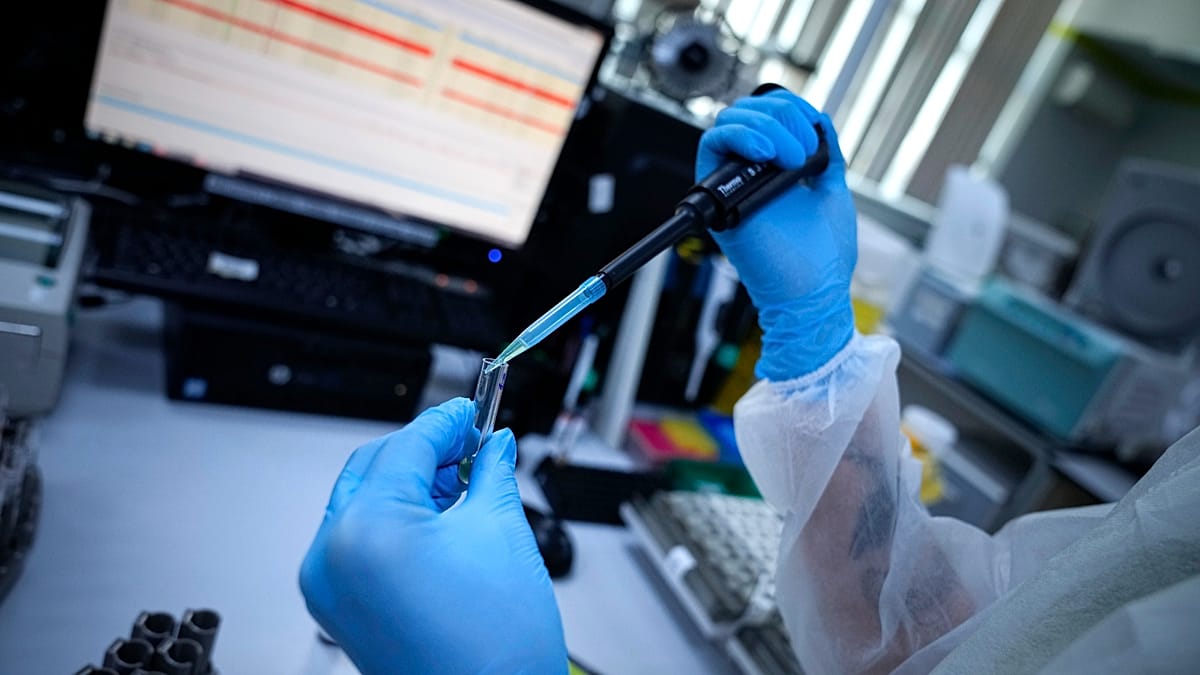
The Ghost in the Test Tube
A lab worker at the Irkutsk Research Anti-Plague Institute died on 2 October after a test tube containing Yersinia pestis broke. Her cause of death was recorded as “pneumonia of unknown aetiology.” Within weeks, roughly 200 people who had contact with her were placed under strict medical observation. Russian authorities have not confirmed an outbreak. The European Commission says it is monitoring the situation “very closely.”
Plague has not been diagnosed in Europe for more than half a century. Yet this single accident in a Siberian laboratory has reignited fears that the world’s most infamous pathogen can still slip through the cracks of modern biosecurity.
How Europe Tries to Watch Without Seeing
The EU’s response follows a familiar pattern: vigilance without visibility. Brussels is in touch with the European Centre for Disease Prevention and Control (ECDC) and is relying on the World Health Organization to relay updates from Moscow. Direct contact between EU health agencies and their Russian counterparts has been severely restricted since the full-scale invasion of Ukraine began in 2022.
“No dedicated meeting yet, no emergency measures,” a Commission spokesperson confirmed. The same cautious tone comes from Washington. The US State Department has urged Moscow to provide “accurate” information “quickly and openly.”
This is not merely bureaucratic hesitation. It is a symptom of a deeper problem: Europe’s biosecurity architecture depends on information flows that no longer exist.
The Laboratory That Should Have Been Safer
The Irkutsk institute is a specialist facility—the kind of place designed to handle exactly this scenario. Lab-acquired infections from Yersinia pestis are extremely rare. When they occur, they usually point to a breach in protocol, a failure in containment, or a lapse in training.
The fact that a test tube broke suggests either inadequate safety equipment or rushed handling. Either way, it raises a simple question: if a high-containment laboratory in Siberia cannot guarantee its own safety, what happens when pathogens cross borders through trade, travel, or conflict?
Russia has spent decades building anti-plague research capacity, partly because the disease remains endemic in parts of Central Asia and Siberia. But that expertise exists behind a geopolitical wall. The EU can monitor reports, but it cannot independently verify them.
Pneumonic Plague: Fast, Deadly, Treatable
Pneumonic plague is the most acute form of the disease. It attacks the lungs and spreads through respiratory droplets during close contact. Without treatment, mortality approaches 100%. With modern antibiotics, survival rates rise sharply—but time is critical. Symptoms appear within one to three days of exposure, and the disease can progress to severe pneumonia and shock within hours.
The EU’s spokesperson noted that “we are much better prepared for any pandemics after COVID,” pointing to stocked antibiotics and established response protocols. That confidence is partly justified. Europe has the drugs, the diagnostics, and the surveillance systems to contain a localized outbreak.
But preparedness is not the same as security. Preparedness assumes you know what is happening, where it is happening, and who is affected. In this case, none of those assumptions hold.
Who Wins and Who Loses
If the outbreak remains contained to a handful of contacts, Russia wins by demonstrating control. The EU wins by showing vigilance. The lab worker loses her life, and the 200 under observation lose their freedom of movement.
If secondary cases emerge—if the pathogen spreads beyond the initial circle—the dynamics shift. Travel disruptions could follow. Trade restrictions might be imposed. Public panic could outpace the actual threat.
Meanwhile, Russia’s isolation from Western health networks means the world’s best epidemiologists cannot help. The EU’s reliance on WHO channels adds a layer of delay and potential filtration. In a disease that moves by the hour, delay is a luxury nobody can afford.
The Bigger Picture: Biosecurity in a Fractured World
This incident is not just about plague. It is about what happens when health security becomes entangled with geopolitics.
The International Health Regulations require countries to share outbreak data promptly. They also require states to maintain core public health capacities. Russia is compliant on paper. In practice, the war in Ukraine has turned health cooperation into a diplomatic liability.
The EU’s response mirrors a larger trend: a world where science and health are increasingly filtered through political lenses. When a pathogen crosses a border, it does not care about sanctions, embargoes, or severed diplomatic ties. But the systems designed to stop it do.
What Comes Next
For now, the EU plans no emergency measures. The focus remains on surveillance and information gathering. If Russia confirms an outbreak and shares data, the response will likely be swift: trace contacts, distribute antibiotics, issue travel advisories if needed.
If Russia stays silent, the uncertainty will linger. Rumours will fuel speculation. Trade routes may face informal barriers. The EU will continue to monitor “very closely”—a phrase that in diplomatic language often means “we are watching but cannot act.”
Longer term, this episode should prompt a rethink of how Europe builds biosecurity resilience when traditional partnerships are broken. That means investing in independent surveillance capacity, stockpiling diagnostics and therapeutics for exotic pathogens, and finding alternative channels for data exchange when state-to-state cooperation is impossible.
The Warning Wrapped in a Whimper
Plague killed millions in the Middle Ages. It was thought conquered by public health, sanitation, and antibiotics. A single lab accident in Siberia shows that the ghost is still there, waiting for a moment of distraction.
Europe’s response reveals the fragility beneath the surface. The medicines exist. The protocols exist. The political will to share information does not.
In a world where a broken test tube can trigger global alarm, biosecurity is only as strong as the trust that underpins it. When that trust is gone, even the best-laid plans become exercises in watching from a distance.
The EU is watching. But watching is not the same as seeing. And in the battle against a pathogen that moves by the hour, that distinction may prove fatal.