The Pope's AI Warning Comes From Paris, Not Silicon Valley
Pope Leo XIV used a visit to France to reframe the AI ethics debate as a moral crisis — not a technical one. His remarks in post-Trump America's European counterpart carry signals most English-language coverage is missing.
The AI debate just moved
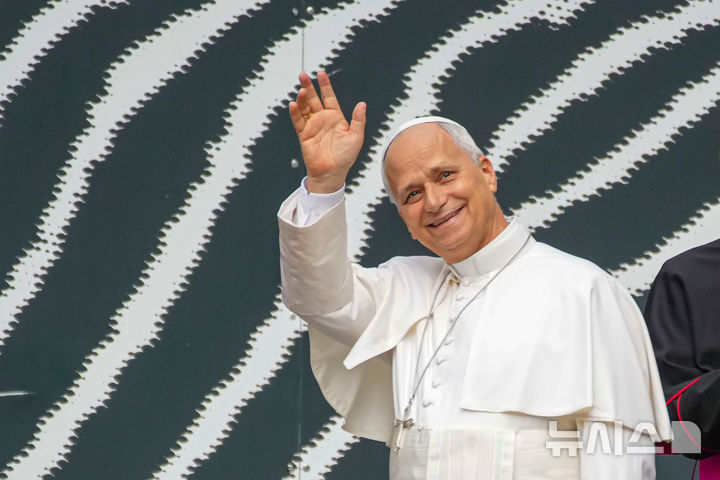
Pope Leo XIV stood before an expected 600,000 people on the Champs-Élysées and told them humanity must not lose itself in an “AI paradise.” The quote will travel fast. But the context is where this story actually lives.
Leo, the first American-born pope, chose Paris — not Geneva, not Silicon Valley, not the UN — to deliver what amounts to a moral indictment of unchecked technological acceleration. He framed the question not as one of regulation or alignment, but of discernment: the urgent need to educate and train people to distinguish “what is morally good.” That framing shifts the entire burden from technologists to everyone else.
This matters because the English-language AI ethics conversation is dominated by voices from California. The debate plays out in congressional hearings, tech summit keynotes, and op-eds from former OpenAI employees. What gets lost is the possibility that the question of AI’s meaning might belong to a different tradition entirely — one that has been asking about technology, power, and human dignity for two millennia.
France as the unlikely venue
France is not a neutral setting for this message. It is the first country in the world to enshrine the right to abortion in its constitution — something the Catholic Church opposes on principle — and it recently legalized assisted dying. Leo declined every honor and ceremony that President Emmanuel Macron offered him, a move widely read as a quiet protest against those policies.
That makes the visit doubly significant. The pope is standing on French soil to warn against a form of technological hubris, while simultaneously declining the trappings of state hospitality from a government whose moral framework diverges sharply from his own. The irony is deliberate and unmistakable.
Macron met Leo at the Élysée Palace and received the warning directly: machines are entering daily life, and without ethical training, humanity risks losing what makes it human. Leo then broadened the critique. Nuclear weapons, he said, are protected by a “false belief” in security. Dialogue, he added, is treated not as a resource for peace but as an obstacle — a “show” rather than a search for the common good. His remarks about international institutions ringing with a critique aimed squarely at the UN and similar bodies that have struggled to respond effectively to wars in Ukraine and elsewhere.
A subtle strike at Trump
On the flight to Paris, a CNN reporter asked Leo about Donald Trump’s ban on certain outlets from White House access. Leo did not name Trump. He said simply that it is important for reporting to come from all sides, for everyone. American outlets interpreted the remark as a veiled criticism — and given Leo’s history of friction with the Trump administration over the Iran war, that reading holds weight.
This is the first American pope addressing a European audience on technology, governance, and media freedom simultaneously. The convergence is not accidental. Leo has previously called for the release of imprisoned journalists and spoken forcefully about press freedom. His refusal to play along with French state pageantry, combined with his comments on the plane, paints a picture of a pontiff who sees authoritarian drift — whether in Washington, Beijing, or Moscow — as part of the same problem his AI warning addresses: the concentration of power without moral accountability.
Who wins, who loses
The winners from this visit are those who argue that AI ethics requires a philosophical or moral foundation, not just technical guardrails. Researchers working on value alignment will find their concerns echoed in a language they rarely hear outside academic papers. Religious and secular communities concerned about surveillance, labor displacement, and the erosion of truth will see their anxieties legitimized at the highest level.
The losers are those who benefit from treating AI as purely a technical or economic question. Silicon Valley’s self-frame — that the industry is wrestling with its own conscience — now shares a stage with a moral tradition that predates the computer by fifteen centuries. That is a problem for anyone who wants the debate confined to policy circles and patent filings.
France’s political establishment loses a bit of face. Hosting a papal visit while declining its honors and its moral authority is an awkward calculus for a government that has prided itself on secular leadership. Macron gets the photo opportunity; Leo gets the platform.
What happens next
Leo’s itinerary continues through Lourdes and Metz, touching sites central to European Catholic identity. The night prayer with 80,000 young believers in northern Paris is the kind of gathering that photographs well and resonates poorly with critics who see the Church as irrelevant. A million participants across two days is a number that cannot be ignored by policymakers, even those who disagree with the messenger.
The Notre-Dame mass — held in the cathedral rebuilt after the 2019 fire — adds another layer. France rebuilt a symbol of its cultural soul after destruction. Leo is using that same symbol to warn about a different kind of ruin: one that comes not from fire but from convenience, from surrendering moral judgment to systems that do not share it.
What English-language coverage typically misses is that this is not a quotable soundbite. It is a strategic reframing. The AI debate is not going to be settled by silicon or statute alone. It will be shaped by whoever controls the narrative about what AI means for human life. Leo XIV just moved the conversation to Paris, and he brought a vocabulary that Silicon Valley does not speak.