Pope Leo's AI Warning Is a Shot Across the Bow of Tech Power
Pope Leo's speech in Paris did more than flag AI risks — it reframed the entire governance debate around human dignity versus machine efficiency. The timing and targets of his remarks reveal a Church positioning itself as a rival voice in shaping global tech policy.
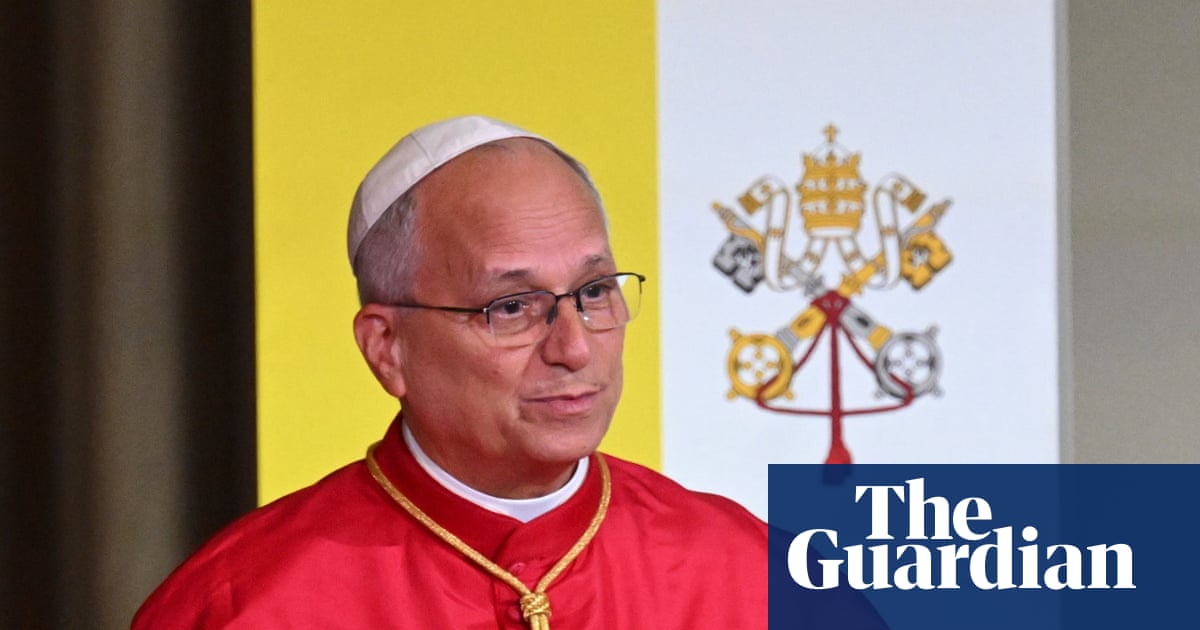
The Pope Is Challenging the Math Behind AI
When Pope Leo told a gathering at Unesco that “every science risks losing its proper meaning when pursued without ethics,” he wasn’t offering a vague plea for responsible innovation. He was attacking the foundational calculus of the AI industry — the idea that efficiency is the highest measure of progress.
His words carried a precision that technical policymakers often lack. “Our ideas and relationships risk being impoverished by a process of dehumanisation,” he said. Then came the sharper line: “We struggle to recognise the inalienable dignity of human persons whose lives are judged according to the criterion of efficiency and when deemed no longer productive, rejected and discarded.”
That is not a soundbite designed for a policy white paper. It is a direct challenge to the economic logic underpinning every major AI deployment — from hiring algorithms to healthcare triage systems to autonomous weapons. The Pope is arguing that the metric itself is corrupted, not just its application.
Why This Timing Matters
Leo’s three-day France visit lands at a politically fragile moment. Emmanuel Macron’s decade in office is winding down ahead of next spring’s presidential election, where Marine Le Pen is polling high. The Church has no stake in French electoral outcomes, but it does have a stake in which frameworks dominate the conversation as Europe debates AI regulation.
This is the first papal visit to France in 18 years. Pope Francis never made a full state visit during his 12-year pontificate. Leo’s presence signals a recalibration — the Vatican is choosing to be physically and rhetorically present at the center of European governance debates at a moment when those debates are about to enter a new phase.
The EU’s AI Act is already law. But implementation is where the real contest happens. Norms set now will echo for decades. The Pope’s intervention places moral authority squarely in that contested space.
The Unesco Speech Was the Real Move
The address at the Elysée Palace, delivered alongside Macron, was the ceremonial event. The Unesco speech was the substantive one.
Unesco, despite its well-documented struggles under repeated funding crises and leadership controversies, remains one of the few global forums where developing nations have institutional parity with the United States and China. By speaking there, Leo positioned his warning inside a multilateral architecture that predates and outlasts any single administration — American or otherwise.
He also named a broader problem without naming names: “Those in power invoke [the law] when it serves their interests and disregard it when it restrains them, treating even justice itself as though it were a commodity to be bought and sold.”
That language, delivered in a Paris classroom of diplomats and educators, reads as a veiled critique of both American and Chinese approaches to AI governance — Washington’s selective enforcement of export controls and Beijing’s integration of surveillance technology into social credit systems. The Pope has been critical of world leadership since at least last April, when he described the world as “being ravaged by a handful of tyrants.”
What the Industry Should Fear
AI companies have spent billions on lobbying, safety research, and public relations. None of that prepares them for a moral argument that operates outside their frame of reference entirely.
The industry’s dominant narrative frames AI risk in terms of alignment, benchmark scores, and catastrophic scenarios. Leo’s argument starts from a different axium: that the question is not whether machines can think, but whether humans are still worthy of care when they cannot compete with machines on metrics of productivity.
This is harder to dismiss. It does not require understanding transformer architectures or reward functions. It requires only observing who gets left behind when efficiency becomes the sole criterion for human value — and there are plenty of observers doing exactly that.
The Assisted Dying Connection
Leo also flagged concerns about France’s June legislation granting adult patients the right to assisted dying, linking it to a pattern of science and technology becoming “profit-driven ventures” promoting genetic manipulation, surrogacy, and organ trade.
Readers should not overlook the strategic placement of this remark. The assisted dying debate is resurfacing across Europe — Belgium, the Netherlands, and now France. By grouping it with AI governance under the umbrella of “profit-driven” technology, Leo is drawing a moral line that connects two otherwise separate policy debates. The argument is consistent: when technology serves markets rather than human dignity, both AI and end-of-life care become casualties.
Who Wins and Who Loses
The winners from Leo’s intervention are the advocates for stronger AI regulation who have long argued that technical safety measures are insufficient without moral frameworks. They now have the moral authority of the Catholic Church behind arguments that were previously framed as purely secular or technocratic.
The losers are the AI companies and their regulators, who now face a narrative competition they did not anticipate. The industry’s safety promises ring hollow against a Pope who can say that efficiency itself is the problem without needing a single data point to back it up.
European policymakers are the real swing actors. France and the EU have the regulatory infrastructure to act. The question is whether moral framing from the Vatican will influence politicians who have spent years treating AI governance as a purely technical or competitive issue.
What Comes Next
Leo’s visit continues Monday with a speech on European peace in Metz, as Russia’s invasion of Ukraine enters its fifth year. The AI warning was only the opening act. The Pope is clearly building a broader case about technology, power, and human dignity — one that extends from AI to warfare to end-of-life medicine.
The Catholic Church has historically been slow to engage with emerging technologies. When it does, the engagement tends to be sweeping and moral rather than technical or incremental. That is precisely what makes this intervention dangerous to the status quo: it refuses to play by the industry’s rules of the game.
If Leo’s framing gains traction among European legislators, the next round of AI regulation will look very different from the current debate. The question will not be whether machines are safe enough. It will be whether they serve human dignity — and that is a question the AI industry has no answer for.