Pope Leo’s Attack on Milei Reveals a New Papal Line
Pope Leo XIV’s rebuke of Javier Milei’s austerity is the Vatican’s sharpest critique yet of a right-wing populist leader. What it signals about papal geopolitics — and Argentina’s fracture.
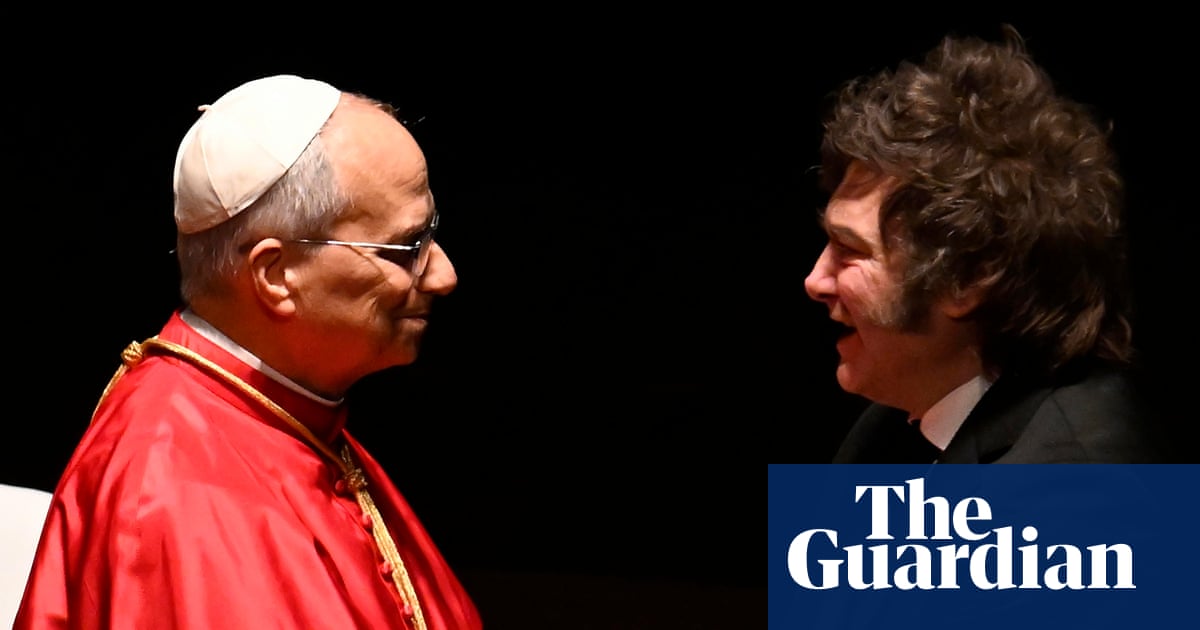
A Pope Steps Into a Fractured Country
Pope Leo XIV arrived in Buenos Aires on Sunday carrying three heavy things: the shadow of his predecessor, the memory of a cancer surgery he underwent just weeks ago, and a mandate from Catholics across Latin America who want him to do something about the continent’s unraveling social contract.
What emerged from that trip was more than a diplomatic encounter. It was a statement of principle delivered with unusual force against a sitting head of state — one of the most consequential interventions by a pontiff into the domestic politics of a nation in modern times.
Leo did not mince words. “The economy must be at the service of the people, rather than people being at the service of the economy,” he told thousands gathered in Plaza de Mayo. Then he went further, defending pensioners, the disabled, and those who work but cannot feed their families. It was, unmistakably, a rebuke of President Javier Milei’s austerity regime.
And Milei, a man who once called his own countryman Pope Francis an “imbecile” for preaching social justice, sat through it all without breaking composure. But the silence spoke volumes.
The Visit That Was Always Going to Be Political
This was the first papal journey to Argentina in nearly forty years. The last was John Paul II in 1987, during the brutal aftermath of the dictatorship. The anticipation was enormous. Argentines are desperate for someone, anyone, to stitch together a country torn apart by three years of shock therapy disguised as economic salvation.
Milei came to power promising to slash inflation and shrink the state. Instead, poverty surged to 32.3 per cent by September. Public hospitals have been stripped. Universities gutted. Disability benefits eliminated. The man who speaks in profanity-laced tirades against journalists and politicians has also restricted protest rights, tightened control over the judiciary, and cultivated a cult of personality that rivals the figures Francis warned against.
So when Leo landed, the question was not whether he would comment on Argentina’s crisis. It was how directly he would name it.
He chose directness.
The Francis Shadow
It would be impossible to read this visit without understanding the ghost of Jorge Mario Bergoglio. Milei’s insults toward Francis were never secret. They were brazen, broadcast, and repeated with relish. In doing so, he drew a line between himself and the tradition of Catholic social teaching that defines the Argentine church.
Leo spent much of his trip retracing Francis’s steps, visiting the same neighborhoods, speaking the same language of preferential option for the poor. The symbolism was deliberate. Where Francis failed to return to his homeland during his nineteen-year papacy, Leo fulfilled that unkept promise. And in doing so, he effectively sided with the legacy of the man Milei has spent years undermining.
That is not neutral behaviour. It is a geopolitical choice wrapped in pastoral language.
Who Wins, Who Loses
For Milei, the immediate cost is modest. He remains popular among his base, which credits him with taming hyperinflation. His supporters argue that short-term pain is necessary for long-term gain. The numbers tell a different story: poverty is rising, inequality is deepening, and democratic norms are eroding.
But politically, the Pope’s intervention gives Milei’s critics a voice they did not have before. Argentine opposition figures, labour unions, and human rights organizations have all seized on Leo’s remarks as validation. What they lacked was moral authority. Now they have it, borrowed from the highest office in Christendom.
For Leo, the risk is real. He is seventy-one, recently operated on for lung cancer, and facing a continent where the Church’s influence is declining rapidly. A University of Buenos Aires poll found that only 57.7 per cent of Argentines identify as Catholic, down from roughly 90 per cent in the 1960s. Secularization is accelerating across Latin America. Every confrontation with a populist leader narrows the Church’s appeal further.
Yet the alternative — silence — carries its own costs. If the Vatican refuses to engage with the moral dimensions of economic policy, it cedes the entire field to market fundamentalism and authoritarian populism alike.
A Broader Fault Line
The Argentina episode is not an isolated incident. It reflects a deeper struggle playing out across the Global South: can Catholic social doctrine survive in an era defined by right-wing populism, neoliberal retreat, and the commodification of public life?
Milei is not alone. Similar figures have risen across Latin America — in Brazil, Mexico, Guatemala — each promising prosperity through deregulation, each clashing with institutions that stand in their way. The Catholic Church, historically the largest single institution in every one of these countries, faces a reckoning.
Do you stay above the fray? Or do you draw a line and risk becoming a political actor?
Leo appears to have chosen the latter path. His comments on Argentina go beyond theology. They are an indictment of a governing philosophy that treats human beings as variables in a budget equation. Whether that approach strengthens or weakens the Church in the long run remains uncertain.
What Comes Next
Leo is spending twelve days in Latin America. He will visit disabled care homes, prisons, and celebrate open-air masses expected to draw millions. Each event is another opportunity to push back against the logic of austerity and impunity.
Milei, for his part, will not change course because a Pope visited. He has built his identity on defying elites and institutions. The Church is simply the latest target. But the pressure is mounting. With inflation finally stabilizing but poverty still high, the government’s narrative is losing coherence. Every critique from abroad strengthens the argument that Milei’s model is extractive rather than developmental.
The real test may come in future elections. If Catholic voters begin to see Milei not as a saviour but as a threat to their values, the populist project could face its first serious challenge in Buenos Aires.
Until then, Leo has made his position clear. The economy serves the people. Not the other way around.