PS6 Memory Costs Explode as AI Demand Devours Console Supply
PlayStation 6's RAM and SSD components alone now cost over $680 — more than a PS5 retails for — as AI data centers drain global memory supply. Sony faces its priciest hardware launch ever.
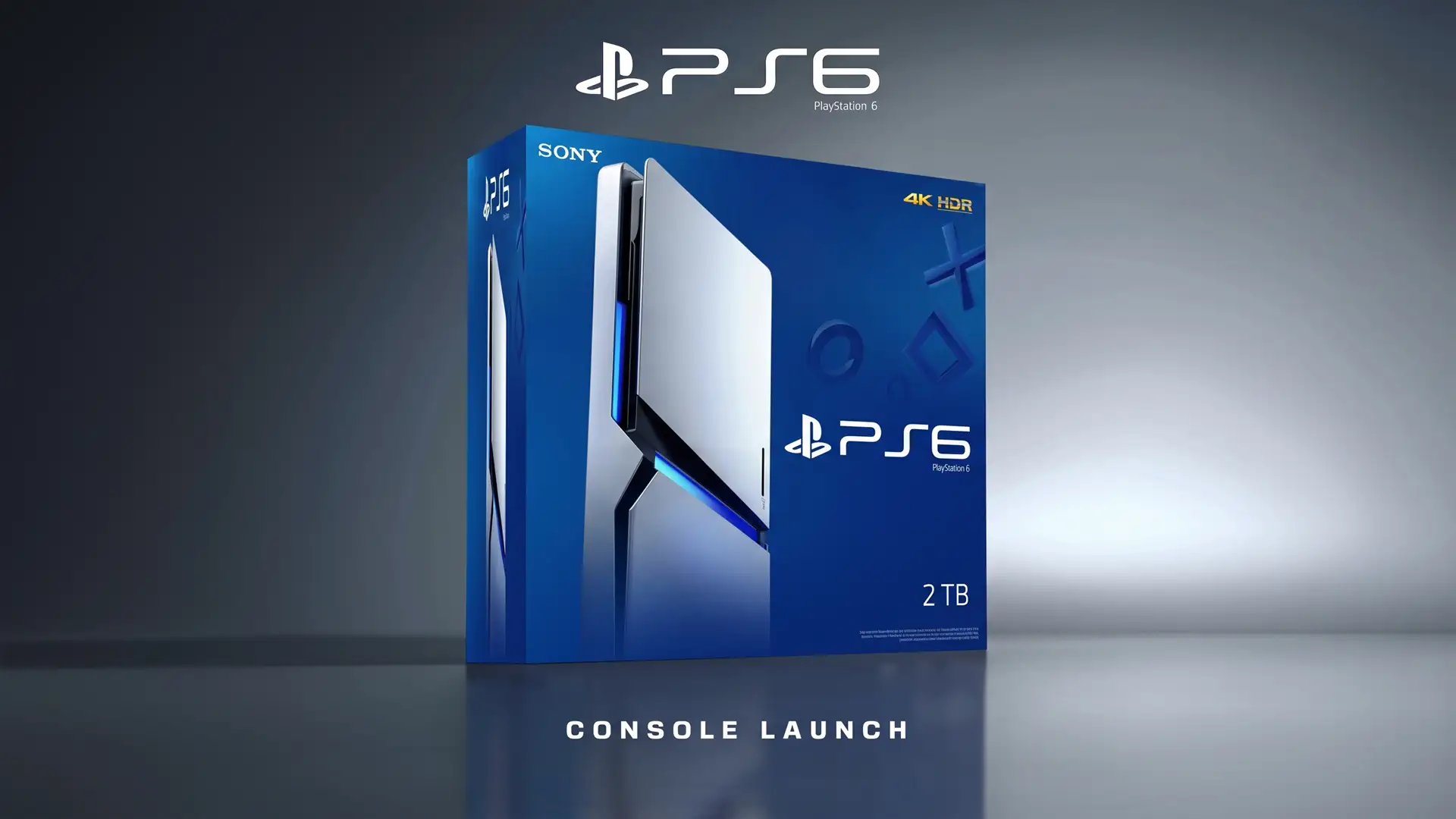
The Console That Costs More to Build Than Its Predecessor Sells For
Sony is about to launch the most expensive gaming console in its history, and the reason has nothing to do with premium materials or unnecessary features. It is the artificial intelligence boom, and it is squeezing hardware costs upward at a pace the consumer electronics industry has never seen.
According to reliable insider Kepler_L2, the RAM and SSD modules required for the upcoming PlayStation 6 now cost over $680 in raw manufacturing alone. That single figure already exceeds the base retail price of the current-generation PS5. When you add the full bill of materials — estimated at $960 for basic components including silicon wafers, compute units, cooling systems, and auxiliary chips — you are looking at a console that costs nearly a thousand dollars just to put on a shelf, before assembly, licensing, global logistics, marketing, and any profit margin are factored in.
The bottleneck is straightforward. AI data centers are consuming DRAM and NAND flash memory at rates that have destabilized the entire supply chain. Memory manufacturers prioritize high-margin enterprise and data center orders over consumer electronics contracts. When you are a console maker competing against Nvidia, AMD, and every major cloud infrastructure provider for the same HBM and NAND capacity, you lose leverage. You pay more, or you wait your turn.
Who Pays the Premium
This is not a subtle shift in pricing strategy. It is a structural cost increase that Sony cannot absorb without accepting losses far deeper than any previous console generation. Analysts now expect the PS6 retail price to significantly exceed the PS5 Pro, potentially becoming the most expensive consumer gaming device in Sony’s brand history.
Sony has a well-documented pattern with its hardware launches. The company subsidizes console production during the early years to lock in market share, then recoups those losses through game software sales and subscription revenue over a lengthy lifecycle. That model worked when hardware margins were tight but predictable. It does not work when the base component cost itself exceeds what a competitor’s finished product sells for.
The internal calculations are unglamorous. Even if Sony absorbs part of the cost increase, the math still pushes the retail price sharply higher than anything since the original PlayStation launched in the mid-1990s. The gap between manufacturing cost and expected retail price leaves very little room for the traditional subsidy strategy. Sony’s management has been publicly hesitant to sustain the kind of deep financial losses that previous generations required, and this generation makes those losses structurally larger.
The Real Contest Is Not With Microsoft
Industry commentary often frames next-gen console competition as a head-to-head rivalry between Sony and Microsoft. That framing misses the actual threat. The PS6 is not primarily competing against the Xbox of tomorrow. It is competing against data center memory allocations, enterprise GPU orders, and smartphone supply chains for the same finite reservoir of DRAM and NAND capacity.
Memory pricing cycles have historically followed multi-year patterns driven by chip fabrication capacity and demand shocks. The AI infrastructure buildout, accelerating since 2023, represents a demand shock unlike any previous consumer electronics cycle. Memory contracts that once served the gaming and automotive sectors now sit behind multi-year enterprise agreements with far higher per-unit returns. Console manufacturers are forced into spot-market purchasing at whatever price remains after enterprise buyers have taken their shares.
The $680 memory subsystem figure for PS6 is not a temporary spike. It reflects a new equilibrium in which consumer hardware shares a supply chain with infrastructure that commands exponentially higher margins. Unless memory fabrication capacity expands aggressively over the next two to three years, console makers will continue to pay premium prices for components that once cost a fraction of that amount.
What Happens Next
The most likely outcome is a PS6 launch price that forces Sony to reconsider how it approaches its install base. A higher upfront cost narrows the audience willing to upgrade on day one. It also shifts more of the revenue burden onto game sales and ongoing services, which puts pressure on first-party development pipelines and subscription pricing.
n
Sony may also look at hardware design modifications during the production ramp. Reducing RAM capacity, switching to lower-cost NAND tiers, or redesigning the cooling architecture could trim component bills, though each choice carries performance trade-offs that critics will scrutinize. The company has done this before with the PS5 Pro, which repositioned the upper tier rather than lowering the base. A similar strategy for PS6 seems probable.
Consumers who expected the next console generation to follow the same pricing arc as PS4 to PS5 should recalibrate expectations. The semiconductor environment that made those prior transitions affordable no longer exists. The AI-driven memory squeeze is not going away. It is a structural change in how computing resources are allocated across the entire economy, and consumer gaming hardware shares that allocation.
If Sony proceeds with current cost estimates, the PS6 will arrive as a premium product priced for dedicated enthusiasts rather than the broader casual market that sustained previous generations. The question is whether that audience is large enough to justify the investment, or whether Sony will be forced to delay, redesign, or accept losses that make the economics of console manufacturing harder to sustain over a twelve-to fifteen-year lifecycle.
The numbers do not lie. Memory costs have crossed a threshold that changes the entire calculus for the next console generation.