Pyongyang Drops the Mask on DMZ Mines — and the World Is Watching
North Korea has shifted from denial to open military-posturing language after a DMZ mine blast wounded three South Korean soldiers. The escalation leaves a thinner path to de-escalation and tests US force posture in the region.
Pyongyang’s New Language, A Harder Crisis
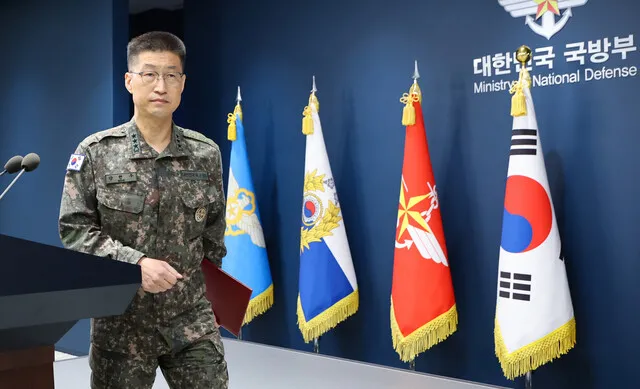
Three South Korean soldiers were badly wounded when a landmine detonated near the DMZ last week. South Korea’s Joint Chiefs of Staff said within hours it was a North Korean mine. Pyongyang denied it. Then Kim Yo-jong, the all-powerful sister of Kim Jong-un, went further.
She did not simply reject Seoul’s finding. She called it a “staged comedy” — a deliberate provocation — and announced that the North Korean military would strengthen its tactical counter-response capabilities, specifically citing South Korea’s 21st Infantry Division under the First Corps as a repeat offender. That shift, from silence or simple denial into explicit language about military retaliation, is the real story here. It marks a qualitative change in how Pyongyang frames the incident, and it raises the stakes significantly.
Why the Rhetoric Shift Matters
North Korea has a long habit of ambiguous phrasing. When it wants to signal readiness without closing doors, it uses coded language. When it wants to leave no room for ambiguity, it says so plainly. Kim’s statement was plain.
Calling the incident a “provocation” and linking it to an increase in tactical counter-response measures is not the language of a regime looking for a face-saving exit. It is the language of a regime prepared to live with escalation. That matters because it removes the most useful tool in any crisis: plausible deniability. Seoul can no longer say it misread Pyongyang’s intent. Pyongyang has now stated its intent.
The timing is also notable. The blast occurred during a period when inter-Korean contact had been low and friction points were accumulating — along the sea border, in the air identification zone, and in the rhetoric around military exercises. Kim’s statement adds fire to an already smoldering situation rather than responding to a single incident in isolation.
Who Wins, Who Loses
Pyongyang wins a short-term informational advantage. By framing the mine as a South Korean false flag, it puts Seoul on the defensive and forces foreign capitals to parse whose story they believe. For audiences inside North Korea, the statement projects strength and resolve. For its allies, particularly China, it signals that Pyongyang is not backing down.
Seoul loses on several fronts. It must now respond to a military threat without appearing disproportionate. If it overreacts, it feeds Pyongyang’s narrative of aggression. If it underreacts, it damages domestic credibility and alliance confidence. The military decision-making window is narrow and ungracious.
The United States loses flexibility. Any US response is interpreted through the lens of alliance politics, which means Washington must coordinate closely with Seoul while also managing Beijing and Tokyo. The US Indo-Pacific posture is already stretched across multiple flashpoints, and a miscalculation on the Korean Peninsula would draw resources and attention away from other priorities.
China watches carefully. Beijing has every reason to prefer stability on the peninsula but also every reason not to publicly criticize Pyongyang over a landmine incident. The implicit message is that China will not rescue North Korea from the consequences of its own provocations, but it will also not abandon it.
What the Armistice framework Reveals
The UN Command’s determination that North Korea violated the armistice agreement is significant. The agreement prohibits hostile acts in the DMZ and restricts crossings of the military demarcation line without permission. Once the UN Command formalized that finding, the incident moved from a bilateral dispute into a multilateral legal question.
That does not automatically trigger enforcement mechanisms, but it does expand the range of responses available to Seoul and Washington. It also gives North Korea a clearer reason to escalate: if Seoul interprets the violation finding as a pretext for broader pressure, Pyongyang can claim that pressure forced its hand.
Why 2015 Is Not a Useful Template
In 2015, a similar mine incident near the DMZ killed two South Korean soldiers. The response was firm but calibrated. High-level contacts followed, and Pyongyang issued a statement expressing regret. The crisis dissolved into bureaucracy, which is often the best outcome in these situations.
Applying that template today would be a mistake. The geopolitical context has changed. South Korea’s government has a different posture toward North Korea. China’s relationship with Pyongyang is more transactional. The United States has repositioned forces in the region. And North Korea itself has conducted more tests and hardened its rhetoric over the intervening years. The 2015 playbook assumes a reciprocity that no longer exists.
Experts in Seoul agree. Yang Yong-seok, a visiting researcher at the Sejong Institute’s Center for Unification and Peace, warned that the mine placement and international context differ from 2015 and that physical clashes must be avoided even while responses remain firm. That is a delicate balance.
The Demarcation Line Problem
A less-discussed but critical issue is the question of where the military demarcation line actually runs. Eighty years of armistice have produced a situation where both sides have different understandings of certain boundary segments, especially in areas that have seen increased fortification and vegetation growth. Kim Yo-jong’s claim that North Korean troops have never crossed the line may be technically true by Pyongyang’s definition — but if Seoul’s definition differs, the risk of accidental encounters rises.
This is why Kang Sung-bae of the Institute for National Strategic Studies argued that dialogue between the UN Command and both Koreas on border demarcation is necessary, even if Pyongyang is unlikely to engage. The goal is not reconciliation; it is conflict prevention.
What Comes Next
Seoul faces a choice between signaling resolve and leaving room for de-escalation. The most likely path is a combination: reinforced patrols, visible US-ROK deterrence exercises, and calibrated diplomatic protests — all designed to show strength without triggering the escalation Pyongyang has now signaled it is willing to accept.
Washington will want to demonstrate that the alliance mechanism works without escalating beyond the crisis. Tokyo will monitor closely and likely call for quieter diplomatic channels. Beijing will urge restraint publicly and encourage Pyongyang to de-escalate privately, but expect little from either front.
The most dangerous assumption any actor could make right now is that this incident will pass quietly, as previous mine incidents have. Pyongyang has made it clear it does not intend that outcome. The question is whether Seoul and its allies respond in a way that matches the seriousness of the shift — or one that underestimates it.