Qatar Calls Global Investors to Its Doorstep as Gulf Capital Rethinks Itself
Qatar's sovereign wealth fund has launched a domestic-focused investment platform for the first time — a clear signal that the Hormuz Strait closure is forcing a strategic retreat from purely offshore bets. What the move reveals about Middle East capital flight patterns matters far beyond Doha.
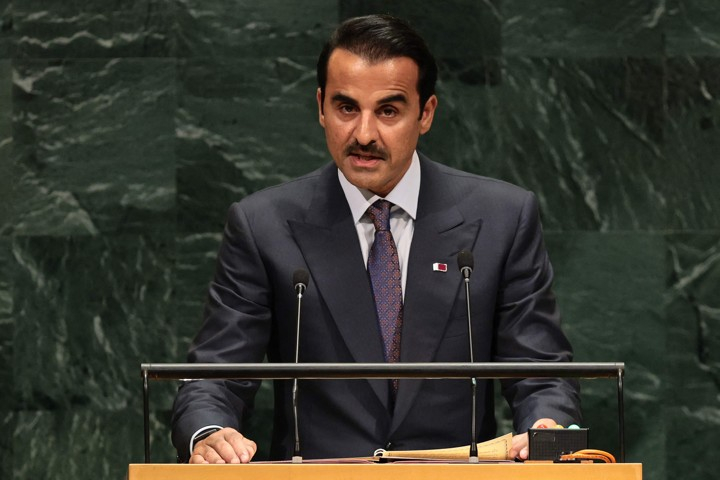
A $580 Billion Fund Turns Inward
Qatar’s sovereign wealth fund just did something it has never done before. It launched a domestic investment platform called Doha Investment, charged with overseeing roughly a third of its $580 billion portfolio — about 45 state-owned enterprises — and pulling private capital into Qatar’s own markets. The move was announced quietly at a closed briefing in Doha on a Monday morning, but its implications are anything but small.
The Qatar Investment Authority was created in 2005 for exactly the opposite purpose: to park oil and gas dollars overseas in London real estate, Parisian hotels, and Silicon Valley startups. Under its first chief executive, Qanoos Al-Jaber, and later Khaled Bin Khalifa Al Thani, QIA became one of the most visible institutional investors on the global stage — a quiet heavyweight with stakes in Barclays, Harrods, the Arc de Triomphe’s restoration, and stakeholdings in Premier League clubs including Arsenal and Manchester City. Its overseas footprint was the model other Gulf funds aspired to replicate.
That model is now under stress. The pivot toward home is not a philosophical shift. It is a survival response to a blocked shipping lane. The Hormuz Strait, through which the vast majority of Qatar’s liquefied natural gas exports flow, has been closed or disrupted by the escalating war between the United States and Iran. Qatar’s economy runs on LNG, not crude oil, and when that valve closes, revenue stops. The fund’s leadership has calculated — correctly or incorrectly — that waiting for the status quo to return is no longer an option.
Doha Investment operates with a mandate to identify, consolidate, and grow Qatar’s strategic domestic assets while actively courting foreign co-investors. It will manage stakes in Qatar Airways, the national bank, telecoms giant Ooredoo, real estate developer Qatar Diar, and the Katara hospitality group — among others — as a unified portfolio rather than the scattered holdings that have historically made coordination difficult. The fund is also expected to launch its first dedicated domestic investment vehicle within the next quarter, targeting sectors from renewable energy to digital infrastructure.
Who Wins and Who Loses
Qatar wins immediate control. Instead of watching assets sit in foreign portfolios while domestic energy exports wither, Doha Investment gives the fund a direct lever over local industry — airlines, telecom, banking, hospitality, and property. The government can now steer capital toward sectors that either keep the lights on during the crisis or rebuild faster once trade resumes. This is especially significant given that Qatar’s gas revenue funds roughly 70 percent of its federal budget. When that revenue dries up, the state’s fiscal calculus changes overnight.
International investors who had written off Qatar as a pure LNG rental play may find a different opportunity here. The door is open for those willing to co-invest in Qatari companies, particularly in technology and infrastructure, rather than only chasing yield from energy shipments. Qatar’s finance minister explicitly said the goal is to expand the role of the private sector and draw overseas capital into domestic markets. Several European asset managers have already expressed interest, according to sources familiar with the discussions. Asian sovereign funds are being courted as well, though they are moving more cautiously given the geopolitical uncertainty.
But the losses are real and immediate. Qatar’s fiscal position is tightening. LNG shipments through Hormuz are the lifeblood of the budget, and any prolonged disruption means less revenue, a weaker riyal peg in practice if not in law, and pressure on public spending. The riyal has held its peg to the dollar, but only because Qatar’s central bank has sufficient reserves to defend it — reserves that are being drawn down. Companies that depended on steady gas income for expansion plans now face delay or cancellation. The Qatar Financial Centre has reported a measurable slowdown in new business registrations, and several multinationals have paused hiring decisions pending clarity on the Hormuz situation.
Global markets lose a reliable supplier. Qatar is one of the world’s largest LNG exporters, accounting for approximately a quarter of global seaborne LNG trade. Its disruption adds to the volatility already rippling through European and Asian energy markets. Every day Hormuz stays closed, buyers scramble for alternative cargoes and prices rise — but the structural problem remains until the strait reopens. Japan and South Korea, Qatar’s largest importers, are particularly exposed. Both nations have been quietly increasing their strategic petroleum reserves and negotiating spot deals with U.S. and Australian exporters as a hedge, but those alternatives are more expensive and cannot fully replace Qatari volumes in the near term.
What the Move Actually Signals
This is not the first time a Gulf sovereign wealth fund has reacted to regional instability. Saudi Arabia’s Public Investment Fund has consistently used domestic investment as a hedge against oil price swings. The UAE’s Mubadala and ADIA have balanced overseas holdings with local priorities for years. Qatar’s move is notable because it is the first explicit, dedicated domestic platform from a fund that has spent two decades building overseas. It represents a qualitative shift in how one of the region’s most sophisticated institutional investors views its own risk landscape.
The signal is sharper than the structure. QIA has already been increasing its local footprint — investing in Qatar Airways, QNB, Ooredoo, Qatar Diar, and Katara Hospitality. But this new platform formally separates domestic oversight from the global strategy, suggesting the fund’s leadership now views home-market stability as a distinct and urgent priority rather than a secondary concern. Analysts at regional banks describe the move as a pragmatic acknowledgment that the era of taking open seas for granted is over.
Industry sources told global IB desks that the move was expected. QIA expanded its fund-of-funds program to $3 billion in February 2026, targeting venture and innovation investments with a domestic orientation. The logic is consistent: build local capacity so the economy survives even if the exports stop. Some of that capital has already flowed into fintech and logistics startups in Qatar, though the scale has yet to match the ambition. The new platform is expected to accelerate those efforts significantly.
The Global Investor Angle
The SOS to global investors is not dramatic, but it is unmistakable. Qatar is asking foreign capital to participate in its domestic transformation — not just as a passive lender but as an active co-investor in Qatari companies. This is a shift from the traditional model where Gulf funds lent money to Western firms and absorbed Western risk. Now the direction of capital flow is being reconsidered. Qatar is effectively saying: we need you, and we need you here.
For international investors, the opportunity carries real conditions. Qatar’s sovereign backing is strong, but the timing is volatile. Capital deployed now enters a market facing revenue contraction and uncertain geopolitical outcomes. Returns may look different than the steady yields of the LNG era — potentially higher, but with significantly more risk. The country’s credit rating has not been downgraded, but several rating agencies are reviewing their outlooks. Moody’s and S&P have both indicated that a prolonged Hormuz closure could prompt a negative revision, which would raise borrowing costs for Qatari borrowers including state-linked entities.
The timing also matters. If Hormuz reopens within months, Qatar’s traditional revenue stream recovers and the urgency behind Doha Investment fades. If the blockade lasts longer, the platform becomes the central mechanism for restructuring the Qatari economy — and early investors could shape which sectors survive and which stagnate. That creates a window, but also a risk of commitment mismatch. Investors who come in early may find themselves locked into positions that lose relevance if the geopolitical situation shifts quickly.
Second-Order Effects Across the Gulf
The implications of Qatar’s move extend well beyond Doha’s borders. Other Gulf Cooperation Council states are watching closely. The UAE’s ADQ and Mubadala have already been repositioning domestic holdings, but Qatar’s explicit creation of a separate domestic platform may accelerate similar moves elsewhere. Kuwait’s KWIM and Oman’s OIA are likely to reassess their own domestic investment frameworks in the coming months. Bahrain, smaller and more financially exposed, may feel particular pressure to act.
There is also a competitive dimension. Qatar is essentially offering the Gulf’s most attractive domestic investment vehicle at a time when other regional funds are competing for the same pool of global capital. The first-mover advantage could be significant. If Doha Investment demonstrates traction, it will set a benchmark that other Gulf funds are pressured to match — potentially triggering a wave of domestic realignment across the region that changes how Gulf capital is deployed for years to come.
Regional banks report that client inquiries about Qatari domestic investments have increased sharply since the announcement. Several large European family offices have requested pitch materials. Asian institutional investors are more cautious but engaged. The interest itself is a signal that the market sees value in what Qatar is offering, even as it acknowledges the risks.
What Comes Next
The next 90 days will define the strategy’s trajectory. QIA needs to demonstrate that Doha Investment can move capital quickly and attract credible partners. Without visible results, the platform risks becoming another bureaucratic add-on rather than a genuine pivot. The first major deal — whether a co-investment in a Qatari tech company, a infrastructure partnership, or a recapitalization of a state-owned enterprise — will set the tone for everything that follows.
Regional implications are broader than Qatar. Other Gulf states watching this move will reassess their own domestic investment architectures. The lesson is clear: when energy chokepoints become weapons, capital must be flexible enough to redirect overnight. The old assumption that offshore diversification was the primary risk management tool is being replaced by a more balanced approach that treats domestic resilience as equally critical.
For global markets, the immediate concern is LNG supply. Qatar accounts for roughly a quarter of global LNG exports, and any sustained disruption reshapes energy pricing from Tokyo to Rotterdam. The secondary concern — and arguably the more durable one — is that Gulf capital is no longer assuming open seas as a permanent condition. The age of effortless offshore diversification may be ending. The age of defensive domestic investment has begun.
What happens in Doha this year could reshape the architecture of Gulf wealth management for the next decade. The question is not whether the pivot will succeed, but how far it will go — and how quickly other regional funds follow.