Rakuten's $10B Satellite Bet Threatens Starlink at Home
Japan's state-backed J-LEO program funnels up to 1,480 billion yen into Rakuten's satellite ambitions, creating a domestically controlled alternative to Starlink. What changes for global satellite broadband.
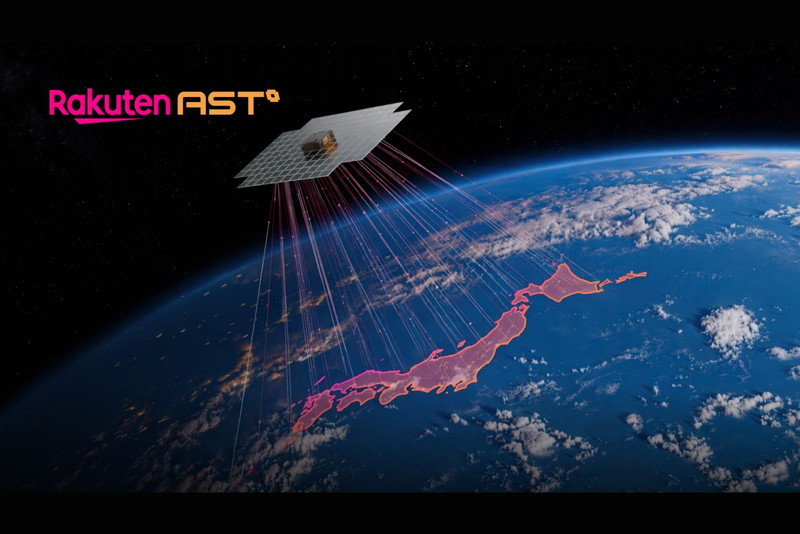
A satellite network built in Tokyo, not Texas
Japan has picked a side in the low-earth-orbit broadband wars. Instead of plugging into Elon Musk’s Starlink — the only constellation that truly works today — it is spending up to 1,480 billion yen to build its own.
The money flows through a programme called J-LEO, formally the Low-Earth Orbit Satellite Infrastructure Development Project for Ensuring Autonomy, launched by the Ministry of Internal Affairs and Communications. The selected contractor is a brand-new entity: Rakuten AST Corporation, a joint venture between Rakuten Group and the US firm AST SpaceMobile. Rakuten holds 51 per cent. AST holds 49. The company launches in November.
Service begins by March 2029. By then, Rakuten AST plans to have 40 to 50 mid-band (1.7 GHz) satellites orbiting at roughly 690 km, with Japan as the country of international registration. That last detail matters more than it sounds.
The registration tells the real story
Under ITU rules, the nation that registers a satellite controls its regulatory framework. SpaceX owns nearly all its Starlink satellites through the United States Federal Communications Commission. Rakuten’s first effort, the so-called “Rakuten Strongest Satellite Service,” also registers through the FCC. But J-LEO satellites will carry Japanese registration — which means they operate under Japanese law, answer to Japanese regulators, and are, in a very concrete sense, Japanese assets.
Masaaki Hirata, Rakuten’s president, put it bluntly: reliance on a foreign provider creates risk that Japan cannot accept, particularly when disaster response depends on satellite connectivity. “When crises hit, you need to know your antenna points where you tell it to point,” he said. That is not possible with a US-registered system.
The distinction is not just symbolic. It defines who can order a beam pointed at a flood zone and who cannot.
Why 1,480 billion yen is a political number
The subsidy figure alone — roughly $10 billion at current exchange rates — signals that Tokyo views this as a national security project, not a commercial bet. J-LEO was conceived explicitly around economic security and disaster resilience. Its full title includes the word “autonomy.”
For context, Japan currently imports virtually all its civilian satellite internet. There is no domestic LEO operator. When Starlink began certified trials in Japan earlier this year, it entered a market without local alternatives. The government wanted to change that before SpaceX could establish itself as the default infrastructure for emergency communications, remote regions, and potentially defence-linked use cases.
One year into the Starlink rollout, the timing is deliberate.
AST brings the one thing SpaceX does not
Here is what makes this partnership plausible. AST SpaceMobile does not chase Starlink’s architecture. Its satellites carry enormous phased-array antennas — far larger than any in SpaceX’s constellation — tuned to cellular frequencies rather than custom radio bands. The result is that a standard smartphone, unmodified, can connect directly to the satellite. No special terminal. No added hardware on the ground.
This is the capability that initially spooked analysts. If a phone in a backpack can reach a satellite, the distribution channel for broadband collapses entirely. The customer acquisition cost approaches zero.
Starlink still wins on speed and latency because its massive fleet of smaller satellites offers continuous coverage. But AST’s approach trades raw performance for ubiquity — the ability to serve anyone with a regular phone, anywhere, including at sea or in the mountains where cell towers never reached. That niche is worth billions to mobile operators globally.
Rakuten’s play is to combine AST’s technology with Japanese state backing and then lease capacity to overseas carriers during the hours when Japanese skies are empty. Low-earth-orbit satellites race around the Earth every 90 minutes or so. Japan occupies only a fraction of each orbital pass. Selling that unused capacity to telecom partners elsewhere turns a strategic asset into a revenue engine.
The two-Rakuten problem
There is a complication worth tracking. Rakuten is running two satellite programmes simultaneously, and they use different technology, different frequencies, and different regulatory regimes.
The Rakuten Strongest Satellite Service, announced in April 2025 with AST, targets a broader global audience using 700 MHz band satellites — the so-called platinum band — registered in the US. Thirteen satellites are already in orbit. A limited trial service, restricted to certain time windows when satellites cross Japanese airspace, launches by the end of 2026. Rakuten Mobile subscribers get it free during the trial period.
J-LEO is the separate project. Different band. Different registration. Different timeline. Different subsidy regime. Both ultimately depend on AST hardware, but both serve different markets and answer to different governments.
Merging the two strategies will become unavoidable. Until then, Rakuten is splitting engineering attention, launch manifests, and investor scrutiny across two parallel tracks.
Who wins, who loses
SpaceX faces its first credible challenge inside Japan. Starlink entered the country as a commercial product in a regulatory vacuum. J-LEO fills that vacuum with a state-subsidised competitor that holds preferential access to emergency contracts and public-sector infrastructure partnerships. Even if Rakuten’s service arrives a year or two later and costs more upfront, it enters the market with a built-in advantage: the Japanese government considers it critical infrastructure.
Telecom operators outside Japan may benefit if Rakuten successfully monetises excess orbital capacity. AST’s mid-band architecture is designed exactly for that kind of wholesale arrangement. If Rakuten secures carrier partners in Southeast Asia or Europe, it gains scale without absorbing the capital risk alone.
Japan’s rural communities and disaster-response agencies gain a domestic back-up network that does not answer to Washington. That is the entire point of the programme.
What happens next
The critical date is March 2029. If Rakuten AST delivers functional service by then — with acceptable latency, sufficient throughput, and stable coverage across Japan — it forces SpaceX to compete for Japanese government contracts instead of cruising through on first-mover advantage. If the programme stalls, the subsidy becomes a cautionary tale and Starlink remains unchallenged.
Launch logistics will determine much of the timeline. The source indicates that lifting satellites from Japanese soil is under discussion, which would avoid dependence on SpaceX’s own rockets for the J-LEO fleet. Whether that translates into actual launch contracts remains unclear.
The bigger picture stretches further east. China is building its own LEO constellation. India has similar ambitions. Japan’s move through J-LEO places it in the same category — a middle-power actor refusing to outsource its orbital infrastructure to a single American company. The 1,480-billion-yen question is whether state funding closes the gap fast enough.
Rakuten’s Hirata did not mince words about the stakes. “Direct communication from satellites will become essential,” he said. “We are making a bold challenge. Japan possessing its own satellites and guaranteeing stable services is vital during crises and national emergencies.”
That sentence reads like a declaration of intent. It will be treated as measured until the first J-LEO satellite beams data from above Tokyo in 2029.