Inside Ratcliffe's Secret Moscow Visit and What It Signals
CIA Director John Ratcliffe's covert trip to Moscow marks the first such visit by a sitting CIA chief during Trump's two terms. His warnings to Russian intelligence — about NATO attacks and Iran support — reveal a high-stakes backchannel reshaping European security.
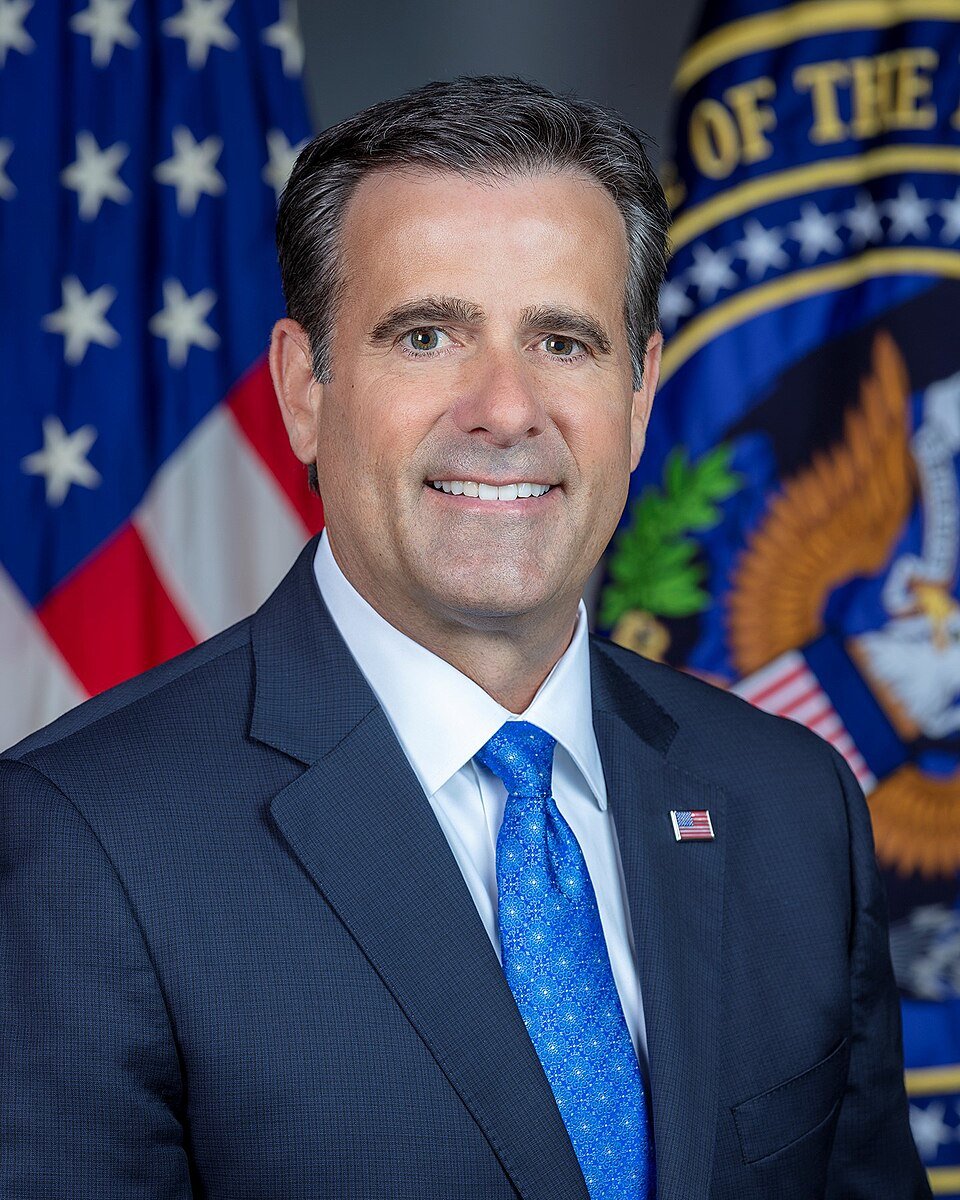
A First in the Trump Era
John Ratcliffe stepped off a C-17 in Moscow on August 25, arriving via Riga, Latvia — a route that tells you everything you need to know about the sensitivity of this trip. He was not there as an ambassador or a diplomat. He came as CIA director, the first sitting head of the agency to set foot in Russia during either term of Donald Trump’s presidency. And he brought warnings with him.
According to Politico, Ratcliffe pressed Russian intelligence officials to cool tensions around the three Baltic states — Estonia, Latvia, and Lithuania — all former Soviet republics now NATO members. He also told them to curb support for Iran and stop provocative acts against NATO countries. On Ukraine and Iran, talks of some kind likely took place, though details remain scarce. The visit followed months of signals from both capitals that each side wanted a direct line open — Washington concerned about escalation, Moscow testing whether the US would soften its posture if given an off-ramp.
The logistics themselves were telling. Ratcliffe flew military transport through NATO airspace, touched down at a Russian airbase under tight security protocols, and spent roughly forty-eight hours in closed-door meetings with SVR and FSB handlers. No photos were released. No transcript will ever see the light of day. What is known comes from multiple Western intelligence and diplomatic sources briefed on the discussions, speaking on condition of anonymity.
Moscow’s Calculated Response
The Kremlin confirmed contact through its own intelligence channels but stopped short of anything resembling warmth. Dmitry Peskov called it “a positive phenomenon” and a “process” — careful language that avoids committing to any outcome. Ratcliffe did not meet Putin. That omission matters. In Kremlin diplomacy, meeting the president is the signal of genuine engagement. Absence of a meeting means Moscow is watching, listening, and calculating — not opening doors.
Trump’s comment that “now something productive can come out” of the Ukraine situation reads less like optimism and more like political framing. He wants credit for a pathway that may not yet exist. The fact that both Washington and Moscow are talking through intelligence channels rather than formal diplomacy suggests neither side trusts the other enough for public negotiations — but both see enough benefit to keep the backchannel open.
What the Kremlin has not done is reciprocate. No Russian intelligence chief has traveled to Langley since the visit. That asymmetry is not accidental. Moscow has every incentive to let Washington do the legwork while it assesses what concessions might be extracted from a US administration clearly eager to pivot away from endless European commitments.
The Baltic Fault Line
The Baltic states are where this all could unravel. They sit on NATO’s eastern flank, bordered by Russia and Belarus. Any Russian provocation there — cyberattacks, border incidents, sabotage — would trigger Article 5. That is the very scenario Ratcliffe was warning against. The route he took through Riga was no accident. It was a signal: the US is paying attention, and it is worried.
France’s DGSI head, Céline Berton, echoed those concerns on August 26. She warned that European defense firms, energy companies, and infrastructure could be Russian targets, pointing to a drone with explosives found near Leipzig airport in eastern Germany — territory that was once East Germany. The implication is clear: Russia may be testing NATO’s resolve through indirect action, probing for weaknesses before any full-scale move.
Estonian and Latvian officials have privately expressed alarm. They see the backchannel diplomacy as potentially rewarding Russian behavior rather than deterring it. One Baltic security minister told reporters on condition of anonymity that “we are being asked to absorb risk while our partners talk in secret.” The anxiety is not unfounded. If Washington and Moscow strike a tacit understanding that limits NATO’s responsiveness in the Baltics, the entire security architecture of northern Europe shifts — quietly, without legislation, without public debate.
Second-Order Effects
The implications extend far beyond intelligence sharing. European defense contractors have already begun adjusting their production schedules, sensing that US commitment to forward deployment in the Baltics may diminish. German energy planners are quietly drafting contingency scenarios for a disruption in Russian gas flows — a scenario that becomes more likely if Moscow believes the US is signaling restraint.
Poland and the Nordic nations are responding with a quiet arms buildup. Warsaw has accelerated its procurement of American heavy weaponry. Finland and Sweden, now NATO members, are coordinating joint defense strategies that explicitly account for reduced US reliability. The coalition Ratcliffe may be helping to build is one where European powers hedge against American withdrawal rather than leaning into it.
There is also a domestic political dimension. Progressive and internationalist Democrats have already raised alarms about bypassing congressional oversight on matters of war and peace. Conservative hawks who supported Trump’s initial hardline stance on Russia are equally uneasy about a backchannel that operates without institutional accountability. Both flanks share a concern: that an intelligence-driven foreign policy concentrates too much power in the executive branch while too few people understand what is being discussed.
Who Wins and Who Loses
Ratcliffe’s visit rewards those who believe quiet diplomacy can de-escalate tensions without public concessions. It gives Trump political cover to claim progress on Ukraine while keeping options open. For Moscow, it provides a face-saving channel — engagement without summit, dialogue without acknowledgment. Putin gets to appear in control while letting his intelligence services do the real talking.
The losers are the Baltic states and Eastern European NATO members who fear they are being used as bargaining chips rather than protected allies. They hear warnings about Russian aggression but see no corresponding increase in US military posture or public commitments. A secret visit from the CIA chief is not a deterrent. A treaty with teeth is. Neither has been offered.
European allies who have borne the brunt of Russian pressure for two decades now face a disorienting reality: the United States is still their security guarantor in name, but the substance of that guarantee is becoming negotiable. That is a lesson Kyiv learned the hard way and one other capital fears repeating.
What Comes Next
This backchannel will likely intensify before it produces anything concrete. Both sides have incentives to keep it going — Trump wants a Ukraine deal, Putin wants sanctions relief and recognition of territorial gains. But without Putin’s direct involvement, progress will be slow and fragile. Intelligence channels are excellent for signaling and managing crises. They are poor instruments for building durable agreements.
The more immediate risk is miscalculation. If Russia tests NATO in the Baltics or through cyber operations in Europe, and the US response is delayed or ambiguous because it is hoping the backchannel works, the consequences could be severe. Europe’s intelligence chiefs are already sounding alarms for that reason. They have seen this movie before — a great power believes it can manage a rival through secret dealings while the allies on the front line bear the cost.
What Ratcliffe’s trip reveals is a US administration willing to bypass traditional diplomacy in favor of intelligence-driven dealmaking. That approach carries risk. It concentrates power in quiet rooms where accountability is thin and stakes are enormous. It assumes that the people in those rooms have information and intentions that the rest of the government — and the public — do not. History suggests that assumption is dangerous.
The clear close is this: the backchannel is open, and that is neither good nor bad in itself. What matters is what happens next. Will Washington couple these secret talks with visible reinforcement of NATO’s eastern flank? Will Moscow interpret silence as permission to push further? Or will the whole arrangement become a mechanism for deferring decisions until a crisis forces them? The answers will determine whether Ratcliffe’s trip was a cautious step toward stability or the first move in a retreat that leaves Europe exposed.