The 390,000 Dead Russians: What the Rosstat Leak Changes
A hacked trove of Russian state statistics appears to confirm what independent journalists have long estimated: over 390,000 Russian soldiers killed in Ukraine. The implications reach far beyond the battlefield.
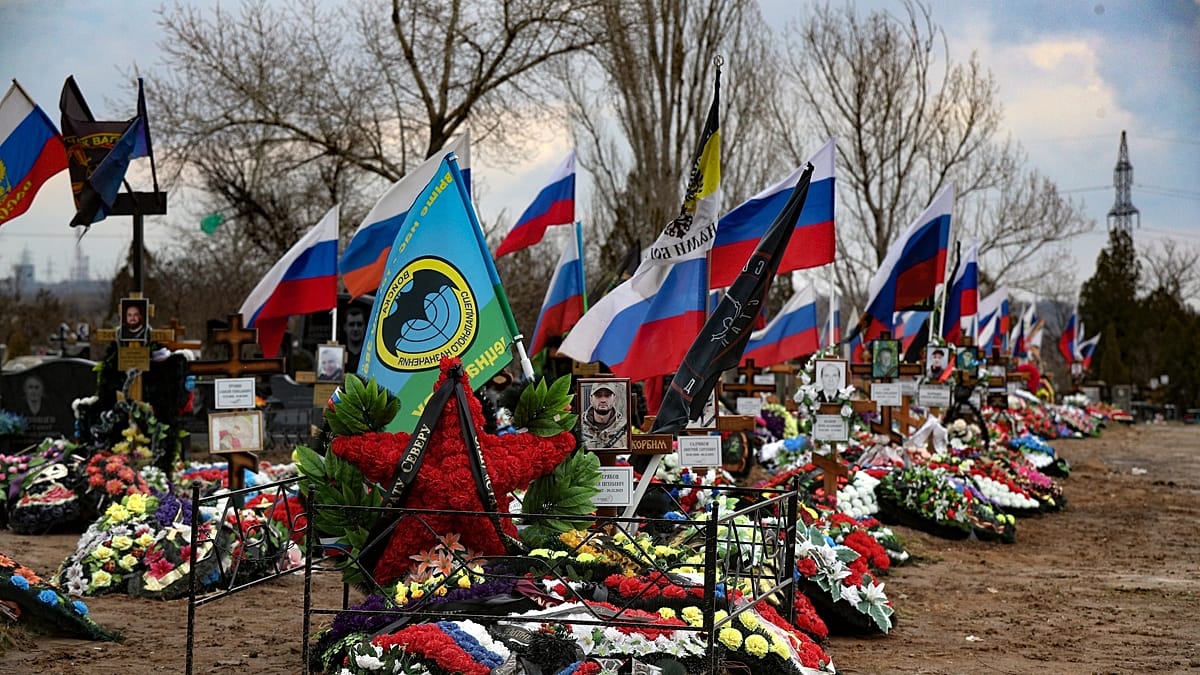
A number the Kremlin can no longer hide
Three hundred and ninety-three thousand eight hundred and eighty-one. That is the figure assigned by the hacker collective Kiberpartizany BY to Russian citizens killed in Ukraine as of late August 2026, derived from allegedly leaked documents inside Russia’s Federal State Statistics Service. Another group calling itself Silent Crow puts the toll even higher — 450,100 — by counting non-combat deaths, ambiguously classified deaths, and people who died in occupied territories where the circumstances remain officially unclear.
Neither number has been independently verified yet. But both align uncomfortably well with what three established open-source investigations have concluded on their own terms: roughly 350,000 Russian servicemen dead by the end of 2025, according to a joint Meduza-Mediazona study, and somewhere north of 286,000 confirmed by name in the BBC Russian Service and Mediazona database, which acknowledges its incompleteness, especially for recent months.
What makes this leak extraordinary is not just the volume — 23 terabytes, including internal demographic and economic files — but what it breaks: a years-long information blackout. Moscow has published no official combat-loss figures since September 2022. Since 2024, Rosstat has stopped releasing annual cause-of-death breakdowns entirely, making every subsequent estimate a guess in the dark. For the first time, researchers potentially have access to the raw administrative data behind those guesses.
Why verification matters more than the headline number
The gap between Kiberpartizany BY’s 393,881 and Silent Crow’s 450,100 is instructive. It reveals how much hinges on definition rather than mere counting. Combat deaths. Non-combat military deaths. Deaths labeled as terrorist acts. People registered in Russia but killed in Ukraine or occupied territory without a recorded cause. Each category pulls the total further up.
That spread also warns against treating either figure as gospel. Rosstat’s internal databases do not track missing persons in real time — individuals listed as missing are declared dead only after lengthy legal procedures. Medical causes of death on paperwork do not always reflect the actual circumstances surrounding a soldier’s killing. And there is nothing to prevent deliberate falsification within the dataset itself, whether through inflation or deflation.
Meduza and Mediazona say they have obtained the same materials and are actively checking both authenticity and completeness. That process will take time, and it may never produce a single definitive number. What it could produce instead is something arguably more valuable: a range bounded by documentable evidence rather than speculation.
The strategic implication no one is discussing openly
If these figures hold up — and the convergence with existing independent estimates gives reason to believe they are directionally accurate — they carry consequences that extend well past any single battlefront.
Consider the Western defense-spending debate. One of the persistent talking points among skeptical lawmakers in Washington, Brussels, and elsewhere has been the question of how costly the war actually is for Russia. The assumption, implicit if not always stated, has been that Putin can absorb staggering losses without political consequence, because his population is large enough and his information controls tight enough to make the math invisible. A credible, document-backed tally of 390,000-plus dead shatters that assumption.
It transforms the conversation from “can Russia keep losing men?” to “how many more men can Russia lose before something breaks?” Both questions matter, but they lead to very different policy answers. The first tends toward endurance strategies — outlast them. The second forces harder accounting: about recruitment capacity, about mobilization thresholds, about the demographic holes that appear in regional economies and military units once a certain loss rate is breached.
For Ukrainian commanders, the implication is equally significant. Attrition is already a central pillar of Kyiv’s strategy, but having a reasonably reliable read on Russian casualties sharpens the calculus enormously. It helps answer operational questions — where to press, where to conserve forces, how long a particular sector can withstand assault before needing reinforcement — that currently rely on patchy intelligence and educated guessing.
Who wins, who loses, and what happens next
The primary winner of this leak, if authenticated, is anyone seeking to understand the true cost of this war. Independent journalists have been building those estimates from obituaries, inheritance records, and regional news reports for four years. Now they may have the administrative backbone to anchor those efforts. That is a genuine informational breakthrough in a conflict where truth remains the first casualty.
The loser is the Kremlin’s information ecosystem. Russia has invested enormous resources in constructing an alternate reality around the scale of its losses, and Rosstat data — even partial, even imperfect — undercuts the project at a structural level. Once the leaks are cross-referenced with burial records, pension payments, and municipal reports, gaps between the official narrative and the documentary record will become impossible to paper over.
The most consequential effect, however, may play out in 2027, when Western audiences grow fatigued and political winds shift. The argument that Russia is paying an unsustainable price in blood is no longer purely rhetorical — it rests on what would be the largest document-backed casualty count of any modern European conflict since World War II. That changes how supporters of continued aid frame their case, and it changes how opponents must respond to it.
Nothing in this leak is final. The data needs verification. The ranges need narrowing. The methodology needs scrutiny. But the direction is clear enough: after years of operating in the dark, the world may finally be able to see how deeply this war has cut into Russia.