Russia Accuses Germany of Declaring War After Drone Incident
Moscow has called Berlin's response to a drone attack at Leipzig-Halle airport a de facto declaration of war, escalating a diplomatic crisis that could reshape Europe's security posture toward Russia.
A Drone, An Airport, and the Fastest Deterioration in Years
The drone that landed at Leipzig-Halle airport on the outskirts of eastern Germany did not carry explosives capable of leveling a terminal. It carried enough shrapnel and fuel to make a statement. But the statement Berlin read from it — a message of sabotage — has already dragged two European powers into their sharpest diplomatic rupture since the Ukraine war began in earnest.
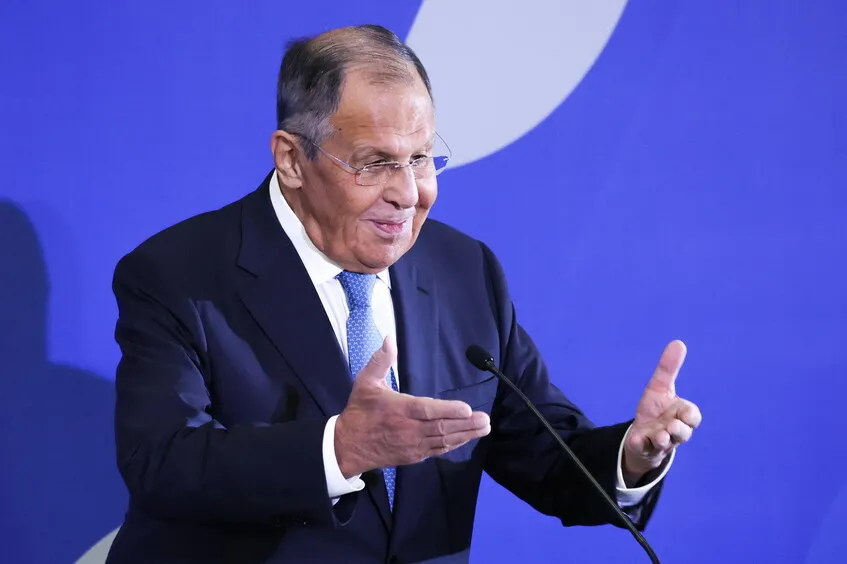
On June 6, Sergei Lavrov sat before Russian state television and delivered language rarely heard between NATO members and Moscow in the modern era. The Russian foreign minister called Germany’s decision to expel diplomats and close consulates a “de facto declaration of war.” He then invoked the prelude to the Second World War — noting that before the Nazi-Soviet conflict began in 1941, Germany had also shuttered diplomatic missions. The historical parallel was deliberate. The audience was not just Moscow.
What Germany Knows
Berlin’s assessment did not emerge from thin air. After the drone detonated near the Leipzig-Halle facility, German authorities — police, intelligence services, and prosecutors — spent weeks piecing together the materials, the flight path, and the likely origin. Federal investigators examined the drone’s propulsion system, identifying a brushless motor consistent with components supplied to Russian military logistics channels. The flight trajectory, reconstructed from radar data and civilian ADS-B signals, showed the device entering German airspace from the east at low altitude, a pattern intelligence officials have flagged in previous cross-border reconnaissance flights over Saxony and Brandenburg.
The conclusion: the device bore hallmarks of Russian military-grade components and was part of a broader pattern of hybrid activity on European soil. German intelligence, according to sources familiar with the analysis, had been tracking similar drone sorties along the eastern German border since late spring, treating the Leipzig-Halle strike as a threshold event rather than an isolated operation.
The response has been measured but concrete. By June 18, Germany is closing the Russian consulate in Berlin. The Russia House cultural center in the capital loses its legal operating basis. Entry requirements for Russian nationals are being tightened. None of these are symbolic. They are structured steps toward reducing Russian operational presence inside Germany — a country that has hosted some of the most sensitive backchannel communications with Moscow throughout the Ukraine conflict.
The Speed of Escalation Is the Story
What makes this moment distinct from previous Russia-West frictions is the velocity. In prior years, incidents like the poisoning of Russian defectors on European soil or the hacking of government networks were met with coordinated but slow diplomatic responses. Here, within weeks of the Leipzig-Halle attack, both sides have moved past warning shots into outright expulsions and institutional closures.
The EU has long classified Russia’s hybrid attacks — cyber intrusions, disinformation campaigns, energy coercion, and now suspected sabotage operations — as among the most serious strategic threats facing the bloc. The Leipzig incident is the first time that threat has triggered such an immediate and public diplomatic breakdown between two major European powers. That shift matters.
Second-Order Effects Are Already Bleeding Through
The closures will produce consequences well beyond diplomatic protocol. The Russian consulate in Berlin processes visa applications, notarial services, and citizen registration for roughly 17,000 Russian nationals legally resident in Germany — students, dual citizens, business migrants, and families maintained through cross-border ties that predate the Ukraine war. Their options will shrink. Some will face the prospect of traveling to Warsaw or Prague for consular services, adding friction to a community that has existed in legal gray zones for years.
Trade channels are even more sensitive. Leipzig-Halle is one of Europe’s busiest cargo airports, handling freight worth billions annually for logistics companies on both sides of the Baltic. Russian airlines and freight operators already navigate a web of sanctions and export controls; the diplomatic freeze adds a new layer of uncertainty for German firms still holding licensing agreements with Russian partners in the machinery and chemicals sectors. No one in Berlin has announced trade sanctions tied to this incident. But the political atmosphere around them has shifted perceptibly, and companies with live contracts are quietly reviewing exposure.
Germany’s role as a purported intermediary is already compromised. Berlin has hosted unofficial talks between Russian and Ukrainian delegations on humanitarian corridors and prisoner exchanges since 2022. Closing consulates and expelling diplomats removes the infrastructure that makes those conversations possible — the informal contacts, the logistical support, the low-visibility meeting spaces. Interior Minister Nancy Faeser has described the closures as reversible. Reversibility is a technical question; trust is a political one, and neither side currently possesses much of it.
Who Gains, Who Loses
For Moscow, Lavrov’s rhetoric serves a clear purpose: it frames Germany not as a victim of aggression but as an aggressor. By reversing the moral geometry of the situation, the Kremlin creates diplomatic room to justify its own countermeasures — the closure of Goethe-Institut cultural centers in Moscow, Saint Petersburg, and Yekaterinburg — as defensive rather than provocative. Putin’s claim that Berlin fabricated evidence adds another layer: it keeps the incident unresolved in the court of global opinion, which is precisely where Russia prefers these disputes to live.
For Berlin, the harder question is what comes next. Closing consulates reduces the very channels through which Germany has historically communicated with Moscow during crises. If the Ukraine war escalates further, or if a nuclear flashpoint emerges, there will be fewer backchannels to fall back on. Germany’s interior minister has suggested the consulate closures are reversible — but reversibility depends on trust, and trust is now in short supply on both sides.
For Europe, the risk is that the Leipzig-Halle incident becomes the template for a new normal: hybrid attacks with ambiguous attribution, slow investigative timelines, and rapid political escalation. If every unexplained drone or cyber incident triggers the same cycle of expulsions and closures, the continent’s diplomatic infrastructure will grow brittle. If it triggers coordinated action, the alternative danger is a Europe that accidentally stumbles into a confrontation it never intended.
The Unanswered Question and What Comes Next
No independent verification of the drone’s origins has been publicly released by German authorities. Berlin has not published forensic details, component analysis, or intercepts that would allow outside observers to weigh the evidence. That silence is politically convenient — it avoids giving Moscow ammunition for its fabrication claims — but it also means the international community is being asked to take Germany’s word on a charge that could redefine its relationship with Russia.
The next few weeks will be telling. If Germany shares more evidence, the EU may rally behind a unified response. If it does not, member states divided on how far to push Russia — particularly Hungary and Slovakia — could fracture the bloc’s position at exactly the moment cohesion matters most. France and Poland are likely to press for a harder line. Italy and Spain may resist economic measures that would disrupt energy and trade flows. Germany finds itself caught between those currents, trying to hold a coalition together while its own diplomatic toolkit has been partially emptied.
One thing is already clear: the era of managed tension between Berlin and Moscow is over. The drone at Leipzig-Halle did not restart the Cold War, but it did puncture the fragile assumption that diplomacy and hybrid aggression could coexist on the European continent. Whether what follows is controlled competition, accelerated decoupling, or an unintended spiral depends on choices these governments have not yet made — and on evidence Berlin has yet to show the world.