Kushner Says Russia Accepts NATO-Style Guarantees for Ukraine
Jared Kushner claims Moscow is comfortable with NATO-equivalent security guarantees for Ukraine — a move that could redraw Europe's postwar order if true. The implications run deep.
A remarkable claim lands at a precarious moment
Jared Kushner told reporters in Berlin on Thursday that Russia is “comfortable” with NATO-like security guarantees for Ukraine. It was, by any measure, an extraordinary thing for a U.S. envoy to say about a adversary still actively bombarding Ukrainian cities and fighting a war that is entering its fifth year.
If true — and Kushner offered no evidence, only his own assertion — the statement marks a dramatic pivot from the Kremlin’s long-stated red line: that Ukrainian membership in NATO must never be permitted. For nearly three years, Moscow justified its invasion precisely on that premise. Putin himself wrote an essay in 2021 arguing that NATO’s eastward expansion threatened Russia’s very existence. Now, according to the man Trump sent to negotiate peace, Moscow is willing to accept a security architecture that amounts to the same thing.
The gap between rhetoric and reality here deserves scrutiny. “Comfortable” is not a word any strategist would use for Moscow accepting armed guarantees along its border. But Kushner’s framing suggests something more important than semantics: Washington believes it has extracted an implicit Russian concession that could form the foundation of a negotiated settlement.
Who wins when the rules change
The first question is what happens next for European governments that spent the better part of five years building a unified stance against Russian aggression. If the United States can broker a deal built on Russian acceptance of NATO-equivalent guarantees for Kyiv, Britain, Germany, France and Poland face an awkward choice. They can either accept a settlement they didn’t design or risk isolation — which is precisely the outcome European leaders feared as Trump moved toward direct talks with Putin in Shenzhen.
The second question is who gets left out of the room. European leaders convened in Berlin with more than 40 representatives, a striking show of solidarity that also revealed anxiety. They wanted assurance that Washington wasn’t cutting a deal over their heads. Kushner said Trump called into those talks after speaking with Putin — a signal, perhaps, that the Americans see Europe as stakeholders rather than partners in shaping the postwar architecture.
Ukrainian officials have expressed mounting concern that Trump and Putin are preparing to decide Kyiv’s fate without meaningful input. The Kerch Bridge attack — the third in four days — appeared calculated to remind everyone that Ukraine still holds leverage. Train traffic was halted. The road deck collapsed. Putin vowed retaliation but also announced the bridge would no longer carry military hardware, a concession that may have been forced by the strike more than offered voluntarily.
Kyiv’s message was clear: any settlement reached without accounting for Ukrainian military realities risks collapsing under its own weight.
What NATO-like guarantees actually look like
This is where the ambiguity cuts both ways. “NATO-like” is a phrase that means different things depending on who is using it. Article 5 collective defense? Permanent basing of foreign troops? Long-range weapons deployment? Each option carries different implications for Moscow’s red lines and Europe’s defense burden.
Putin has repeatedly demanded that Ukraine remain neutral — that is, outside NATO’s defensive umbrella. A guarantee that falls short of full membership but provides comparable deterrence could satisfy both sides publicly while leaving technical disputes for later negotiations. That is how diplomatic language often works under duress. But it also means the details will determine whether this is peace or merely an armistice with better branding.
The Russians have shown no appetite for credible verification mechanisms. Without them, any agreement rests on Putin’s willingness to honor a commitment he broke once already. That is a thin reed on which to build European security for decades to come.
The domestic politics nobody is discussing
There is a quieter dimension to this story that English-language coverage has largely overlooked. In the United States, support for Ukraine has frayed significantly under Trump, with aid packages stalled and public opinion shifting. Democrats regained ground in midterm elections, and the question of whether to resume substantial military assistance to Kyiv is now a live political issue — one that could constrain whatever deal the administration negotiates.
In Europe, the calculus is different. Governments in Warsaw, Tallinn, Helsinki and Stockholm face populations increasingly convinced that American commitments are unreliable regardless of which party controls the White House. That conviction is driving defense spending increases across the continent that would have been unthinkable in 2021. Whatever emerges from these talks, Europe appears committed to rebuilding its own security architecture whether Washington leads or not.
Prince Harry’s veiled criticism of U.S. policy — noting a “big separation” between the Trump administration and the American people — may seem irrelevant to geopolitics until you consider that it reflects a broader truth: Western support for Ukraine is fracturing along predictable fault lines, and the speed of that fracture matters more than its direction.
What happens next
No date has been set for the next round of multilateral negotiations. The Kremlin invited European officials to Moscow to “determine their position,” though it is unclear whether anyone accepted. Dmitry Peskov declined to confirm any responses. Putin insisted the bridge attacks would be met with a response, though he framed the damaged structure as a civilian asset — an argument that rings hollow given that Russia has used the Kerch Bridge continuously for military logistics since annexing Crimea in 2014.
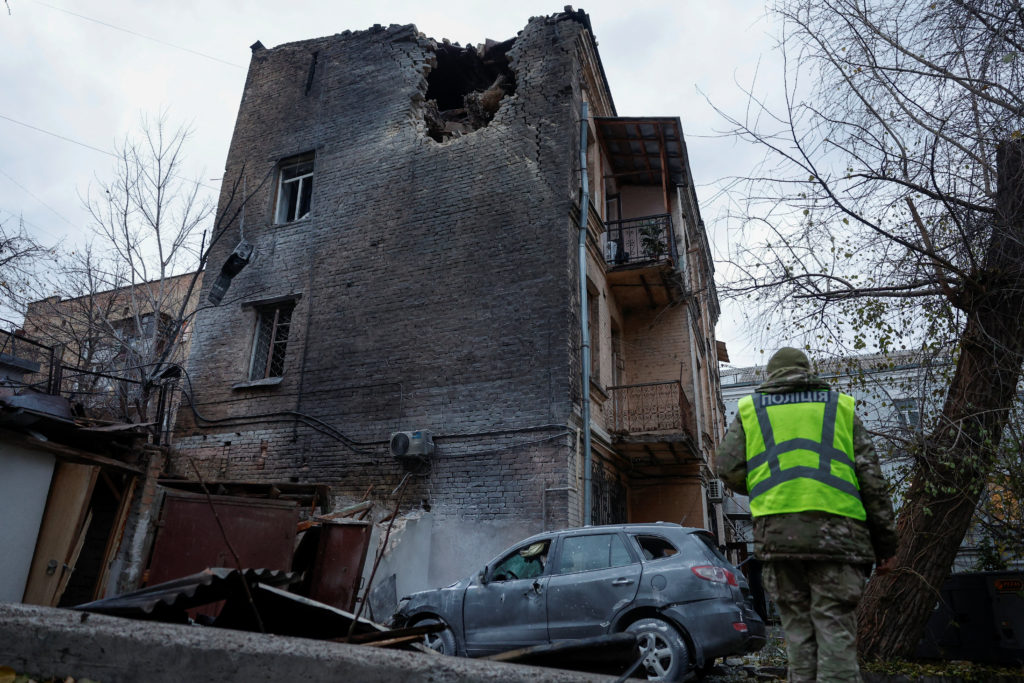
The war continues independently of diplomacy. Russia launched 98 drones at Ukraine on Thursday. Civilian casualties mounted on both sides. Kyiv struck refineries inside Russia. Moscow bombed residential areas. Neither side is demonstrating capacity — or interest — in stopping.
Kushner’s claim about Russian comfort with NATO-like guarantees may prove to be a negotiating probe, a genuine breakthrough, or simply rhetoric designed to shape expectations. The distinction matters less than what comes next: whether European capitals choose to engage with whatever framework the United States proposes, whether Ukraine retains meaningful agency in its own settlement, and whether any agreement includes enforcement mechanisms strong enough to prevent Russia from reversing course within months.
Europe spent years building a consensus around deterrence. If this claim holds, that consensus may need to be rebuilt around something else entirely — and the timelines for doing so are shorter than most politicians are prepared to admit.