Russia Is Weaponizing Nuclear Fuel Against Its Own Ally
Putin's review of uranium export restrictions targets a structural weakness in South Korea's nuclear program — a vulnerability the US can afford to ignore but Seoul cannot survive without solving.
The Enrichment Trap
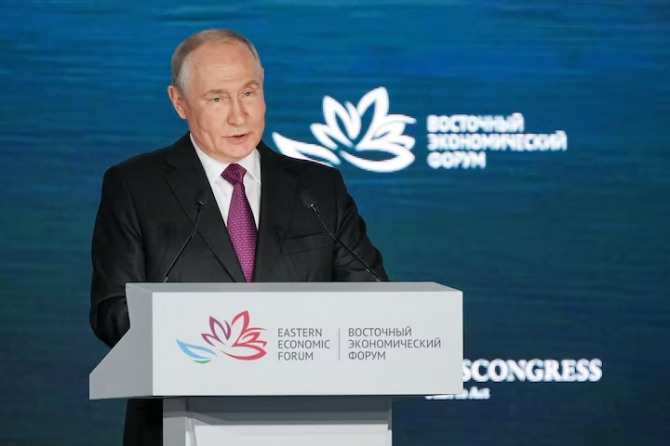
Moscow is about to turn a wrench on Seoul’s nuclear ambitions, and the mechanism is far more precise than a blanket export ban. Vladimir Putin’s September 11 directive asking the government to review restrictions on uranium, titanium, and nickel exports is not merely an echo of Western sanctions on Russian goods — it is a targeted strike at the one chokepoint South Korea has never been able to escape.
The numbers make the vulnerability visceral. According to the World Nuclear Association, Russia controlled roughly 45 percent of global uranium enrichment capacity as of 2020. That figure is staggering precisely because Russia holds only about 8 percent of the world’s uranium reserves. The power does not come from owning the raw material — it comes from owning the machinery that transforms it into fuel. South Korea’s state-backed Hanil Nuclear Fuel, the company that supplies enriched uranium to every operating reactor in the country, does not own a single enrichment facility. It buys finished fuel from Orano in France, Urenco in the UK, and Rosatom’s Tenex subsidiary in Russia. That is the entire architecture of Korean nuclear power: a nation that designs, builds, and operates reactors but outsources the most technically consequential step in the fuel cycle to foreign suppliers.
Putin’s wording matters. He told Prime Minister Mishustin to find measures that do not damage Russia’s own economy and specifically did not order immediate restrictions. What he is building is a bargaining table, not a shutdown switch. But the mere act of putting South Korea’s fuel supply on that table signals that Moscow sees Seoul’s dependency as leverage worth flexing — and it signals that the Kremlin views the US-ROK alliance from a distance that no longer requires deference to American strategic concerns.
Who Gets Hit First
The direct hit lands on Korea’s operating cost curve. If Russia restricts shipments from Tenex, the company has no domestic fallback. Enriched uranium spot prices would bid upward as demand shifts toward French and British capacity, which already run near full utilization. Hanil Nuclear Fuel’s procurement costs climb, and those costs flow through to KEPCO and the roughly two dozen reactors it operates. The magnitude is speculative until Moscow publishes implementing regulations, but the structural risk is real.
The United States faces a different but related squeeze. More than 20 percent of the enriched uranium consumed by American commercial reactors comes from Rosatom and Tenex, according to a House report. President Biden signed a law in May 2024 banning Russian low-enriched uranium imports by 2040, with a temporary waiver window open through January 2028 to allow utility supply chains to adjust. Washington is rebuilding its enrichment infrastructure; it just has not finished. Korea has not started.
The asymmetry is the story. When Russia tightens the tap, Washington can lean on exceptions, domestic production, and allied capacity. Seoul has no domestic capacity and fewer allies willing to reroute enrichment services away from commercial contracts. The alliance posture does not protect a power plant from a fuel shortage.
The Alliance Blind Spot
What English-language coverage of this story routinely misses is the geopolitical irony: Russia, a nuclear-armed state accused of proliferation risks worldwide, is now positioned to deny fuel to a US treaty ally that depends on Russian enrichment. That is not a scenario Washington has built policy architecture for. The Biden-era ban targets Russian uranium on national security grounds but does nothing for a Korea that cannot simply replace Tenex with a domestic alternative because no such alternative exists.
If Putin’s review hardens into actual restrictions, the first practical test will be the waiver system. US utilities already filed for exceptions before the 2028 deadline. Korea has no equivalent legal mechanism — no statute that authorizes emergency procurement overrides, no strategic reserve of enriched uranium, no bilateral agreement with France or the UK that guarantees priority access during a shortage. The nearest thing Korea has is a stockpile of uranium concentrate, which is functionally irrelevant if you cannot enrich it.
This gap is not inevitable. It is the product of a policy choice made decades ago: South Korea developed a world-class reactor design and construction industry while deliberately outsourcing enrichment, citing non-proliferation commitments and cost efficiency. The choice made sense when enrichment capacity was abundant and politically stable. It makes less sense when a rival superpower controls the majority of global enrichment capacity and is willing to discuss restricting it.
What Happens Next
Three scenarios are plausible, and they diverge sharply in their implications for Seoul.
The first is the status quo with pressure. Russia announces the review, markets tighten slightly, spot prices creep up, and no shipments are actually blocked. This is the most likely near-term outcome. It costs Korea money without breaking the supply chain and lets Moscow signal resolve without provoking a crisis. It also serves as a reminder to Seoul that its energy security is not fully sovereign.
The second is selective restriction. Russia targets specific grades or volumes of enriched uranium, perhaps reserving allocations for friendly buyers in Asia while choking off supply to competitors. This would force Korean utilities into expensive spot purchases or long-term contracts with European suppliers at premium prices. KEPCO would absorb higher generation costs, and the political question of whether the government should subsidize nuclear fuel would surface quickly.
The third is full restriction. This is the low-probability, high-impact outcome. If Russia cuts off Tenex shipments entirely, Korean reactors face a fuel runway measured in months, not years. The strategic reserve would buffer some reactors but not all. Operating schedules would be disrupted. The government would face an immediate crisis: invoke emergency exemptions, negotiate directly with Moscow, or accelerate a domestic enrichment program that would take a decade and raise proliferation questions the country has spent thirty years avoiding.
The Strategic Question
The most important implication of Putin’s directive is not the price of uranium — it is the revelation that South Korea’s nuclear independence is conditional. The country can build reactors. It can operate them. It cannot guarantee that they will keep running if a major supplier decides to withhold fuel. That is a vulnerability no amount of diplomatic alignment with Washington can fully neutralize.
The waiver system Biden created buys America time. It buys Korea none. The policy question for Seoul is whether to accept a permanent dependency on foreign enrichment or to invest in the industrial and diplomatic capacity to break it. Neither option is cheap. Both are necessary if nuclear power remains central to Korea’s energy strategy — and it is.
Russia’s move is not a surprise. It is a mirror. It shows exactly what happens when a country builds a critical energy sector on borrowed capacity and assumes the suppliers will always be available. The lesson is not to fear Russia. The lesson is to stop treating fuel supply as someone else’s problem.