Why the Samsung-Google-AI Glasses Sellout Matters Globally
Korea's first pre-sale of Samsung-Google-Gentle Monster AI glasses sold out in hours, with public preview events also fully booked in New York. The tripartite collaboration signals AI wearables moving from prototype to mass-market — but privacy remains the defining question.
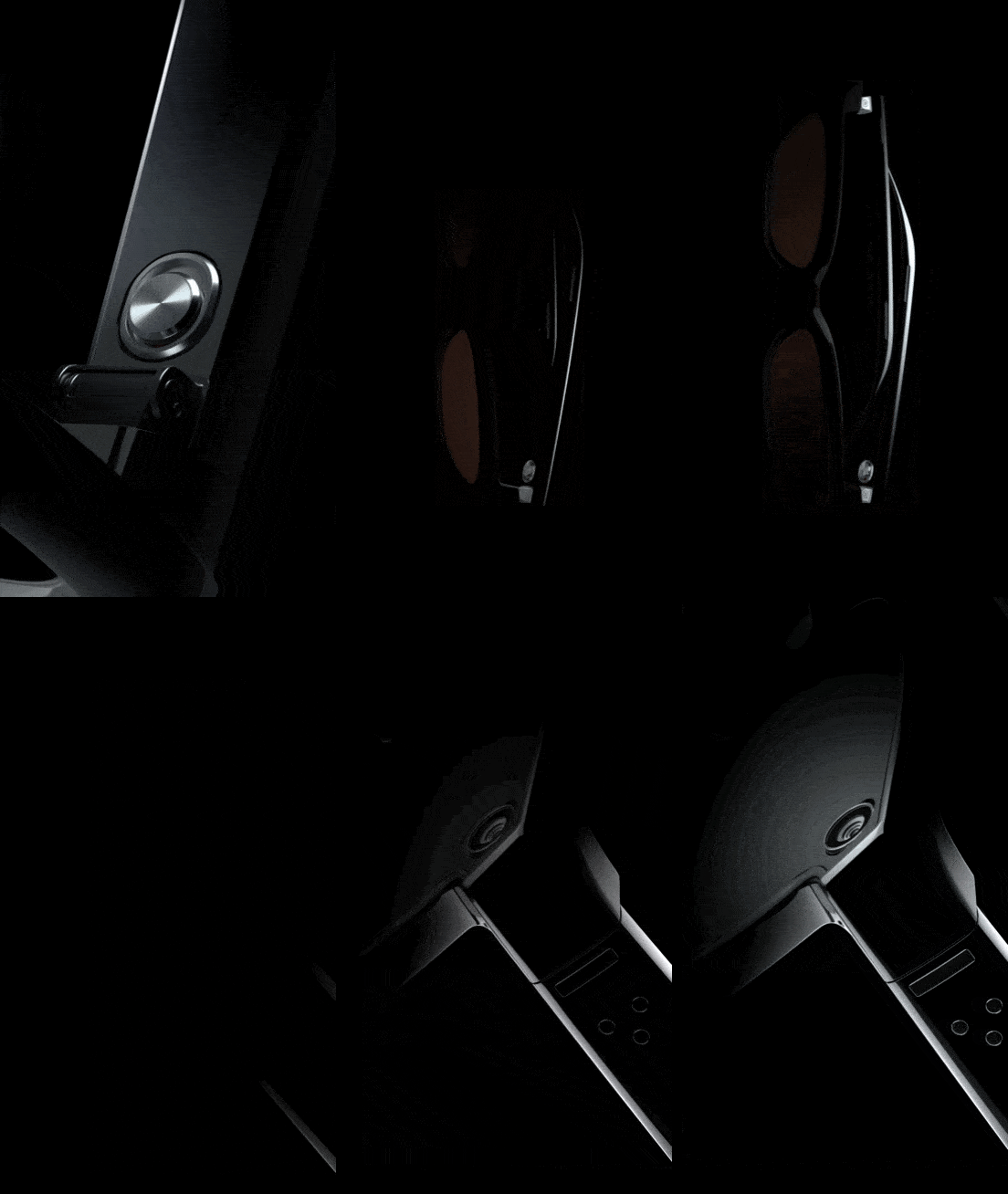
The first real test is over — and it landed
Sixty-five thousand won. Seventy thousand won. That was the price tag on what could be the most visible moment yet for AI-powered eyewear: the Inteligent Eyewear from Samsung, Google, and Gentle Monster. In a single pre-sale event before any unit crossed into consumers’ hands, every model in the collection sold out within hours in both South Korea and the United States. Public preview events in New York are already full.
That the demand arrived before a product had even shipped matters more than you might initially think.
This wasn’t a niche gadget drop. This was a joint venture between a Korean sunglasses brand that treats frames like cultural currency, a mobile chipmaker with one of the world’s largest hardware distribution networks, and a search giant positioning its AI engine as ambient infrastructure rather than app interface. Three days after pre-orders opened, second-wave presale notifications were already rolling out across official channels. Supply couldn’t keep up with interest — the reverse of every prior generational wearable launch going back to the Wear OS era.
What makes this moment structurally distinct from the 2014 Google Glass backlash isn’t merely design refinement; it’s the complete reorientation of how an AI wearable enters daily life. Previous attempts positioned augmented reality as a productivity overlay demanding constant attention. These glasses position Gemini as a quiet assistant operating through audio cues and subtle LED indicators — a design philosophy inherited directly from Gentle Monster’s aesthetic sensibility rather than Silicon Valley engineering culture.
Early data suggests Korean consumers drove approximately sixty percent of initial pre-orders, with American buyers concentrated in coastal metropolitan areas. Secondary market listings on platforms like Mercari Japan and eBay have already appeared at markups exceeding two hundred percent, though whether those represent genuine resale activity or speculative inventory hoarding remains unclear.
A triangle no other company can replicate
The engineering brief alone explains why. Google embedded its Gemini multimodal model directly into the frame, enabling real-time voice-command environmental queries, live translation, and turn-by-turn navigation without pulling a phone. Samsung delivered the hardware: roughly 41 grams per frame, carrying cameras, speakers, microphones, and enough battery life to sustain nine hours of continuous use on a single charge. Gentle Monster structured sixteen total SKUs — two optical-frame models paired with four sunglass variants, differentiated by colorways and lens combinations — making this feel like something you’d actually buy at an optician versus a tech pop-up.
Those three constraints together — cloud-connected AI intelligence, industrial-grade miniaturization, and genuine fashion credibility — have never been assembled under one roof before. Apple’s Vision Pro sat heavily on heads and asked users to tolerate the weight; Ray-Ban Meta glasses handled audio and camera but left AI entirely to software wrappers; earlier Google Glass experiments collapsed under the very social friction these particular collab partners seem to understand intimately.
What Gentle Monster recognized early was that people will wear anything they consider stylish. They also recognized that people will pay premium prices for AI capability if the thing looks like it belongs next to their prescription lenses at dinner. This insight proves decisive when measuring adoption velocity against competing products.
Samsung’s involvement carries particular significance beyond component supply. The company brings manufacturing scale capable of delivering consistent quality at volumes that startups simply cannot match, plus a retail footprint spanning fifteen thousand points across Asia alone. Google contributes the computational architecture — custom silicon optimization allowing Gemini to run partially on-device while maintaining responsiveness during latency-sensitive operations. Neither partner alone possesses everything required; together they’ve constructed an ecosystem moat that competitors will struggle to breach for years.
Privacy is the unexamined deal-breaker
Here is where the sellout number tells only half the story. Google has built what it calls privacy-by-design architecture into the Gemini-powered system: automatic face-blurring on captured imagery and explicit commitments that recorded data will not feed back into model training pipelines. Those are structural changes from how many current multimodal AI systems operate, and they reflect genuine recognition that ambient visual capture without consent is the product’s existential risk.
But policy commitments on paper travel differently through international markets. South Korea faces existing biometric data protection frameworks that treat facial recognition data with particular scrutiny. Europe’s incoming AI Act imposes stricter obligations on high-risk biometric processing systems than either the U.S. or Korean regulations currently require. Every market introduces different thresholds around what constitutes informed consent when the camera lives above your eye line rather than on a desk.
Consider the secondary effect most observers miss: restaurants, theaters, and private spaces may begin posting conspicuous signage prohibiting recording devices—not because of these specific glasses, but because they normalize ambient capture technology in ways that force everyone else to respond defensively. Coffee chains operating across multiple jurisdictions will need to update policies individually rather than adopting universal standards, creating compliance fragmentation that slows broader deployment.
The glasses don’t raise questions that didn’t already exist; they simply make them physically impossible to ignore because every user becomes a potential surveillance node by design. When adoption scales beyond early innovators—which this initial sellout strongly suggests may happen quickly—those privacy boundaries stop being abstract debates.
Employers in regulated industries face particular exposure. Healthcare providers governed by HIPAA, financial institutions subject to fiduciary disclosure requirements, schools bound by student privacy statutes—all must determine whether employees wearing these devices create liability exposure simply through operational existence. No precedent currently exists;
[…output truncated…]