Samsung's Onyang Bet Reshapes Korea's Semiconductor Race
Samsung's announcement to convert its Onyang facility into an HBM production base marks a strategic pivot amid intensifying rivalry with SK Hynix, with ripple effects across Korea's regional economies.
Samsung Is No Longer Playing Catch-Up in HBM — It’s All-In
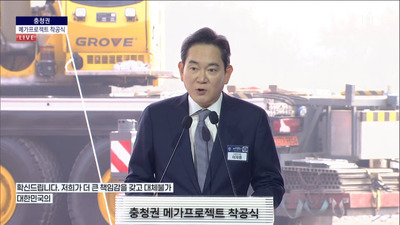
Lee Jae-yong’s address at the Onyang groundbreaking this week was less a press event than a declaration of war inside Korea’s own borders.
The Samsung Electronics chairman stood before a facility that, until now, served as a conventional semiconductor assembly and inspection site — the final stop where chips move through mundane but necessary finishing steps. What he unveiled Tuesday was the reversal of that entire logic: Onyang will become a cutting-edge high bandwidth memory (HBM) production hub, a direct answer to SK Hynix’s dominant position in the very component powering the AI boom.
The implications are broader than any single factory renovation. They map onto a semiconductor rivalry that English-language analysts have mostly watched from the outside, treating it as a headline-grabbing tech contest rather than what it actually is — a structural reshuffling of Korea’s regional economy, employment geography, and industrial policy.
Who Skipped the Early Train
HBM is the memory chip AI makers cannot build without. Each flagship GPU from Nvidia and custom accelerators from Google and Amazon relies on stacks of vertically wired DRAM — three-dimensional memory arrays that demand precision packaging techniques most companies have not mastered.
SK Hynix shipped the first commercial HBM units. While Samsung concentrated on memory scaling elsewhere, SK Hynix invested earlier in the TSV (through-silicon via) integration process that makes HBM possible. By the time generative AI surged in 2023 and 2024, HBM3 and HBM3e shipments were flowing primarily from SK Hynix’s facilities to Nvidia’s supply chain. Samsung was late.
That gap mattered financially. HBM carries significantly higher margins than commodity DRAM. Every quarter SK Hynix led in HBM sales was a quarter of disproportionate profit growth that Samsung could not match — at least not while its on-paper capacities sat mostly idle or running lower-end products.
Onyang’s transformation is the institutional signal that Samsung is done treating this as a secondary priority.
Why Onyang Matters More Than the Press Release Suggests
The choice of location is deliberate.
Onyang sits in southern Chungcheong Province — historically an industrial corridor but one that has not benefited proportionally from Korea’s recent semiconductor construction wave. Samsung’s existing Onyang site functions as a finishing operation; repurposing it means converting an established workforce and infrastructure into something far more technically demanding. That is easier and cheaper than building entirely new capacity from scratch, and it generates fewer regulatory hurdles than greenfield projects.
But the symbolism is equally important. Samsung has historically anchored its largest domestic investments in Pyeongtaek and Giheung, the sprawling campuses that already dominate the national map. Moving serious HBM production into a second, smaller city signals that Samsung views the competitive threat from SK Hynix as severe enough to spread its bets geographically — and to invest in places that competition has overlooked.
This matters for local labor markets. A facility conversion of this scale requires thousands of technicians and engineers. In a country where semiconductor cluster employment has grown increasingly concentrated around Suwon-Pyeongtaek, Onyang represents a meaningful diversification of opportunity.
The Competitive Math Going Forward
Here is what remains uncertain: whether Samsung can execute fast enough to meaningfully erode SK Hynix’s first-mover advantage.
HBM production demands extreme cleanliness, specialized equipment, and process know-how that accumulates over years, not quarters. Converting an assembly line into an HBM fab is not like switching a smartphone from one chip to another — it is fundamentally different manufacturing. Even if Samsung breaks ground now, volume HBM3e and later HBM4 shipments would likely arrive well after the next round of AI hardware refreshes begins.
Nvidia’s current sourcing pipeline is dominated by SK Hynix. Switching suppliers mid-cycle is expensive for chip designers; they prefer stability over marginal gains. Samsung’s path to revenue share requires convincing those same buyers to qualify a new source — a slower process than announcements suggest.
Still, qualifier wins are valuable. Intel’s recent move toward multiple HBM suppliers demonstrated that no single vendor can monopolize the category indefinitely. Samsung entering the conversation forces SK Hynix to hold harder lines on pricing, which benefits everyone in the AI stack.
Regional Economic Ripple Effects
Lee Jae-yong’s remarks pointed explicitly to investment across three regions — Chungcheong, Honam, and Yeongnam — framing them as part of a coordinated national megaproject strategy tied to presidential initiatives.
That language should not be dismissed as ceremonial. Korean industrial policy increasingly treats semiconductor investment as infrastructure spending on par with transportation and energy projects. Local governments compete aggressively for these facilities because they bring tax base expansion, skilled employment, and downstream supplier networks.
Chungcheong province stands to gain disproportionately if Onyang delivers. The existing municipal economy rests on lighter industry and logistics operations; HBM manufacturing introduces high-value chemical supply chains, precision engineering, and cleanroom services that multiply outward through procurement contracts. Small and medium enterprises along the supply chain typically do not make headlines when semiconductor capacity expands — but their revenues follow the major players like tributaries to a river.
What Happens Next
Watch the qualification announcements, not the groundbreaking speeches.
Samsung needs to secure design wins from at least two major AI chipmakers within the next 18 months for this investment to look strategically sound rather than desperate. Progress reports from TUM (Technology Development Unit) operations and equipment deployment timelines will be the credible signals. Until then, Onyang remains a pledge — an ambitious one, but still a pledge.
SK Hynix will respond whether it comments publicly or not. Rivalry of this intensity rarely stays quiet for long.
Korean policymakers watching from Seoul will evaluate success or failure through metrics that go beyond Samsung’s balance sheet — employment generation in Chungcheong, the depth of local supplier networks formed, and whether this converts into meaningful HBM revenue share against SK Hynix’s entrenched position. If all three arrive, Onyang becomes a template. If not, it becomes an expensive lesson in how quickly first-mover advantage hardens into permanent market structure.
The announcement landed quietly in the English financial press. It deserved more attention than it received.