Samsung Ousts China’s Roborock From Robot Vacuum Throne in Korea
Samsung Electronics has wrestled South Korea's robot vacuum market away from Chinese leader Roborock after years of Chinese dominance — not on cleaning performance alone, but by leaning hard into security and service trust. The shift is a small data point with outsized implications for Asia's home-tech supply chain.
The King Has Fallen — Inside Korea’s Robot Vacuum Upheaval
For years, China’s Roborock reigned over South Korea’s robot vacuum market with comfortable dominance. In 2022, barely two years after entering Korea, it overtook Samsung Electronics and held the number-one spot through 2025. By last year, Roborock’s own figures put its market share above 50 percent in Korea.
Then, in the summer of 2026, something shifted.
According to industry estimates compiled by Maeil Business Newspaper, Samsung’s domestic robot vacuum market share climbed past 50 percent in June and held near that level through July — back-to-back months at the top, a streak that signals more than a promotional spike. Roborock, meanwhile, slipped into the 30s.
The headline takeaway is simple: Samsung has taken the lead in a category where Chinese manufacturers had seemed untouchable. The subtext is where the story actually lives.
It Wasn’t Just Cleaning Performance
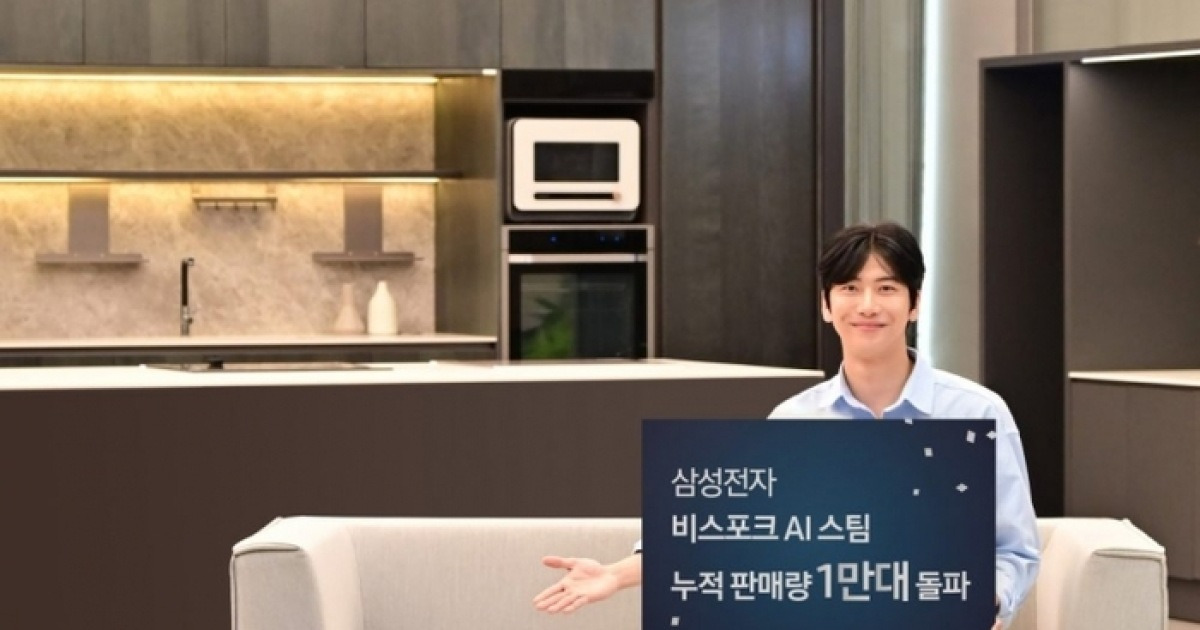
Samsung’s case, the 2026 “Bespoke AI Steam” robot vacuum, launched in February 2026. On paper, it competes head-on with Roborock’s all-in-one offerings — mopping, self-emptying, obstacle avoidance.
But Korean consumers, it turns out, care about things beyond brush rotation and suction power. Two factors appear to have tipped the scales: security and after-sales service.
Robot vacuums are among the most privacy-sensitive household gadgets available. They map your home with cameras and sensors, logging floor plans, room layouts, even the furniture you keep where. For a product that lives in your living room and records your domestic life, that’s a trust hurdle — one that Korean buyers apparently weighed heavily.
Samsung’s brand familiarity and established repair and service network across Korea gave it an edge Roborock simply couldn’t match on day one. As industry analysts noted, the gap wasn’t closed on specs alone; it was closed on comfort.
That doesn’t mean Samsung won purely on goodwill. The company also ran a promotional campaign called the “Appreciation Festival” from June 8 through early July, offering a 20-percent digital gift-card refund on robot vacuum purchases. That gave demand a boost. But the fact that Samsung’s share held near 50 percent in July — after the promotion wound down — suggests the lift wasn’t temporary. Buyers who came in for the deal stayed for the product.
Why This Matters Beyond Korea
South Korea is a peculiar test market for global appliance competition. It’s a high-income country with tech-savvy consumers who are simultaneously loyal to homegrown brands and willing to adopt foreign innovation. When a Chinese brand cracks Korea, it’s usually because the product genuinely outperforms — not because of subsidies or marketing alone. Roborock’s rise to the top in 2022 was earned.
Samsung’s reversal, therefore, carries more signal than a routine market-share flip. It suggests that even in categories where Chinese manufacturers have demonstrated undeniable product competitiveness, incumbency advantages — brand trust, service infrastructure, security perception — can still matter. Not always. But often enough to keep the playing field from flattening entirely.
For Roborock, the loss of its Korean crown is a stinging setback in what had been its showcase market outside China. Korea was supposed to be the proof point: if you can beat Samsung at its own game in its own backyard, the rest of the world follows. That narrative now needs revision.
For Samsung, the win is validation of a strategy it has been refining for years — leaning into ecosystem lock-in, service density, and consumer trust as differentiators rather than chasing raw spec sheets. The Bespoke AI Steam isn’t necessarily the most advanced robot vacuum on the market. But it may be the one Korean buyers feel safest buying.
The Bigger Supply-Chain Picture
This shift should be read against the broader trajectory of Asian home-tech manufacturing. Chinese firms like Roborock, Ecovacs, and Dreame have been pushing aggressively into global markets with products that often match or exceed Samsung and iRobot on features at lower prices. Their success in Korea was one of the clearest signs that the old hierarchy — Western and Korean incumbents at the top, Chinese challengers below — was fracturing.
Samsung’s rebound doesn’t erase that trend. It complicates it.
The company’s ability to regain ground in Korea suggests that the Chinese wave has hit a wall it didn’t fully anticipate: the trust ceiling. In categories where devices monitor private spaces — robot vacuums, smart speakers, security cameras — consumers don’t always choose the best product. They choose the product they trust not to misuse their data, the brand they can call when something breaks, the name on the box they recognize from their parents’ generation.
That’s a moat that no amount of competitive pricing or feature parity can easily cross. And it’s one that Samsung and other legacy brands can reinforce through continued investment in service infrastructure and data-security messaging.
What Comes Next
August will be the real test.
If Samsung holds above 50 percent through the summer without the promotional crutch, the market reshuffle is no longer a blip — it’s a structural shift. Industry insiders are watching closely, noting that sustaining majority share after a big promotion ends is a stronger signal than the initial spike.
For Roborock, the question is whether it can adapt its Korea strategy. That might mean investing more locally in service and support, or doubling down on product differentiation that appeals to the segment of buyers who prioritize features over familiarity. The company has the engineering; the challenge is the relationship gap.
Samsung, for its part, will want to protect the position it’s reclaimed. The Bespoke line has momentum, but robot vacuums are a fast-moving category. A single misstep — a firmware bug, a privacy scare, a competitor launch — could erode the gains quickly.
One thing is clear: the era of unchecked Chinese dominance in Korea’s robot vacuum market is over, at least for now. How long it stays over depends on whether Samsung can convert a moment of advantage into lasting market power — and whether Roborock can find a way back in that doesn’t rely on hope alone.
The king may have fallen. But the throne isn’t secured yet.