Samsung's Record Payout Signals a New Era for Korean Tech
Samsung's 110-trillion-won shareholder return is the largest in Korean corporate history, funded by memory-chip profits in an AI-driven supercycle—and it's reshaping how global investors view capital allocation in the semiconductor sector.
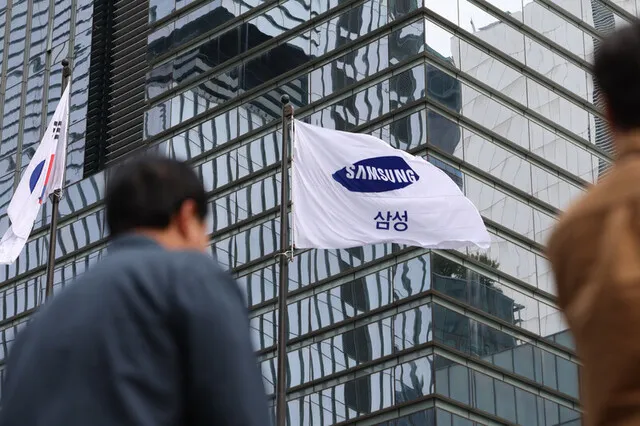
Samsung Is Paying Up—and It’s Not Just About Stock Buybacks
Samsung Electronics has committed to returning up to 110 trillion won ($77 billion) to shareholders this year, dwarfing the previous Korean corporate record of 20.3 trillion won set in 2020 by roughly fivefold. The board approved the plan on June 21. Another 15 trillion won is earmarked for employee compensation through self-share purchases. A separate 78.9 billion won incentive fund goes to suppliers in its DS (Device Solutions) division.
This is not a company searching for growth options. It is a company converting windfall cash flows into shareholder value at a pace that would be unthinkable under any other market conditions.
The Memory Supercycle Is Funding This Moment
Samsung’s cash generation is being driven by the memory-chip supercycle. High demand from AI infrastructure and data-center build-outs has pushed prices and margins in DRAM and NAND far above the trough levels seen after the 2023 downturn. That is the simple, mechanical explanation. The deeper one is how Samsung is choosing to allocate that capital relative to competitors.
SK Hynix, Samsung’s domestic rival, announced a 40 trillion won share buyback and cancellation on June 19—two days before Samsung’s board vote. Taken together, Samsung and SK Hynix are signaling that the memory profits are here, and they intend to share them rather than hoard them for capex or acquisitions. That is a qualitative shift from the pre-2023 era, when Korean chipmakers prioritized capacity expansion even through cyclical lows.
What the Numbers Actually Say About Samsung’s Strategy
Let’s break down the timeline. Approximately 30 trillion won in cash dividends will flow to shareholders in Q3. The rest—up to 80 trillion won—will be determined in January, after this year’s results are finalized, and split between cash dividends, share buybacks, and cancellations. On paper, that creates a two-phase payout structure: immediate cash for liquidity-sensitive investors, and a deferred, performance-tied second wave.
Over the past three fiscal years, cumulative shareholder returns have reached an estimated 120 trillion to 140 trillion won. Samsung applied a 50% free cash flow distribution policy across 2024–2026, which it began during the bottom of the last memory cycle and has now scaled aggressively. In 2024, regular dividends were 9.8 trillion won. In 2025, another 9.8 trillion won. The 2024 special dividend added 1.3 trillion won, and an 8.4 trillion won buyback-cancellation package was executed that same year.
That trajectory matters because it shows consistency, not a one-off response to a temporary boom. Samsung’s board is framing this as a structural commitment, not a discretionary gesture.
The Unasked Question: Where Does the Capex Go?
The most important question this payout plan raises is the inverse of the one investors usually ask. Everyone asks what Samsung is investing in. The real question is what it has already invested in—and whether its current fixed-asset position is sufficient to meet the next several years of AI memory demand.
Memory manufacturing is capital-intensive, with new fab lines taking three to five years from groundbreaking to volume production. Samsung’s 110 trillion won payout does not come out of nowhere; it comes from existing cash generation on assets already built. If the company is willing to return this much capital while still competing in a high-capex industry, it likely believes its current fabrication capacity is either adequate for near-term demand or that additional investment can be deferred without losing competitive positioning.
That belief could be wrong. If AI memory demand outpaces Samsung’s ability to scale DRAM and NAND output, competitors with newer capacity may capture disproportionate gains. But it could also be right, depending on how Samsung positions its M1x and subsequent logic and memory nodes against TSMC and SK Hynix.
Who Benefits and Who Loses
Shareholders win immediately—both through cash and through the signaling effect of a payout this large. A 5x increase over the prior record tells foreign investors that Samsung is no longer the slow-moving conglomerate of the 2010s, and that its management is actively responsive to valuation gaps versus global peers.
Employees also benefit from the separate 15 trillion won self-share purchase program, which is earmarked for performance-based compensation packages. That is not new money; it is redirected equity value.
What does not win in this framework is the small-cap supplier base that Samsung funds through its 78.9 billion won DS division incentive pool. The fund is modest relative to the overall payout. It is a maintenance-level commitment, not a structural investment in supply-chain diversification or safety modernization. Suppliers watching for a deeper partnership model may find this a signal that Samsung sees its tier-one ecosystem as stable, not at risk.
The Global Investor Read-Through
For investors outside Korea, Samsung’s decision carries a specific signal about the memory cycle’s durability. Historically, when chipmakers commit to large shareholder returns mid-cycle, there are two interpretations: either the cycle is peaking and management is cashing out, or the cycle is mature and durable enough to sustain returns without jeopardizing competitive positioning.
The timing here—during an active AI infrastructure build-out—makes the first reading less credible. The more likely scenario is that Samsung’s board believes the memory supercycle has further run, and that distributing profits now strengthens the company’s valuation framework without eroding its capital-expenditure runway.
Global semiconductor funds tracking Korean equities should treat this as a confirmation that Korean memory makers view current earnings power as sustainable for at least the next 12 to 18 months. The alternative—hoarding cash for a downturn—would be the more cautious signal. Instead, Samsung is leaning into confidence.
The follow-on to watch is the January board meeting, where the remaining payout structure will be locked in. If Samsung favors buybacks and cancellations over additional dividends, that is a bullish signal for share price. If it tilts toward cash, it suggests a more income-oriented strategy for a broader investor base.
Either way, the era of Samsung as a low-yield, high-capex conglomerate appears to be closing.