Samsung's Record Profit Ignored — A Warning for Global Tech
Samsung posted a historic 107 trillion won quarterly operating profit, yet its stock fell. The market isn't questioning how much Samsung is earning — it's questioning how long it can keep earning it.
The Profit That Wasn’t Good Enough
Samsung Electronics reported a quarterly operating profit of 107.4 trillion won — roughly $74 billion — making it the first Korean company ever to clear the 100 trillion won quarterly threshold. Excluding Saudi Aramco, Samsung became the first global technology company to hit that milestone. Revenue climbed 126.6% year-over-year to 195 trillion won. On paper, this was a triumph that should have sent shares soaring.
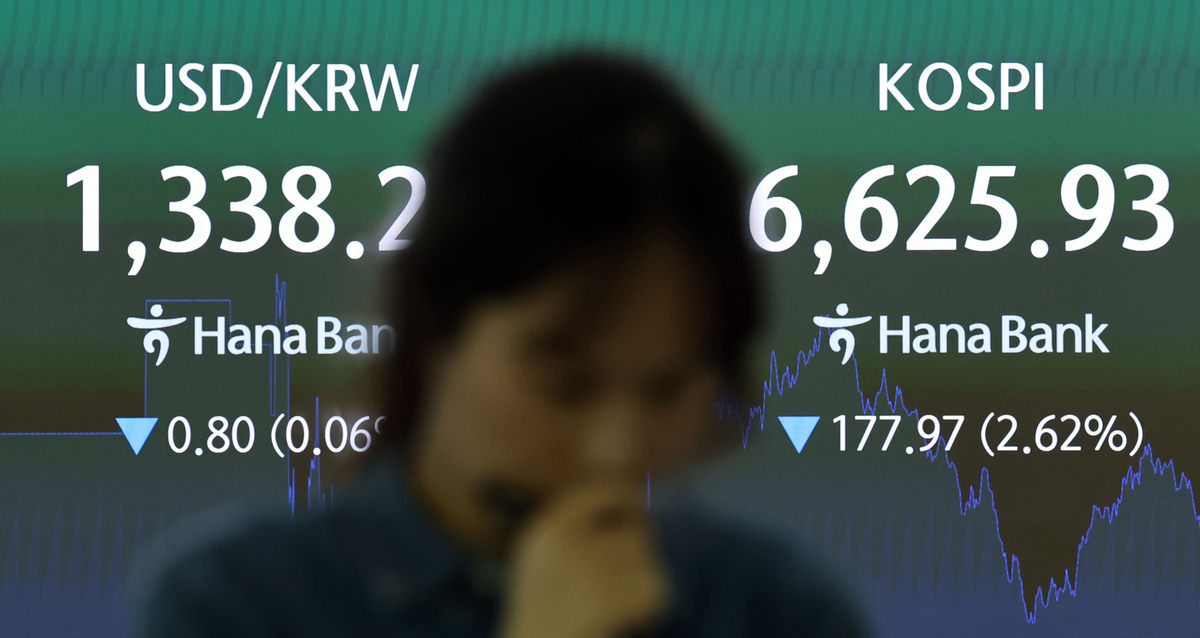
The stock fell by nearly 3% that day.
The disconnect between record profitability and falling shares is not a bug in Samsung’s story. It is the story. And it is a signal worth watching from every market where semiconductor valuations have run ahead of the next earnings cycle. The market has moved past asking if Samsung can earn money — it is asking how long it can keep earning it at these margins.
What the Numbers Hide
The revenue and profit figures are undeniably strong. Samsung’s third-quarter operating profit jumped 782.5% from a year ago and 20% from the prior quarter. The company’s memory-chip business, which had been in a brutal downcycle through 2023 and most of 2024, is now riding a wave of surging AI demand, with high-bandwidth memory (HBM) becoming the hottest product in the industry.
South Korea’s overall semiconductor exports also hit a record 603 billion dollars in September, according to the Ministry of Trade, Industry and Energy — the first time the country has breached the 600 billion dollar mark in a single month. Total exports for the month reached 1.209 trillion dollars, also a national record. The AI boom is not just theoretical; it is showing up in shipping manifests and customs data.
These are real numbers. They are not in doubt. But the market was not buying Samsung on the strength of this quarter alone. It was buying a narrative — and that narrative is starting to show wrinkles at the edges.
The Mechanics of a Drop
Goldman Sachs provided a useful analysis of the supply-side pressure that hit Samsung’s stock on the day. Seven semiconductor ETFs with roughly 19 trillion won in combined assets were undergoing rebalancing simultaneously. Option expiries and the end of Samsung’s own share-buyback program overlapped with the same window. The effect was mechanical selling pressure that had little to do with fundamentals.
Samsung Securities estimated that among 23.2 trillion won in domestic equity ETFs due for regular adjustment that month, semiconductor-related ETFs accounted for 18.1 trillion won. The rebalancing could have generated as much as 200 billion won in automatic sell orders for Samsung stock. This explains part of the drop. It does not explain all of it.
What Goldman Sachs’ analysis missed was the second-order effect: when one major player sells mechanically, other algorithmic systems detect the momentum and amplify it. The selling begets more selling, creating a feedback loop that detaches price from value for several hours before the market reprices.
The Real Question Is Timing, Not Profit
Investor sentiment had already bid up Samsung’s shares in anticipation of strong results. Memory chip prices were rising. AI server investment was expanding. HBM demand was outstripping supply. The third-quarter number was never going to be a surprise — it was the price of admission for anyone holding the stock.
What investors are now asking is not whether Samsung can make money. They are asking whether it can keep making money at these margins for longer than the next twelve months. The critical window, according to analysts, is 2027 to 2028. That is when Samsung’s major memory-chip capacity expansions are expected to come online, along with rival output increases from SK Hynix and SK Group’s memory business.
The industry has spent the last two years tightening supply and raising prices. The next two years will test whether that tight supply can survive the return of new capacity. History suggests it cannot. Every memory cycle has ended the same way: prices surge, margins expand, companies invest billions in new fabs, and eventually supply outpaces demand. The question is not whether this cycle will end — it is when, and whether Samsung’s competitors will arrive with excess capacity at the same time.
Who Wins, Who Loses
The winners in this moment are the investors who bought Samsung and memory-chip stocks during the downturn and are now taking profits. The mechanical selling from ETF rebalancing and option expiries gives them an orderly exit from positions they have held through the worst of the downcycle.
The losers are the buyers who are paying forward-looking valuations based on the assumption that the AI memory supercycle will persist indefinitely. If new supply hits in 2027–2028 and margins compress, those valuations look generous. The market is pricing in a scenario where AI demand grows forever — but no demand curve is infinite.
For Samsung itself, the pressure is indirect but real. The company has gone from posting losses to posting record profits in less than two years — a remarkable reversal driven by AI demand. But the market’s reaction shows that even a company with Samsung’s scale, pricing power, and vertical integration cannot escape the discipline of cyclicality. The stock market does not reward the past. It rewards expectations of the future. And right now, the future looks crowded.
Second-Order Effects on Global Markets
Samsung’s stock drop sent ripples through related positions. Taiwanese foundries that supply Samsung’s advanced nodes saw modest declines. Chinese data-center operators betting on continued HBM availability now face supply uncertainty. Japanese equipment makers that depend on Samsung’s capital expenditure plans are reassessing their order backlogs for 2026 and 2027.
The broader implication is that when Samsung — arguably the most diversified semiconductor company in the world — struggles to maintain investor confidence despite record profits, smaller players in the memory space face even greater scrutiny. Companies without Samsung’s vertical integration, customer relationships, and balance sheet strength will feel the pressure first when the cycle turns.
What Comes Next
The brokerage community in South Korea is divided on the near-term outlook but relatively unified on one point: the AI-driven memory cycle itself is not broken. The short-term volatility from ETF rebalancing and other mechanical factors is likely overblown. The structural demand for HBM and AI-grade memory remains strong, and hyperscalers like Microsoft, Google, and Amazon continue to sign multi-year supply agreements at premium prices.
But “strong” and “sustainable” are not the same thing. The question that will define Samsung’s next earnings season — and the valuations of every memory-chip company in the world — is whether the capacity additions planned for 2027 and 2028 will bring supply and demand back into balance, or whether AI demand will continue to outpace production for longer than anyone currently expects.
The market is pricing in the second scenario today. Samsung’s falling stock after record profits suggests some investors are already betting on the first. This divergence between price action and fundamentals is exactly what happens at cycle peaks — not because the numbers are wrong, but because the market is already looking through them to the next inflection point.
What Makes Samsung’s Situation Worth Watching
This is not just a Korean story. It is a story about whether the global tech sector’s most important growth bet — AI-driven memory demand — can survive its own success. When the biggest memory maker in the world posts record profits and the market sells anyway, it is a signal that investors are not paid for what you earned. They are paid for what you will earn next — and next is looking less certain than the headlines suggest.
The real warning is not that Samsung’s numbers are weak. It is that even exceptional results cannot shield a cyclical business from the discipline of forward-looking markets. Samsung sold the world AI memory, and the market is now asking when the bills come due. Until Samsung can prove that demand will outpace supply through 2028 and beyond, its record profits will remain exactly what they appear to be: a milestone the market has already priced in, discounted, and moved past.