Saudi Arabia's Oil Lifeline Just Got Cut
Satellite images confirm catastrophic damage to Saudi Arabia's critical east-west pipeline, leaving the kingdom with only days of export stockpiles. The attack exposes the fragility of global oil supply chains as regional conflict enters its seventh month.
The Pipeline That Was Supposed to Keep Saudi Arabia Safe
For six months, Saudi Arabia had something no one thought possible: an exit ramp from its own strangulation. While the Strait of Hormuz lay effectively shut — Iran requiring vessels to obtain permission and likely preparing to charge tolls — Riyadh kept 4 million barrels per day flowing west across the Arabian Peninsula to the Red Sea port of Yanbu. Roughly 4 percent of global oil supply took that desert route, insulated from the chaos gripping the Gulf.
That insulation ended over the weekend.
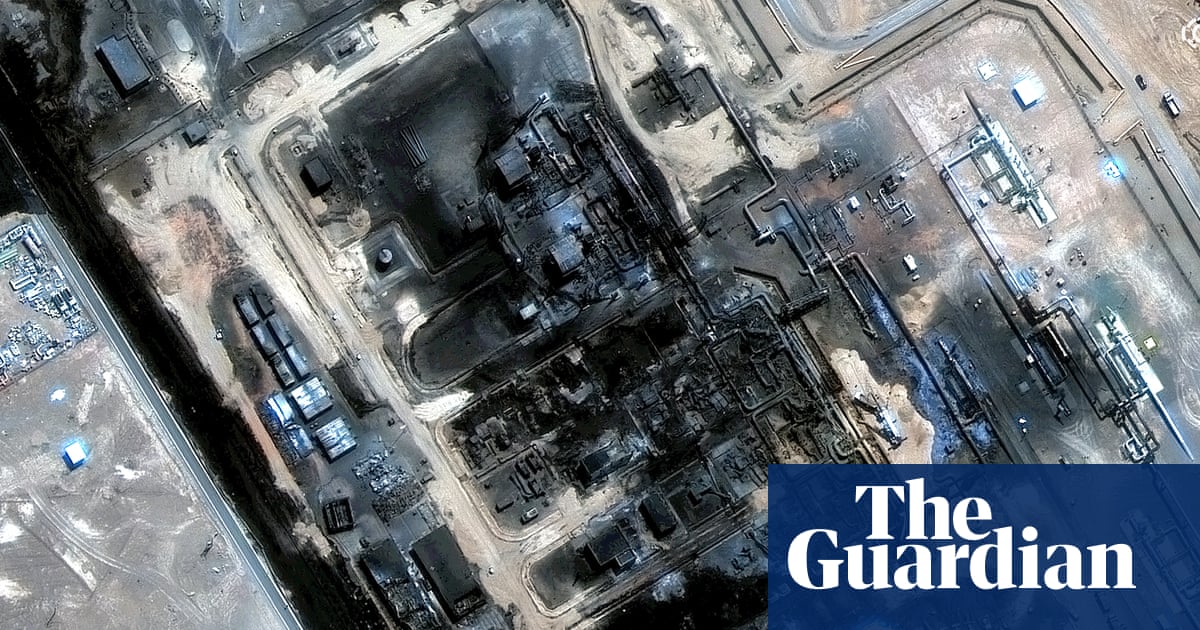
Satellite imagery released Sunday night by Vantor showed a pumping station on the 1,200-kilometer east-west pipeline charred and badly damaged following drone strikes on Friday. Saudi officials blamed militants in Iraq, but the attribution matters less than what the damage reveals: the kingdom’s primary escape route from the Hormuz crisis is now compromised, and the clock is ticking.
Five Days Until the Tankers Stop Coming
According to three industry sources familiar with Saudi export operations, Yanbu’s current stockpiles can sustain shipments for just five to seven days without the pipeline resuming flow. Egypt’s Red Sea and Mediterranean ports — Ain Sukhna and Sidi Kerir — hold slightly longer reserves, but those too will eventually run dry.
The math is stark. A nation that exports more oil than any other on Earth cannot survive on warehouse inventory. The pipeline isn’t an alternative — it’s the backbone. Shut it down long enough and Saudi Arabia watches its market share erode not because demand collapsed, but because its tankers simply have nothing to load.
Repair timelines remain uncertain. One source told Reuters the damage could take up to six weeks. Another suggested partial operations might resume sooner. The Saudi government has offered neither confirmation nor denial, and the energy ministry did not respond to requests for comment.
What the Satellite Images Really Show
The Vantor imagery is valuable not just for documenting destruction but for understanding the vulnerability landscape. A single pumping station — one node in a linear chain stretching 745 miles across desert — can disable millions of barrels per day. There is no redundancy built into this system. When one station goes dark, the entire artery stops.
This is the hidden architecture of modern energy risk: the concentration of flow through chokepoints that are far easier to damage than to rebuild. The Hormuz crisis was supposed to test that theory. The pipeline attack proves it already has.
The Houthis Are Closer to Everything Now
Meanwhile, the Houthi campaign continues to expand beyond symbolism into territorial control. The group captured the strategic island of Perim at the southern entrance to the Bab al-Mandab strait — the same waterway that feeds the Red Sea port of Yanbu. This is not incidental. Perim controls the maritime approach to the very destination the pipeline serves.
The Houthis have declared a blockade and are pushing operations closer to a major US base in Djibouti. What began as asymmetric harassment of shipping has evolved into something closer to a coordinated campaign against Saudi Arabia’s energy lifelines — both maritime and terrestrial.
The timing is significant. The conflict entered its seventh month this week, well past the four-to-six-week finish line that Donald Trump promised when he declared war on Iran on February 28. Instead of resolution, the operational picture has worsened: Iran constrains Hormuz, the Houthis seize Perim and strike Saudi infrastructure, and diplomatic channels are stalling.
Diplomacy Already Behind the Curve
Oman’s foreign minister, Sayyid Badr Albusaidi, posted late Sunday that a regional meeting scheduled for Monday had been postponed “in the interests of consensus.” Iran and Gulf Arab states were supposed to present an agreement on governing shipping routes through the Strait of Hormuz. Postponed.
The delay is telling. Diplomatic processes in the Gulf move slowly by design, and this conflict has already outpaced every timeline policymakers imagined. The pipeline attack and the Hormuz impasse are symptoms of the same problem: no mechanism exists to de-escalate a conflict that has already rewritten the regional security map.
The Price Signal Is Already Here
Brent crude rose more than 3.4 percent to $108 per barrel on Sunday — a level not seen since May. US diesel prices had already hit a record above $6 a gallon the previous Friday. The market is pricing in the possibility that Saudi stocks will run low and that restart timelines could stretch toward that six-week upper bound.
For consumers in Europe and Asia, the transmission is direct. For the United States, the impact arrives through refined product markets that are already strained. The inflationary impulse from energy prices does not discriminate between importing nations — it simply raises the cost of moving everything.
What Comes Next
Several scenarios are possible, none of them comfortable.
If repairs proceed quickly and the Saudis restore partial flow within days, the worst-case premium in oil prices may recede. But the damage to confidence — that a major export route can be disabled by a drone strike — will linger in market pricing regardless of how fast the pumps restart.
If repairs take weeks, Saudi Arabia faces a choice between rationing exports or finding alternative routes that may not exist at sufficient scale. Either outcome strengthens the case for Iran-backed proxies to press further, knowing that Riyadh has limited leverage while its tankers sit idle.
The broader implication extends beyond Saudi Arabia. Every oil-exporting nation in the region now watches the same satellite imagery and asks the same question: what is my equivalent of the east-west pipeline, and who wants to damage it?
The answer, increasingly, is that there may not be one.