Seoul's Chip Premium: What the VeriRubin Price Surge Says About the AI Arms Race
South Korea is paying nearly double the market rate for NVIDIA's next-gen VeriRubin chips in a bet to become an AI superpower — but the premium reveals something darker about Beijing's desperation to circumvent US restrictions.
The Price Isn’t the Problem — It’s the Signal
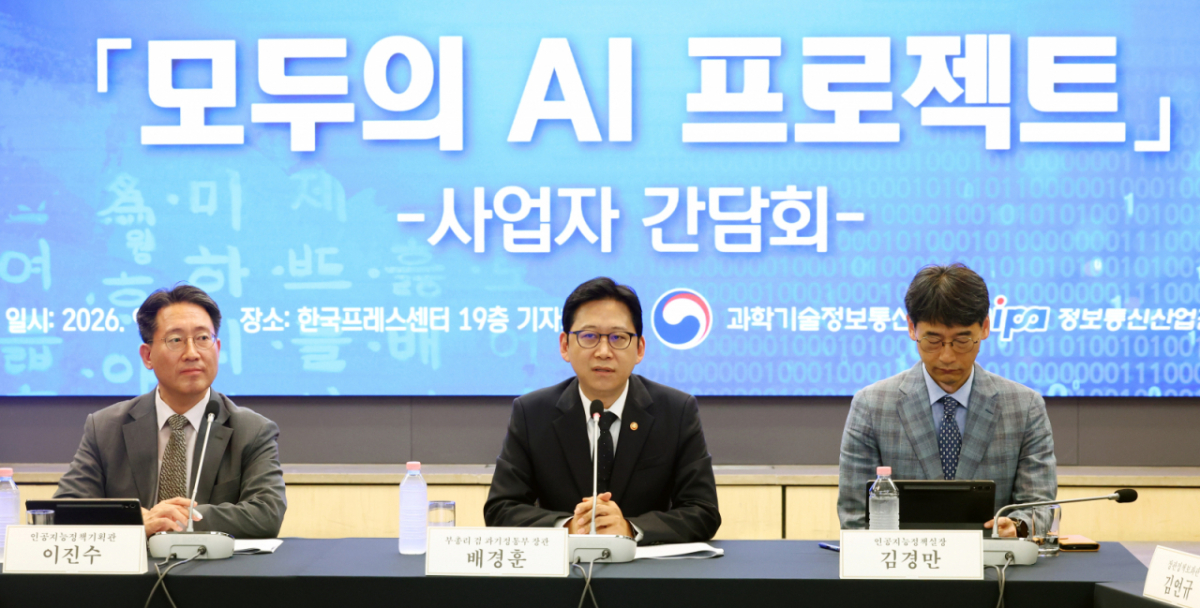
South Korea’s government has quietly agreed to pay 27.5 billion won ($19.6 million) for each VeriRubin NVL72 server rack — nearly double what Wall Street analysts predicted just months ago. The deal, confirmed by a legislative document obtained by the Ministry of Science and ICT, commits Seoul to acquiring 140 racks over the next year as part of a 3.85 trillion won GPU infrastructure budget.
But the headline number isn’t what should keep Washington awake. It’s what happens to those chips after they leave the factory floor.
The VeriRubin — NVIDIA’s next-generation AI accelerator slated for release in 2027 — represents the most powerful commercially available silicon the United States currently permits for export outside its most restrictive tiers. Each NVL72 rack contains 72 VeriRubin GPUs, 36 data center CPUs, NVLink 6 switching fabric, ConnectX-9 networking, and liquid cooling infrastructure. Put simply: it is a weapon-grade computing asset in hardware form.
And China is willing to pay whatever it takes to get its hands on these systems through third-party markets like South Korea.
The Premium That Talks
To understand the geopolitical stakes, you have to start with the price compression. Bernstein’s June 2026 report estimated the baseline NVL72 rack at $9.1 million, factoring in rising HBM memory costs and manufacturing constraints. That estimate was conservative even then — and it was wrong. NVIDIA has since announced a 15 percent price increase across its enterprise GPU line. By the time the Korean government finalized its procurement terms, the per-rack cost had more than doubled the original projection.
There are several reasons for this escalation. Supply constraints are real: the VeriRubin architecture relies on TSMC’s most advanced process nodes, which are already bottlenecked by competing demand from Microsoft, Google, Meta, and Amazon. Each additional wafer slot allocated to NVIDIA means someone else gets less. The liquid cooling infrastructure required for these racks also faces its own supply chain issues — you cannot simply scale up cryogenic-grade heat exchange systems overnight.
But there is a second, less discussed factor: Korea’s domestic market is small compared to the Chinese demand for frontier AI compute. Seoul is committing 140 racks; Beijing is effectively ordering millions through indirect channels. When a buyer knows the other side will pay any price, the market shifts. The premium embedded in this deal is partly a subsidy for Korea’s AI ambitions, but it is also a tax on scarcity — one that China’s intermediaries are quietly financing.
Who Wins, Who Loses
South Korea wins if this bet pays off. The government’s “Frontier AI Lab” program envisions training models at the level of Meta’s Milvus or Google’s Gemini — systems that require roughly 10,000 VeriRubin-class GPUs to train. Deputy Prime Minister Kyung-Hoon Bae has publicly stated that without this scale of infrastructure, Korea remains a second-tier player in the global AI hierarchy. The math is brutally simple: either you commit the capital now, or you watch your domestic tech ecosystem stagnate while American and Chinese firms pull away.
China wins through leakage. Despite US export controls that explicitly prohibit the re-export of restricted GPU architectures to Beijing, enforcement remains patchy. South Korean chips can be purchased by shell companies, routed through Southeast Asia, and integrated into Chinese data centers before investigators connect the dots. The premium that Korean buyers pay today is partly subsidized by the black-market value of these same chips in Beijing tomorrow. Every NVL72 rack that Korea acquires strengthens the case that the US restriction regime is porous — and every successful diversion makes future enforcement harder.
The United States loses in the long game. Washington’s strategy rests on a false assumption: that end-user verification and licensing requirements can physically prevent sophisticated actors from acquiring advanced compute. The reality is that semiconductors are fungible, shipable, and relentlessly profitable. When China cannot buy VeriRubin chips directly, it will buy them through Korea, Japan, the Netherlands, or Taiwan. The question is not whether these chips reach Beijing — it is whether they arrive before or after Seoul’s commitment expires.
The Real Cost of AI Sovereignty
Korea’s calculation is rational from a national security perspective. The alternative — accepting permanent dependency on American cloud providers and British research institutions — would cede sovereignty over the most economically transformative technology of the century. A country that cannot train its own frontier models cannot control its own data, its own economy, or its own security.
But there is a catch. By becoming a major purchaser of restricted semiconductor technology, Seoul places itself in the crosshairs of both Washington and Beijing. The US government may view Korea’s aggressive GPU acquisition as insufficiently coordinated with allied export policies. Beijing, in turn, will expect preferential access to the very chips Korea is trying to hoard for domestic development.
The 27.5 billion won per-rack price tag is not just a procurement figure. It is a signal that the AI arms race has entered a phase where compute scarcity is pricing entire nations out of the frontier. Korea is choosing to pay the premium rather than accept technological subordination. But in doing so, it has made itself a target — and a tempting intermediary for a superpower that views AI dominance as a matter of civilizational survival.
What Comes Next
The next twelve months will determine whether this investment pays off or becomes a cautionary tale. If Korea can train competitive frontier models with its VeriRubin fleet, the country will have demonstrated that mid-sized economies can punch above their weight in the AI era. If the models underperform or the chips are diverted before they reach domestic data centers, Seoul will have spent trillions of won on infrastructure that strengthens competitors rather than itself.
Washington will be watching closely. Any evidence that Korean-acquired GPUs are reaching Chinese hands — even indirectly — could trigger retaliatory measures, from export license delays to threats against Korea’s own semiconductor industry. Beijing will be calculating how much leverage it can extract from Korea’s vulnerability: a nation that needs American protection from North Korea but also needs Chinese investment for its economic survival.
The VeriRubin deal is not just about semiconductors. It is about who gets to define the future of artificial intelligence — and who pays the price when the bill comes due.