Seoul faces a personal energy emergency as US pushes allies to guard Hormuz
The US is asking allies to share the military burden of keeping the Strait of Hormuz open — a request that lands differently on Seoul than on Washington. Korea imports nearly 70 percent of its oil through that chokepoint, making every day of tension a direct threat to its economy.
The request that hits Seoul hardest
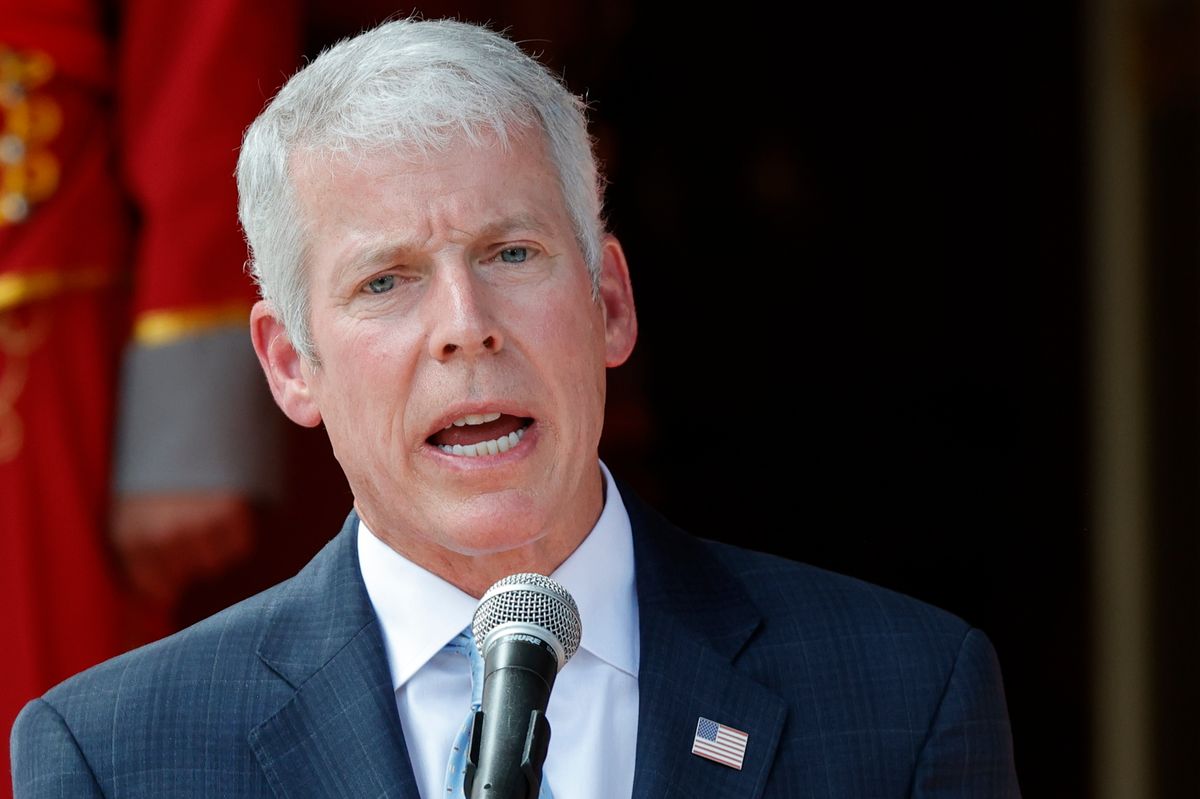
When US Energy Secretary Chris Light said the Strait of Hormuz must no longer be an American-only security burden, the words sounded like standard alliance management. They carried a different weight in Seoul.
Korea imports roughly 70 percent of its crude through that narrow waterway between Oman and Iran. That is not a strategic vulnerability it can shrug off. It is the economy itself, distilled into tanker routes. Every escalation near Hormuz lands on Korean refineries, on shipping costs, on household fuel prices almost immediately.
Light made the appeal public on 6 September during interviews with CNN and Fox News after a press event at Venezuela’s Miraflores Palace on 2 September. He called US military support for oil transit through the strait essential and said it had become the new normal. But he stressed it could not stay that way. Allied and friendly nations must contribute military assets, and he expected quick deployments from extra-regional partners.
He did not name South Korea. He said several countries had already expressed willingness to cooperate. Yet for a nation whose oil import map is drawn in Hormuz, the silence about specific partners was itself a signal.
What Light’s numbers actually mean
Light pushed back sharply against claims that the Trump administration had inflated daily transit figures. He put the number at roughly 18 million barrels per day, with 4 million to 5 million barrels moving through a parallel pipeline rather than the strait itself. Those are large volumes by any standard — roughly a fifth of global seaborne crude trade runs through Hormuz on top of that pipeline flow.
The point of contesting the numbers was political. If the flows are smaller than claimed, the urgency for allied military contribution softens. If they are as large as Washington says, the case for burden-sharing hardens. Light chose the harder case.
His remarks came against a backdrop of broader US-Iran friction. President Donald Trump has repeatedly stated that the primary military objective is blocking Iran’s path to a nuclear weapon and revising the nuclear agreement. Light hinted in an ABC News interview that a formal deal may not materialize before the next administration, and that the outcome could simply be the neutralization of Iran’s nuclear capability without a comprehensive agreement.
That ambiguity matters for Seoul. A limited military arrangement leaves Hormuz open but fragile. A broader confrontation risks closing it entirely.
Seoul’s calculus, written in barrel counts
South Korea’s government is reportedly reviewing multiple options to expand its military footprint for navigation safety in the strait. The review is not driven by geopolitical ambition. It is driven by import dependency.
Japan faces a similar profile, which is why Tokyo and Seoul have historically coordinated on Gulf security. But coordination is not the same as capability. Korea’s naval presence in the Gulf has been limited to replenishment and escort missions under multinational frameworks. A meaningful expansion — sustained patrols, dedicated warship assignments, intelligence-sharing arrangements that go beyond existing protocols — would require political willingness the government has not yet fully shown.
The cost is real. Deploying naval assets far from home diverts ships from other duties and raises insurance and operational expenses. The benefit is existential for an economy that cannot function without steady oil flows. That is the tight spot Seoul occupies.
Who wins, who loses
Washington wins if allies absorb more of the security cost. It wins politically if the strait stays open without a major US combat commitment. It wins operationally if Iranian threats to shipping recede through deterrence backed by a coalition rather than a single navy.
Iran loses influence over the most critical energy chokepoint in the world. A multilateral security presence near Hormuz narrows Tehran’s options for leveraging oil transit as a political weapon. That is likely the intent.
Korea and Japan win only if the security architecture actually holds. If Hormuz remains transit-capable with allied ships on station, their economies keep running. If tension escalates and the strait closes even briefly, their refineries idle and inflation spikes within weeks.
China is the quiet variable. It is the largest buyer of Iranian oil and a major consumer of Gulf crude. Beijing has refused to join US-led security initiatives in the strait. Its presence in the region is commercial, not military. Any closure scenario would hurt China too, but its calculus is different — it can fall back on overland pipelines from Russia and Central Asia that bypass Hormuz entirely. Korea cannot.
What happens next
Three outcomes are plausible in the near term.
First, the status quo hardens: US and allied navies maintain a persistent but limited presence, Iran continues low-level harassment of shipping, and Korea incrementally increases its contribution without a dramatic posture shift. This is the path Light is pushing.
Second, a sharper crisis forces action. An attack on a tanker or a mining incident could close the strait for days. Oil prices would spike globally, and Korea would feel it first in domestic diesel and petrochemical costs. The government would then be forced into a faster, larger deployment than it currently plans.
Third, diplomacy advances and tension cools. Light’s comments left the door open for negotiations, even if deferred to a future administration. A deal that constrains Iran’s nuclear program and guarantees free passage would reduce the security burden on allies. But the conditions for such a deal are not present now, and neither Washington nor Tehran shows strong incentive to reach one before the next US electoral cycle.
For Korean readers, the message is personal. The Strait of Hormuz is not a distant diplomatic issue. It is the distance between a full gas tank and an empty one. Every statement from Washington about allied burden-sharing is, for Seoul, a question of whether the country will pay more in soldiers and ships or pay more in prices and shortages.
Light did not name Korea. He did not need to.