Seoul's Hormuz Dilemma: The Second Front the US Can't Name
Trump's push for South Korean troops to the Hormuz Strait forces Seoul into an unwinnable balancing act — pleasing Washington while the real threat simmers in the north. The calculus is reshaping Northeast Asia security in ways most observers miss.
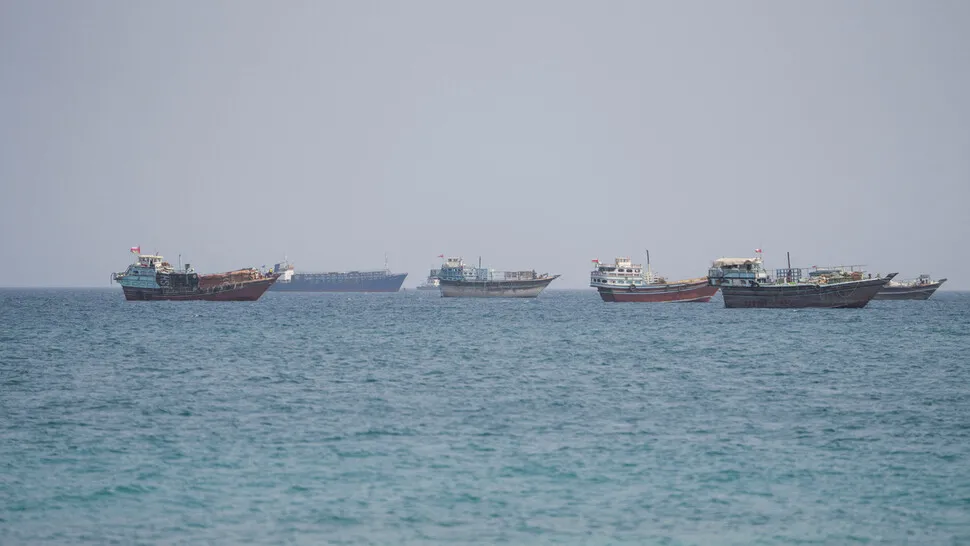
The Impossible Ask
The United States wants South Korea to send troops to the Hormuz Strait. Not hundreds. Not a ceremonial contingent. The details are still being shopped around in Washington, but the request itself is already rewriting the calculus of Northeast Asian security.
What makes this demand so consequential is not the troop count — it is the logic behind it. With the war in Ukraine consuming American attention and resources, the Trump administration is looking for lower-cost ways to hold open critical chokepoints without committing US forces. South Korea, a treaty ally with a modern military and deep trade dependence on Middle Eastern energy, is being asked to fill a gap that was never meant for it.
Seoul is caught between a second front it did not ask for and a first front that keeps getting more dangerous.
The Timing Is a Weapon
The politics inside South Korea reveal the real pressure. The ruling People Power Party is in full retreat. Its lawmakers have barely discussed the Hormuz question in committee. One defense committee member admitted the ruling party has not even held a proper consultation. Another warned, in blunt terms, that the issue is very complicated.
The complication is not abstract. It is structural.
North Korea–US talks are being floated again. Trade negotiations between Seoul and Washington are underway. Public opinion on troop deployment is sharply divided. Send soldiers to the Strait of Hormuz and the North Korean regime reads it as proof that Seoul is subordinating its own security to Washington’s middle-east agenda. Keep them home and the US calls it unreliability.
The party in power has identified a political trap and can find no way out of it.
Opposition critics are not offering an alternative strategy. They are offering contempt. Jang Dong-hyuk, a leading member of the People Power Party, posted on Facebook on May 5 that sending troops now would earn Seoul nothing but embarrassment. He called it desperate diplomacy from a government that is barely keeping its head above water. Jo Yong-sool, another party figure, called it something worse: scolding diplomacy, in which the Lee Jae-myung administration tries to please Washington, Tehran, and domestic hardliners simultaneously and succeeds at none.
The sharpest line came from People Power Party floor leader Choi Jung-sup, who demanded the government disclose transparently what it actually knows about the situation at Hormuz and what it expects from Washington in return. That demand for transparency is significant because it confirms what outsiders suspect: the executive branch does not have a coherent answer.
The Real Cost of a Second Front
South Korea’s defense posture has been carefully calibrated around one threat: North Korea. The majority of its forward-deployed forces, its missile defenses, its war plans, its diplomatic rhythm — all of it is oriented toward the 38th parallel. The US military footprint in the region, the joint command structures, the intelligence-sharing apparatus — these too are built for the Korean peninsula.
A Hormuz commitment would not be cosmetic. It would require pulling assets from existing training cycles, reassigning naval patrol schedules, and potentially stretching the ROK Navy thin across two oceanic theaters. The cost in readiness is real and measurable, even if Seoul tries to downplay it.
And North Korea watches.
Pyongyang’s strategic psychology is well documented. It interprets any strengthening of the US alliance network as an existential threat. It has spent decades building nuclear weapons and intercontinental missiles specifically to deter what it calls US hostility. A South Korean battalion deploying under American command to a theater where Iran’s IRGC operates would not pass unnoticed. It would be read as part of a broader encirclement strategy — one that extends from the Taiwan Strait through the South China Sea to the Persian Gulf.
That reading may be exaggerated. It may also be exactly what Pyongyang wants other actors to believe.
Either way, the strategic signal is immediate: Seoul is no longer a one-theater ally. It is a global partner, at least on paper.
Who Actually Wins Here
Washington wins without spending American blood or treasure. It gains a credible coalition signal to Tehran without triggering the political cost of deploying US sailors to the Strait of Hormuz. It also binds South Korea tighter to American strategic priorities, making it harder for Seoul to pursue the kind of independent diplomacy it has occasionally attempted with China or North Korea.
The Trump administration gets both objectives at once: reduced US exposure and enhanced alliance dependency. That is not conspiracy. That is standard alliance management under a transactional presidency.
Seoul loses calibration. Every troop committed to the Persian Gulf is a troop not oriented toward the Korean peninsula. Every diplomatic concession to Washington on Hormuz is a concession that shifts the alliance’s center of gravity away from Northeast Asia and toward the Middle East. The long-term effect is a gradual rebalancing of American security commitments that benefits Washington’s immediate political needs and costs Seoul its strategic focus.
North Korea wins by default. A distracted Seoul is a distracted Seoul. If South Korea is arguing internally about whether to send troops to Oman while its own intelligence apparatus monitors a regime that has conducted multiple missile tests and reinforced its western border, the advantage belongs to Pyongyang.
What Comes Next
The most likely outcome is paralysis with incremental movement. The government will announce a review. It will commission a study. It will consult with Washington and Tokyo and quietly reassure Pyongyang that no hostile intent is implied. Then it will produce a small deployment — perhaps a few maritime patrol vessels, perhaps a logistical unit — small enough to claim contribution and large enough to infuriate domestic critics.
This is the path of least resistance for a government that wants to avoid direct confrontation with Washington while avoiding electoral suicide at home. It has worked for every ambiguous alliance commitment South Korea has made since the Iraq War.
The danger is that this model assumes Washington will stop at symbolic deployments. It assumes Iran will accept a token gesture as sufficient. It assumes North Korea will not treat the move as escalation. None of those assumptions is secure.
The deeper truth is that the Trump administration is asking South Korea to become a middle-power security provider in a theater where middle powers do not control the outcome. It is asking a country whose entire defense infrastructure is built for one scenario to prepare for another, without giving it the tools or the strategic clarity to do so.
Seoul’s political class is right to call this complicated. The complication is not bureaucratic. It is existential.
The question is not whether South Korea will respond to US pressure. It is whether it will ever learn to answer in its own terms.